Ecology

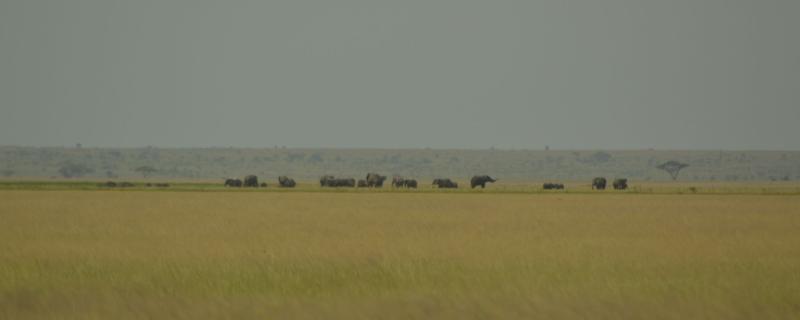
Ever wondered if natural surroundings give out subtle hints before going through landscape level transformations? Scientists from Princeton University (USA) and Indian Institute of Science (India), have collaborated to try and figure out if there are any such hints or signs in nature, which can help in predicting transformations within grassland and woodland habitats in Serengeti-Mara.

[field_op_main_image]

 It is in the best interest of a tree to ensure that its seeds are dispersed to far off places where they can get good sunlight and nutrition to grow. This is carried out by the help of frugivores, who eat fruits and transport seeds in their gut. A recent study illustrates how irreplaceable elephants are as seed dispersers using computer simulation and three species of trees with large fruits. The study shows that in the absence of elephants no frugivores can disperse seeds as far or as efficiently.


[field_op_main_image]

Why do we see certain species of animals in one place while they are absent in the neighbouring regions? How do species inhabit remote islands? Questions like these are central to our understanding of evolution and speciation. Exploring these question in a Sri Lankan context, scientists from National Centre for Biological sciences and University of Colombo studied how a two species of small passerine birds colonized the island nation. Through phenotypic and genotypic analysis they could show that not all Sri Lankan wildlife is a subset of Indian wildlife.


[field_op_main_image]

Different parts of the country was inundated with floods this year, while other parts continue to face rainfall shortages, leading to drought situations. The culprit behind the disparity may be the sudden, extreme rainfall events we have been facing. Warming temperatures leading to extreme events may be affecting the overall rainfall the country receives says this new study.


[field_op_main_image]

Bangalore of the yesteryears was a city of gardens; cool, pleasant and green. In addition to the 2000+ species of trees -- some natural and some specifically planted -- individual gardens in small households contributed to the large biodiversity here. The undulating terrain of the city allowed formation of lakes -- natural and manmade – that were interconnected. As the ‘Garden City’ transformed into the ‘Silicon Valley of India’, the city’s rapid, uncontrolled growth turned this biodiversity haven to a concrete jungle.


[field_op_main_image]

Humans are not the only organisms under threat by the malarial parasite Plasmodium. These parasites are known to infect a range of animals from primate to reptiles, theis list also includes birds. In their recent study Scientists from the Indian Institute of Science, Bangalore have collected these parasites from the blood of various species of birds in the Himalayan foothills. Through their study the team was to show the burden of infection in birds and the seasonality of the infection.


[field_op_main_image]


If pictures say a thousand words, what would a collection of hundreds of pictures say? A fascinating chronicle indeed! That’s what Dr. Navendu Page’s newly launched book is.

Unicellular microalgae cells living in freshwater sources are constantly exposed to stimuli and stresses of all kinds, be it changes in temperature, salinity, drought or pathogenic attacks. With climate change and rapid diminishing glaciers, these variations of the environment will continue to get worse. Sensing, reacting and mitigating the harmful impacts of such drastic environmental alterations becomes a matter of survival for these algal cells.


[field_op_main_image]

Organic farming, a method of farming that uses no artificial pesticides or fertilisers, is a re-emerging practice in agriculture and is seen as a new hope in times where our lands are ravaged by chemical fertilizers. Following this method has multiple benefits among which maintaining soil health is one. But how much of ‘good’ does it do to soil? A new research has now studies the various long and short term effects of organic farming on soil health and has found that in comparison with conventional farming methods,  organic farming results in better soil health as indicated by its physical, chemical and biological properties 


[field_op_main_image]

The Western Ghats in India has been a hotspot for many a diverse and unique forms of life. The dense rainforests and tropical climate have assisted in the diversification of species, many of which are yet to be found. The latest addition to this growing list is Nasikabatrachus bhupathi, an underground dwelling frog that surface only for a few days every year, to mate. The species was found along the eastern slopes of the Western Ghats, which receives rainfall during the northeast monsoon unlike the other parts of the ghats, and could be a primary reason for the differences in the species found in the different places. 

Search Research Matters