Ecology


[field_op_main_image]

Why does a fish, so commonly sold in the supermarkets, demand a day of observance in its honour? Perhaps, the answer lies in the question! On World Tuna Day, observed on 2nd of May every year, we present some insights into the factors leading to the near extinction of one of the most sought after fish in the world -- Tuna. While some species of Tuna are already critically endangered, some are fast approaching this status, threatening to wipe out the entire family of tunas from the face of the Earth. How can you help save them? Read to know more...

[field_op_main_image]

Most methods that farmers follow today to control pests and save their crop are mostly reactive, which is done ‘after’ the damage has started. In addition, these methods either destroy other crops, or cause harm to animals that feed on them, or pollute the soil or air. Researchers have now found a ‘green’ and ‘clean’ way to detect crop pests before they start the damage. They have built a highly sensitive sensor that detects pheromones or chemicals released by insects for mating, which signal the presence of pests and thus prompt the farmers to take remedial measures.   


[field_op_main_image]

Forests are home to a wide variety of plants and animals. But what decides the distribution of this rich flora and fauna? How do some species of trees end up in selected pockets of the forest? In a recent study, scientists have examined this connectedness in patchy shola forests of the Western Ghats and have given some insights into what dictates tree distributions in such patchy forests and what connects these patches. This study, the researchers say, provides key details on the micro and macro ecology of the forests.

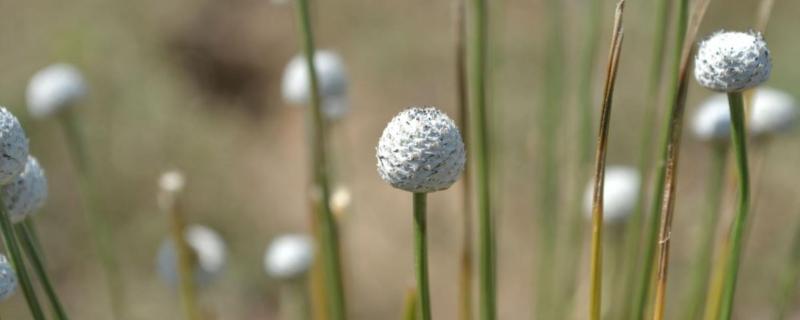
Scientists from the Agharkar Research Institute, Pune, have discovered a new species of plant Eriocaulon parvicephalum in the Western Ghats of Maharashtra. This plant belongs to the family Eriocaulaceae or commonly called pipeworts, due to their long naked stalks with a bulb like bud at the top. Although it looks similar to another species - Eriocaulon palghatense, of the same family, it was identified as a separate species after DNA analysis showed remarkable difference in the genetic make-up.

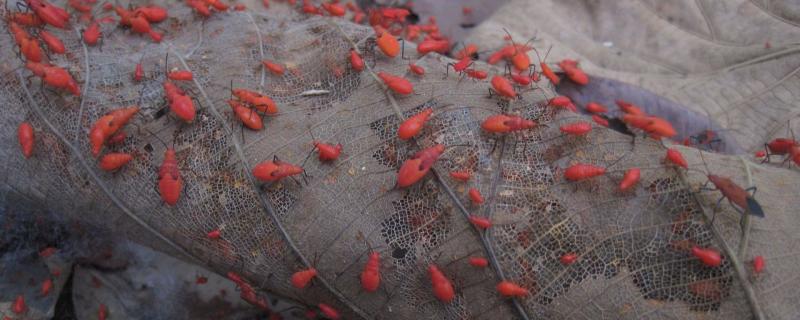
Cotton pests have been the cause of decreasing cotton yields in the country. Despite several attempts to controls these insects, their numbers remain unaffected. Rhynocoris fuscipes is a species of insect belonging to the family Reduviidae, which are known to be the natural predators of many cotton pests. Now, scientists from St. Xavier’s College, University of Florida and US Horticultural Research laboratory have proposed rearing Rhynocoris fuscipes in microenvironmental cages and then using them as predators to control cotton pests.

A new species of arboreal crab - Kani maranjandu, has been discovered in the Western Ghats in Kerala. Sightings of the crab were first reported to a team of researchers surveying the region, by the local Kani tribe of Kerala, after whom the new species was named. They reported having seen a long legged species of crab that could climb trees. The researchers, with the help of members from the Kani tribe, were finally able to capture a specimen of the species on September 05, 2015.


[field_op_main_image]

When Charles Darwin put forth his theory of natural selection, he argued that all species of life evolved by adapting to their environments to survive. Most of such adaptations are evident in those life forms living in their natural habitat. But what about those that are locked up in laboratories and used as ‘model organisms’ in experiments to understand biological systems? How are their natural habitats and what kind of adaptations have they developed to survive in these habitats? A series of studies by scientists have now thrown some light on these questions in the life of zebrafish, a commonly used fish in laboratories.


[field_op_main_image]

Relationships between various organisms stem to achieve an ultimate objective - survival. In mutualistic relationships, all involved in the relationship help each other survive, whereas in parasitic relationships, only one of those have an upper hand. But in spite of this chaos, how does nature maintain a balance? In a new study, scientists have studied examples of such relationships between termites and fungi - both mutualistic and parasitic - and have uncovered some interesting strategies adopted by these fungi to survive and thrive.


[field_op_main_image]

Nature has bestowed each organism the ability to adapt and evolve with time and each such adaptations strengthens the ability of the organism to flourish. The story of carpenter bees, a close relative of honey bees and bumblebees, is no different. In a research study, scientist have observed how different adaptations of males of three different species of carpenter bees influence their ability to find a mate.

A team of scientists from Centre for Ecological Sciences (CES) at the Indian Institute of Science (IISc) have discovered a new species of plant – Reissantia (Celastraceae). Members belonging to Reissantia family are usually found in Old World tropics of Africa and the Indo- Malaya regions.  The plants are found as a climbing, scandent or erect shrub and are characterized by small flowers.

Search Research Matters