
The Royal Swedish Academy of Sciences today announced that the Nobel Prize in Physics for 2016 would be awarded to Prof. David James Thouless, Prof. F. Duncan M. Haldane and Prof. J. Michael Kosterlitz ”for theoretical discoveries of topological phase transitions and topological phases of matter”. Prof. Thouless has been awarded half the prize share, while the other half will be shared equally between Prof. Haldane and Prof. Kosterlitz. The scientists have used advanced mathematical methods to explain unusual properties of matter when cooled to very low temperatures.
Archives

The Nobel Peace Prize is announced every year to "the person who shall have done the most or the best work for fraternity between nations, for the abolition or reduction of standing armies and for the holding and promotion of peace congresses", as described in Alfred Nobel’s will. For the year 2016, Colombian presidentJuan Manuel Santos was awarded the prize for his efforts to end his country's 50-year civil war. From 1895 to today, there have been 104 individuals and 26 organizations that have been awarded with this prestigious title.
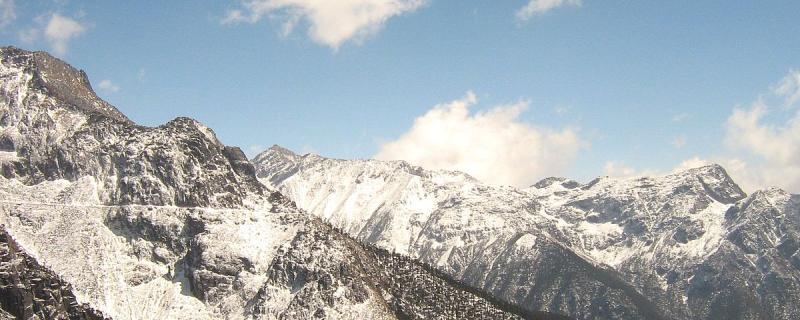
To most of us, the Himalayas is a snow clad, dry and cold mountain range. But trained eyes see through this apparent homogeneity and interpret the observed variations to understand the local climate and its implications. As a testimony to this, scientists from the Snow & Avalanche Study Establishment (SASE), Him Parisar, Chandigarh and the Divecha Center for Climate Change, Indian Institute of Science, Bangalore, have recently published a study on the variations in the 'whiteness of snow' across the Himalayas and its relationship with the mean winter air temperature and glacial stability.
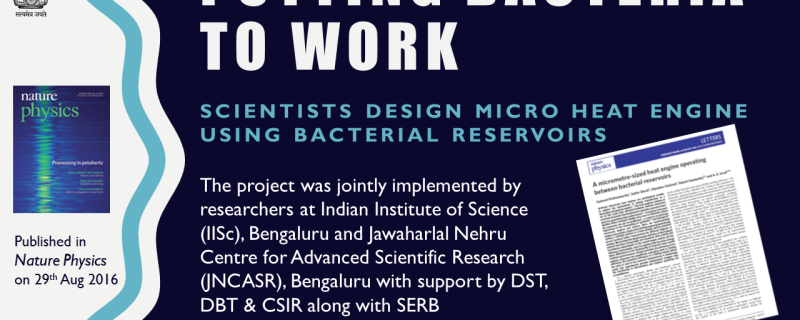
Can the omnipresent bacteria work for us, run our cars, refrigerate our food or fuel our aeroplanes? Yes, say scientists from the Indian Institute of Science and the Jawaharlal Nehru Centre for Advanced Scientific Research (JNCASR), Bangalore. In a ground-breaking interdisciplinary experiment, the team have built a micro heat engine that works using bacterial reservoirs. This study was the result of a collaborative effort between Prof. Ajay Sood and his graduate student Sudheesh Krishnamoorthy from the Department of Physics, IISc, Dr. Rajesh Ganapathy from JNCASR and Prof. Dipankar Chatterji and his student Subho Ghosh from the Molecular Biophysics Unit, IISc.
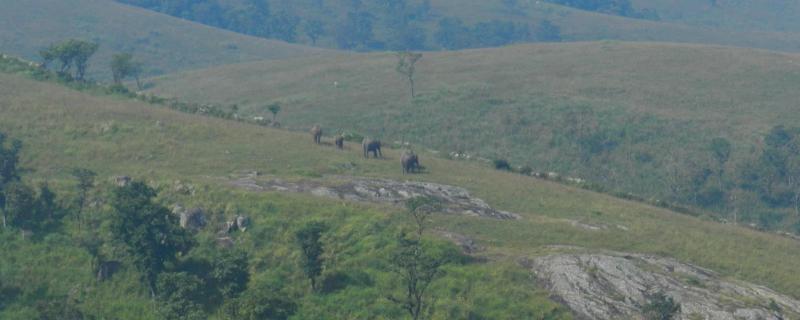
In the month of May, over 6000 personnel from the National Disaster Relief Force were deployed for rescue operations in Garwhal and Kumaon districts in Uttarakhand. A rather uncommon, unappreciated disaster had struck that region – forest fires. A recent study by researchers at the Indian Institute of Science, Bangalore is a significant step towards understanding the cause of devastating forest fires.
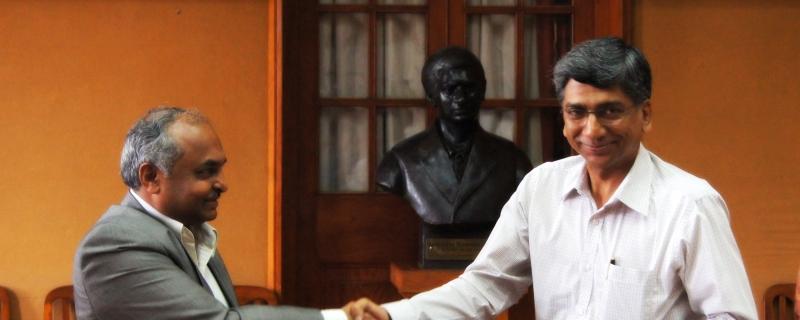
In a major move to homegrown research, the Indian Institute of Science, Bangalore, (IISc) and Bharat Electronics Limited (BEL) today signed an agreement on transferring a technology on Radio Frequency (RF) amplifiers based on Complementary Metal Oxide Semiconductor (CMOS) technology, developed at IISc. The signing ceremony took place at IISc where Prof. Anurag Kumar, Director, IISc and Dr. Ajit Kalghatghi, Director (R&D), BEL exchanged the agreement.

With the invention of telescopes in the 17th century, astronomers around the globe started studying the planets of the Solar system. Several spacecraft have been sent to the planet for exploration including orbiters, landers and rovers, with the recent ones being NASA’s MAVEN and Indian Space Research Organization’s MOM. The biggest challenge faced by the spacecraft on such expeditions is the heat generated due to its speed. Now, scientists at the Indian Institute of Science, Bangalore, are experimenting with a new technology that can help in faster dissipation of the heat in spacecraft entering the Martian atmosphere.
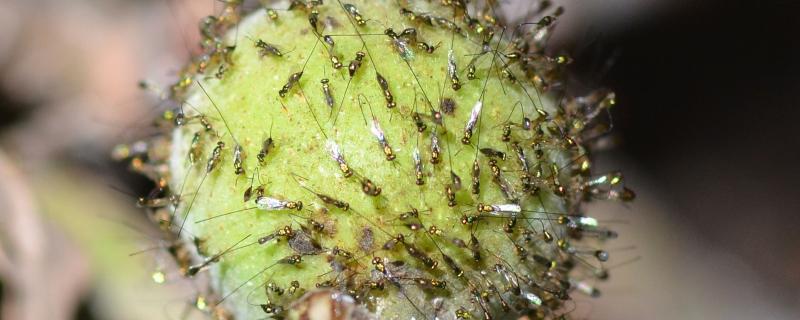
Do plants talk? Contrary to popular beliefs, plants are as equally adept in the art of signalling and communication as their animal counterparts. Prof. Renee M. Borges from the Centre for Ecological Sciences, Indian Institute of Science, Bangalore, has spent many years delving on the many aspects of plants communication and their language.

Scientists estimate that our Solar System is 4.567 billion years old. But, have you ever wondered how it was formed? How did the planets take shape from the initial gas and dust of the solar nebula and eventually, how did life evolve on Earth? What processes shaped the initial evolution of our Solar System? These fundamental questions drive Prof. Ramananda Chakrabarti and the researchers in his lab at the Center for Earth Sciences, Indian Institute of Science, Bangalore, to study rocks on Earth and from space.

Bengaluru, apart from all its glory, is also loved for its pleasant weather and surprise light showers. But what makes up the raindrops in those beautiful showers? Are these raindrops formed when fresh river water evaporates and become clouds? Do salt water bodies like seas and oceans influence the constituents of the raindrops that fall in Bengaluru? A team from the Centre for Earth Sciences (CEaS) and Divecha Centre for Climate Change at the Indian Institute of Science, Bengaluru is exploring this relationship between rain and the role of ocean in driving it. Prof. Prosenjit Ghosh, a member of the study team and a Professor at the Centre for Earth Sciences, calls this research “the journey of moisture from ocean to the land".