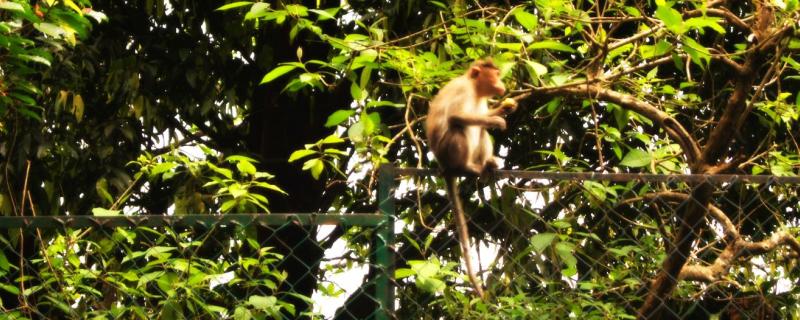
Researchers have, for the first time, reported in detail a little known source of water among great apes and Old World monkeys – a family of primates that inhabit the forests of Asia and Africa. The team, led by Prof Anindya Sinha of the National Institute of Advanced Studies, Bangalore, observed eight species of great apes and Old World monkeys (belonging to the Cercopithecidae family), drinking water accumulated in tree-holes.

Researchers from BITS-Pilani, Hyderabad, have developed a safer, fluoride-free synthesis method for metal-organic frameworks that significantly boosts their capacity to capture greenhouse gases and store clean fuels at room temperature.