Six young researchers have been named the winners of the Infosys Prize 2025, celebrating their extraordinary contributions to science and scholarship in India. The Infosys Science Foundation (ISF) announced the laureates, all under 40, who are being honoured for research that tackles some of the world’s most pressing challenges and complex theoretical problems. Their work ranges from creating absurdly fast algorithms to pioneering sustainable fertiliser production.
The winners span six categories: Economics, Engineering and Computer Science, Humanities and Social Sciences, Life Sciences, Mathematical Sciences, and Physical Sciences. Each recipient will receive a gold medal, a citation, and a substantial prize purse of USD 100,000 (or its equivalent in Indian Rupees). Eminent national and international researchers chaired the Jury for the award, including Prof. Kaushik Basu, Prof. Jayathi Murthy, Prof. Akeel Bilgrami, Prof. Mriganka Sur, Prof. Chandrashekhar Khare, and Prof. Shrinivas Kulkarni.
Inforsys Prize 2025 winners:
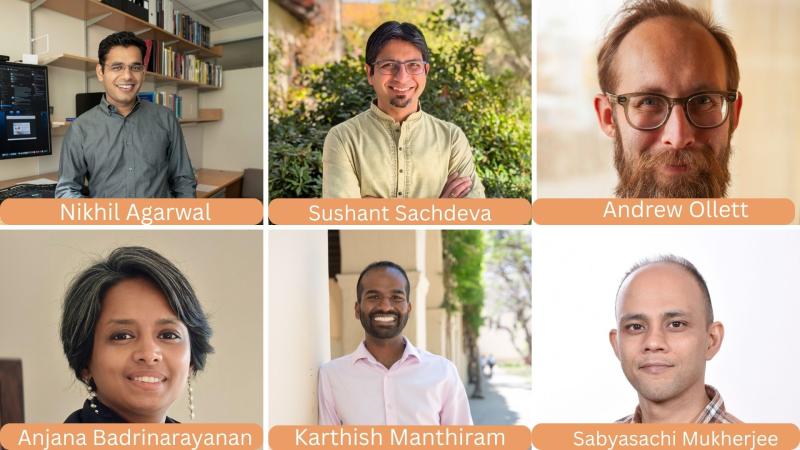
In Economics, Nikhil Agarwal, Professor of Economics at Massachusetts Institute of Technology, was awarded for his pioneering contributions to "market design," transforming how we understand and implement allocation mechanisms to improve matching problems, such as students seeking college admission or patients needing kidney exchanges.
In Engineering and Computer Science, Sushant Sachdeva, from the University of Toronto, was honoured for his insights into mathematical optimisation, which have set new standards for performance in computational problems that affect the flow of information among vital societal lifelines, like the internet and transportation networks.
The Humanities and Social Sciences award went to Andrew Ollett of the University of Chicago, who was named the world’s foremost scholar of the Prakrit languages in this generation. His scholarship, including his book ‘Language of the Snakes’, which includes a magisterial analysis of Prakrit’s cultural roles alongside Sanskrit, Kannada, Tamil, Old Javanese, and Chinese, helps us understand the remarkable cosmopolitan reach of Indian culture across Asia.
The Life Sciences prize went to Anjana Badrinarayanan, an Associate Professor at the National Centre for Biological Sciences, Bengaluru, for uncovering fundamental principles of DNA damage repair. She also identified novel pathways of mitochondrial DNA damage responses, revealing universal strategies that cells use to safeguard their genomes.
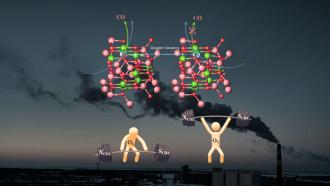
In Physical Sciences, Karthish Manthiram of California Institute of Technology (Caltech), was recognised for his pioneering work on sustainable electrochemical routes to essential chemicals, showing how renewable electricity can be used to drive the efficient synthesis of chemicals fundamental to agriculture and industry. His work on lithium-mediated ammonia synthesis and oxygen-atom transfer catalysis shows us a sustainable and energy-efficient path towards chemical production.
Finally, in Mathematical Sciences, Sabyasachi Mukherjee, an Associate Professor at the Tata Institute of Fundamental Research, Mumbai, was recognised for his original work that links two distinct areas of mathematics - the dynamics of Kleinian group actions and the iteration of holomorphic and anti-holomorphic maps in complex dynamics. His work has reshaped our understanding of conformal dynamics, which has implications in physics and fluid dynamics.
The Infosys Science Foundation (ISF) has recently shifted its focus to honour researchers under the age of 40, specifically emphasising the need for early recognition of exceptional talent.
K. Dinesh, President of the Board of Trustees, reaffirmed the commitment of the Infosys Science Foundation to promoting science and research in the country.
"The Infosys Prize continues to embody our belief that research and science are cornerstones of human progress. It reflects the Foundation’s enduring commitment to nurturing a culture that drives innovation and broadens understanding across disciplines” he said.
Based on a Press Release from the Infosys Science Foundation