Researchers from BITS-Pilani, Hyderabad, have developed a safer, fluoride-free synthesis method for metal-organic frameworks that significantly boosts their capacity to capture greenhouse gases and store clean fuels at room temperature.

Deep-dive

Coimbatore

Researchers have discovered two new species of rare ant flies in India, marking the first time in over a century that new members of this rare and unusual insect group have been identified in the country.

Bhopal

Researchers have identified the specific structural loops in G-quadruplex DNA that allow it to act as a chaperone, preventing protein clumping and ensuring healthy cellular function.

Mumbai

IIT Bombay researchers have developed an optimised thermal weathering protocol and a crucial correlation to safeguard India's iconic Makrana marble structures

Mumbai

IIT Bombay’s new deep learning framework, named SpADANet, enhances damage classification accuracy using limited labels across multiple hurricanes.

Mumbai

New evidence from Martian valley networks confirms a gradual climate shift from warm and wet during the Noachian period, around 4 billion years ago, to cold and icy by the Hesperian period, around 3 billion years ago.
Bengaluru

Physicists at the Indian Institute of Science (IISc) have discovered that pure mathematical formulae developed by Srinivasa Ramanujan over a century ago for calculating the value of pi are fundamentally connected to modern high-energy physics.

Mumbai

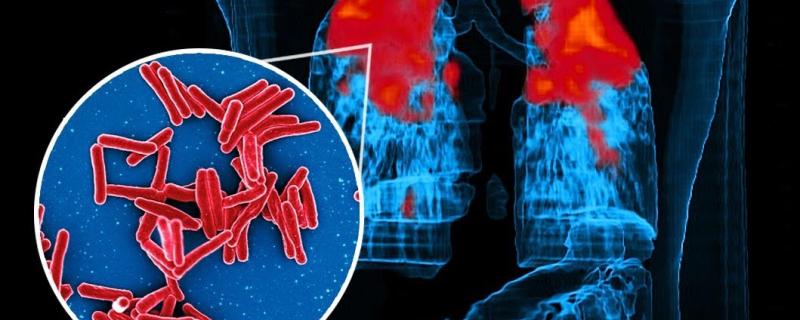
Researchers discover that TB bacteria can shield themselves from antibiotics and stay alive longer by changing their outer fat coating.

Mumbai

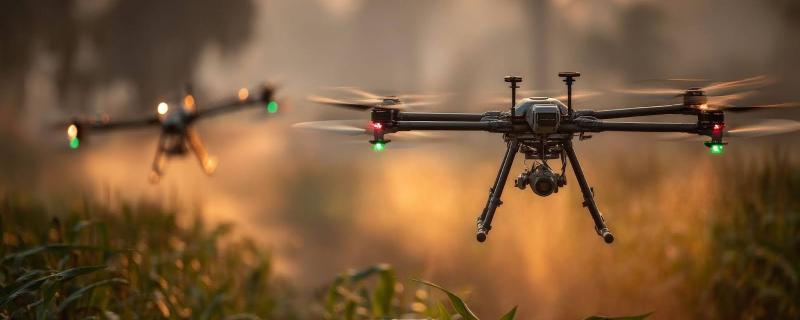
Novel scheme by IIT Bombay researchers to control drones can enable complex formation flying using only camera data, without GPS or inter-drone communication.

Dehradun

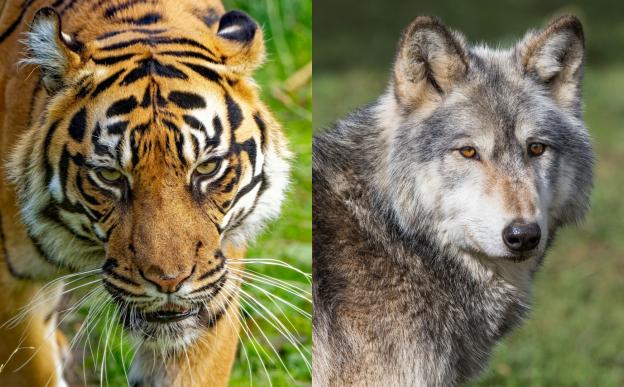
A new study reveals that while older shepherds in India revere wolves as sacred guardians, the younger generation increasingly views them as financial liabilities, posing a new challenge for wildlife conservation.

Mumbai

A collaborative study by IIT researchers shows that adding tetrapod-shaped nanoparticles to certain synthetic plastics can make them less sticky and easier to process

Search Research Matters