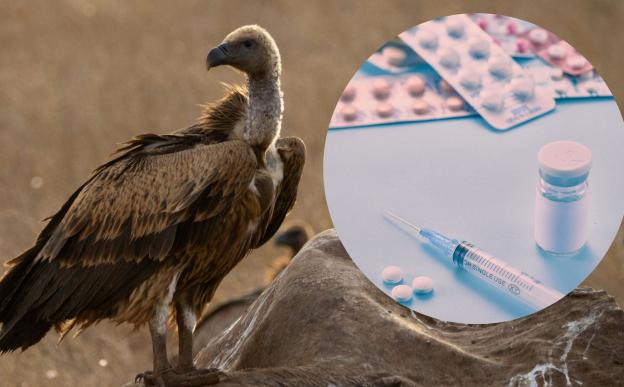
Despite successful bans on the veterinary drug diclofenac in Nepal and parts of India, a decade-long undercover investigation reveals that toxic alternatives like flunixin and nimesulide are rapidly replacing it, posing a renewed existential threat to the region’s critically endangered vulture populations.

Science

Mumbai

Scientists from Indian Institute of Technology, Bombay, find a way to convert undesirable heat energy from electronic devices to electricity and reconverting this into electricity using the concept of thermoelectric effect - a physical phenomenon where a difference in the temperature between two contacts leads to a difference in the voltage, and hence flow of electricity.
Bengaluru

Prof. Philip S. Low, a Ralph C. Corley Distinguished Professor of Chemistry at Purdue University and the Director of the Purdue University Institute for Drug Discovery, addressed a gathering of students, researchers and Purdue alumni at the Material Research Centre auditorium, Indian Institute of Science, Bangalore on the 8th of January 2018.

Bengaluru

Tigers face threats like degradation on habitats and conflict with humans that has caused their numbers in India to dwindle. When the number of members in a population goes down, the population faces another threat, inbreeding depression. Scientists from the National Center for Biological Sciences, Bangalore, study the genetic makeup of tiger populations to mediate the ill-effects of inbreeding depression.

Bengaluru

Scientists from the Tata Institute of Fundamental Research, Mumbai, Université libre de Bruxelles- Institute of Neuroscience, Belgium, Indian Institute of Science, Education and Research, Pune and Sophia College for Women, Mumbai are now a step closer to understanding how the development of neural and glial cells – the two primary cell types in our brains – is regulated in a developing brain.

Bengaluru

Prof. Baldev Raj was born on 9th April 1947. He completed his Bachelor of Engineering from the Government Engineering College, Raipur under the Pandit Ravishankar Shukla University (currently National Institute of Technology, Raipur). After completing his BE, Prof. Raj moved to Bengaluru to join Indian Institute of Science to complete his PhD and then moved to Chennai to obtain a Doctor of Science degree from Sathyabama Deemed University.

Mumbai

In a first of its kind study in India, scientists from Indian Institute of Technology Bombay (IITB) and National Institute of Solar Energy, New Delhi, conducted a detailed survey at 51 locations across India to check for the degradation in the performance of photovoltaic modules. This study, to establish reliability of the modules, could help India achieve the ambitious dream of 100 GW of solar energy by 2022.

Bengaluru

Scientists at Indian Institute of Science (IISc), Bengaluru have developed a new type of energy harvester that uses piezoelectric and electrodynamic mechanisms in a single device.

Energy harvesters are devices which converts ambient sources of energy like solar, wind, thermal or mechanical, into usable electricity. Unlike energy producers which consume fuel to produce energy, energy harvesters can only convert one type of energy into another usable form, usually electricity and often run on renewable energy sources.

Kharagpur

Most studies on air pollution focus on intra-city roads. In India, highways constitute 40% of the traffic, making it important to effects of air pollution on and near highways. Scientists from IIT, Kharagpur explore this understudied phenomenon.

Bengaluru

With swelling competition and reducing profits, staying environmentally responsible can be extremely challenging for any organization. There is therefore need to develop efficient systems that have minimum environmental impact, said Prof. Saptarshi Basu.

He was speaking at the 2nd International Conference on Sustainable Energy and Environmental Challenges (SEEC-2018) from 31st December 31 to January 3, 2018.

Bengaluru

Researchers at the Ashoka Trust for Research in Ecology and the Environment (ATREE) have proposed a new approach towards restoration of the Edeyarhalli-Doddasampige Wildlife Corridor (ED corridor) near Biligiri Rangaswamy Temple Tiger Reserve by working in collaboration with the local communities.

Search Research Matters