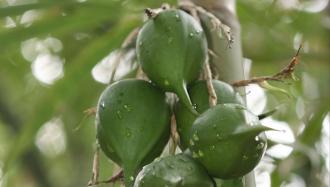
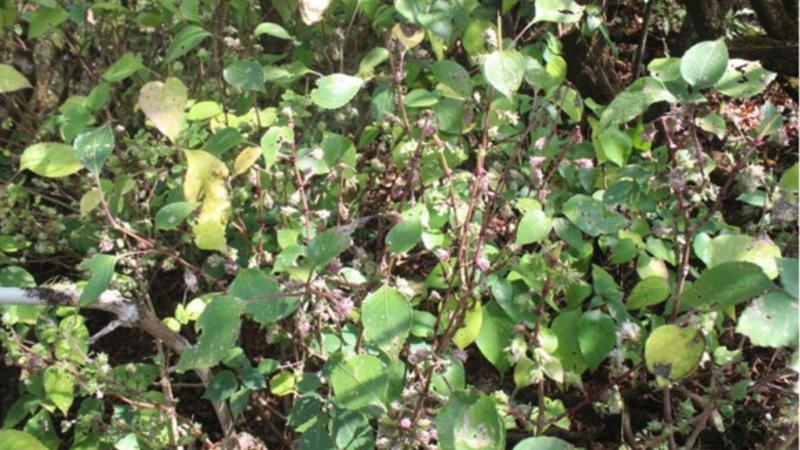
Image: Strobilanthes sharavathiensis. Credit: Savinaya M. S. https://doi.org/10.1002/njb.04888
A new species of flowering plant has been discovered in the high-altitude grasslands of India’s Western Ghats, adding a fresh member to the region's rich botanical history. Named Strobilanthes sharavathiensis, the new species was identified by a team of researchers from the Srishti Manipal Institute of Art, Design and Technology, Panchavati Research Academy for Nature, Karnataka University, and Kuvempu University.
The discovery was made during a floristic exploration of the shola grasslands, the unique high-altitude rolling grasslands and patches of forests found in the Western Ghats in southern India. While surveying seasonal stream channels, the team noticed a shrub growing to up to 2 metres tall that stood out from the local vegetation. Although the plant initially resembled a close relative, Strobilanthes jomyi, distinct physical differences suggested it was new to science.
To confirm their suspicions, the researchers employed Scanning Electron Microscopy (SEM) to examine the microscopic structure of the plant’s pollen. The investigation revealed several unique characteristics that set Strobilanthes sharavathiensis apart from its cousins. Unlike similar species, this plant features a pendulous spike inflorescence, meaning its flower clusters hang downward rather than standing upright. Additionally, the reproductive parts of the flower, known as stamens, extend visibly beyond the petals, and under the microscope, the pollen grains displayed a unique spheroidal shape with a spiky surface.
The name of the new species, Strobilanthes sharavathiensis, pays homage to the specific landscape where it was unearthed. The researchers chose to name it after the Sharavathi River, a major west-flowing river in the region celebrated for its stunning valleys and rich variety of plant life. Since the discovery was made deep within the river’s catchment area in the Ambaragudda shola grasslands of Karnataka, the name serves as a permanent geographical marker, linking the plant forever to the unique ecosystem that sustains it.
Locally, plants in this genus are collectively known as ‘Gurugi,’ with communities often using specific prefixes to describe different varieties based on their size or appearance. Currently, the new species has only been found in the Ambaragudda region, thriving in habitats well-exposed to sunlight but partially shaded by stunted trees. Because it has currently been found in only one location, the researchers have suggested it be categorized as ‘Data Deficient’ under International Union for Conservation of Nature (IUCN) criteria, urging that further studies are needed to understand its population size and ensure the protection of this rare addition to the Western Ghats' ecosystem.
This article was written with the help of generative AI and edited by an editor at Research Matters.