Science

In the present time, with increasing demand for transportation fuels coupled with declining reserves of crude oil, scientific communities are forced to focus on renewable fuels. Although biofuels obtained from energy crops such as food and non-food energy crops act as renewable fuels, various issues such as food versus fuel debate, biodiversity loss and their effect on the land has shifted the idea of energy production towards other alternative biofuel producers like waste materials and microorganisms.

[field_op_main_image]

India is one of the 17 megadiverse countries in the world and home to a vast expanse of natural habitats from evergreen forests to grasslands. These natural havens have over the past years faced many threats from humans, but the largest threat that Indian wildlife faces is poaching. How can these vast expanses be constantly monitored in order to protect our unique wildlife? Researchers and forest officials have come up with many ingenious methods using the latest technology to take action against this threat. From realtime videos accessible on smartphones to DNA analysis - read more about how our wildlife is being protected from poachers.


[field_op_main_image]

Climate change and anthropogenic pressure are affecting natural environments world over. In this scenario how vulnerable are forests? If we keep growing at the rate we are growing now, what impact will it have on our forests in the years to come? Scientists from Indian Institute of Science and Wildlife Institute of India explore these far reaching questions in an Indian context. Their findings show that many forests are under considerable stress. The researchers say a perception change can help protect our forest.

Welding is a process that has been used to sculpt metal from the renaissance periods. Over the ages, it has become one of the key processes in making several consumable and artistic materials.  Though there is mechanization in most industries, this field still has over 5 million people working in it. The massive industry, comes with its own set occupational hazards. Welding releases a cocktail of toxic gases, heavy metals and nanoparticles. Even upon exercising great care and protection, these substances can still be inhaled by the workers.

Black holes are the celestial objects with such immense gravity that nothing can escape from them -- not even light!

Einstein's theory of General Relativity tells us that space and time are intertwined. This space-time can be curved and warped by anything that has mass, like the sun or earth. Gravity is not a force that attracts objects like magnetism, but is the result of this curve in space-time.

Ever wondered if natural surroundings give out subtle hints before going through landscape level transformations? Scientists from Princeton University (USA) and Indian Institute of Science (India), have collaborated to try and figure out if there are any such hints or signs in nature, which can help in predicting transformations within grassland and woodland habitats in Serengeti-Mara.

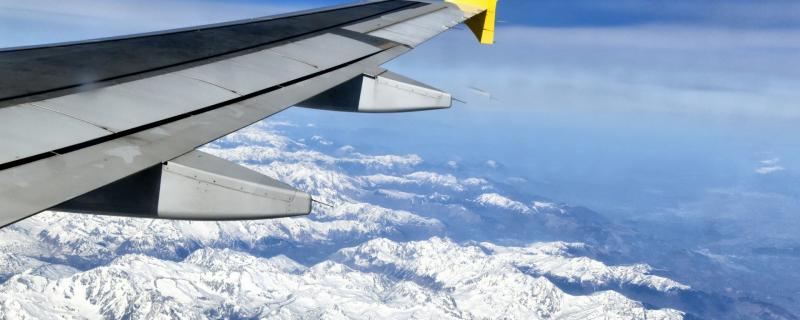
Research at the Indian Institute of Science, Bengaluru and Vikram Sarabhai Space Centre, Thiruvananthapuram indicates that black carbon (BC) aerosol emissions from aircrafts could be impacting the stratospheric ozone layer. Aerosols are minute particles suspended in the atmosphere that interact with incoming and terrestrial radiation affecting the earth’s climate. Some aerosols, such as sulphates and,  nitrates cool the atmosphere. BC, on the other hand, is a positive climate forcing agent, absorbing radiation across a wide range of wavelengths.


[field_op_main_image]

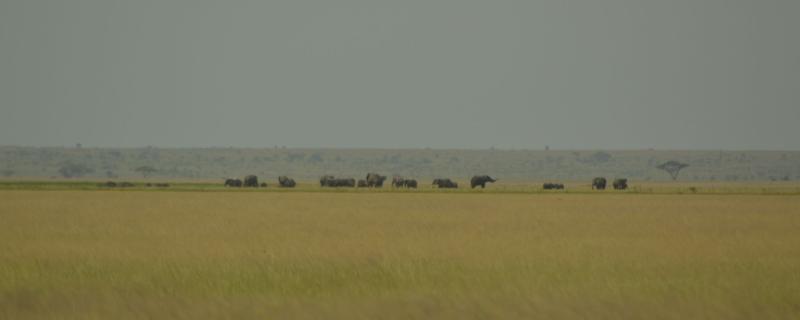
 It is in the best interest of a tree to ensure that its seeds are dispersed to far off places where they can get good sunlight and nutrition to grow. This is carried out by the help of frugivores, who eat fruits and transport seeds in their gut. A recent study illustrates how irreplaceable elephants are as seed dispersers using computer simulation and three species of trees with large fruits. The study shows that in the absence of elephants no frugivores can disperse seeds as far or as efficiently.

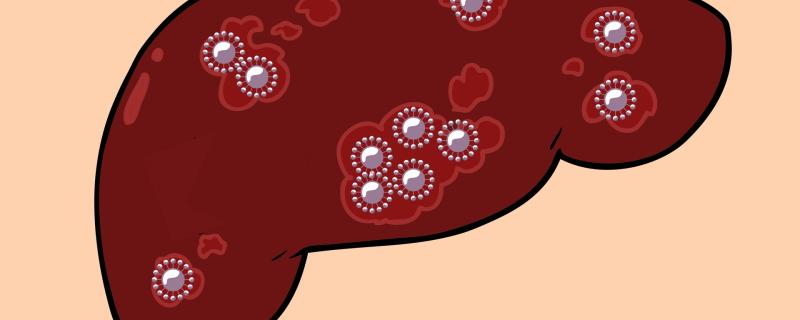
Hepatitis C Virus (HCV) affects 6-11 million people in India. Chronic HCV infection is the leading cause for liver-related deaths worldwide. In India, HCV infection was estimated to be responsible for 59,000 deaths in the year 2015. Moreover, untreated HCV infection could also lead to substantial economic burden. However, the advent of directly acting antivirals (DAAs), is proving to be a game changer in HCV treatment. Directly acting antivirals target specific enzymes and the genetic material in HCV, hence stopping the spread of the infection.

Search Research Matters