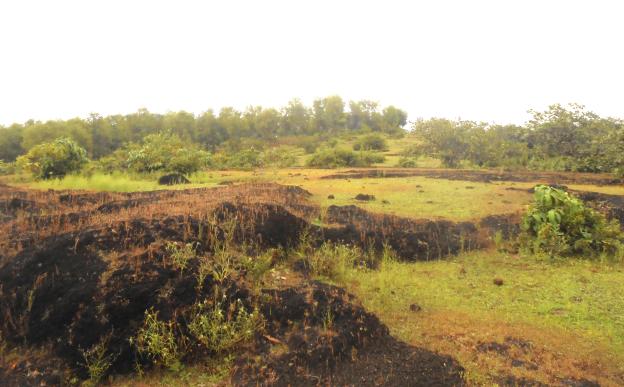

A new open-source satellite tool has revealed the critical ecological and economic importance of India’s Open Natural Ecosystems, challenging the colonial-era classification of these biodiversity hotspots as unproductive wastelands.

Technology

Ever wondered how an ATM card stores information? Most of us are aware that the black strip at the back of the card plays an important role in this process. How it works though, isn't as common a knowledge.

The black strip found at the back of most smart cards is essentially a band of magnetic material. Different materials respond differently to a magnetic field. Iron for example, gets ‘magnetized’ in the presence of a magnet, whereas a piece of wood does not.


Thiruvananthapuram

Cervical cancer plagues the life of many women around the globe. Sometimes the disease can be caused by an aggravated and repeated infection by the Human papilloma virus (HPV). Researchers from the Cancer Research Program, Rajiv Gandhi Centre for Biotechnology (RGCB) in Kerala, use gene editing molecules rid the virus of the genes, which form a protein that can cause malignancy in humans.

An international team of scientists from University of Glasgow, UK, Chinese Academy of Sciences, China, Institute of Solar Terrestrial Physics, Russia, West Kentucky University, USA, National Academy of Sciences of Ukraine, Ukraine and Indian Institute of Science, Education and Research (IISER)- Pune, India have proposed a novel method to accurately study radio observations of the sun.

A team, including scientists from University of California, Santa Barbara, USA and Indian Institute of Technology -Kanpur, have developed a new technique to reduce the amount of carbon dioxide produced while making hydrogen. The new method not only reduces the amount of greenhouse gases, but also allows for the reuse of carbon that is produced in the reaction.

Kanpur

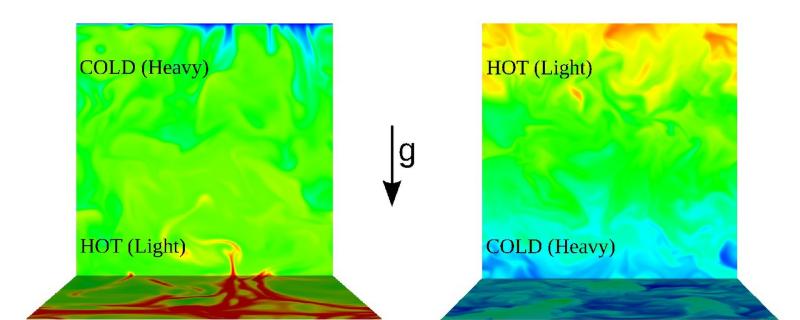
When energy is supplied to a fluid, it flows. As this energy is increased the flow becomes turbulent. If the energy is provided through heat, we see buoyancy driven turbulence, where the hotter fluid rises to the top and colder fluid moves to the bottom. A conjecture that explained such buoyancy driven turbulent flows may now be overturned. New insights gained in a study using one the world’s most powerful supercomputer could help better explain such flows. 

Humans have used nanoparticles since antiquity. Stone age workers, artists during the renaissance, and ancient metallurgists have all used nanoparticles either for decorations or to enhance the properties of materials.

There are plenty of activities we as humans perform each day, which requires incredible amount of coordination between the different parts of our body. A simple act of lifting a book requires, first your eye to pin-point the book, next it guides your hand to clasp the book and then lift it up. Sounds complicated. Yet, each day, we can lift things up, catch fast moving objects, and ride very fast on the bike, hardly noticing what our hands our doing, while swerving through the traffic.

We live in a world where day to day objects seems to be getting smaller and better. The advent of nanotechnology is a major contributing factor to this phenomenon. Defined as the “engineered construction of matter at the molecular level”, nanotechnology has applications and uses in a multitude of fields. From medicine, electronics, food, clothing, batteries and environment, nanotechnology seems to be pushing the limits of all these fields. Now, scientist have discovered yet another novel application of nanotechnology – facilitating soil microbial growth.

Bengaluru

[field_op_main_image]

Although Solar energy has been often hailed as a green source of energy, shortcomings in conventional silicon based solar cells and the environmental damage caused during mining and manufacturing of such cells raises questions on the green nature of the energy. In a breakthrough, scientists have developed organic solar cells, developed from indigenously developed discotic liquid crystal, that could provide an alternative.

Rapid Industrialization and technology development have placed a high demand on fossil fuels and other energy sources. While fossil fuels are still the most efficient of the energy sources, their adverse effects on the climate along with diminishing oil reserves, has prompted scientists to look for other, environmentally friendly options of fuels. While renewable energy alternatives like solar and wind, can be quite expensive, cheaper alternatives have been the quest for many scientists. One of the promising candidates has been Biofuels.

Search Research Matters