
New research shows the complex and often contradictory machinery behind one of conservation’s most controversial questions: when is it acceptable to kill a protected animal? As human populations expand and wildlife habitats shrink, conflicts between people and large carnivores are becoming increasingly frequent. However, a new comparative analysis of tiger management in India and wolf management in Germany suggests that the decision to use lethal force is rarely a straightforward calculation of public safety. Instead, it is a complex social equation in which ancient cultural beliefs, modern political polarisation, and bureaucratic hurdles weigh far more than the animals' biological reality.
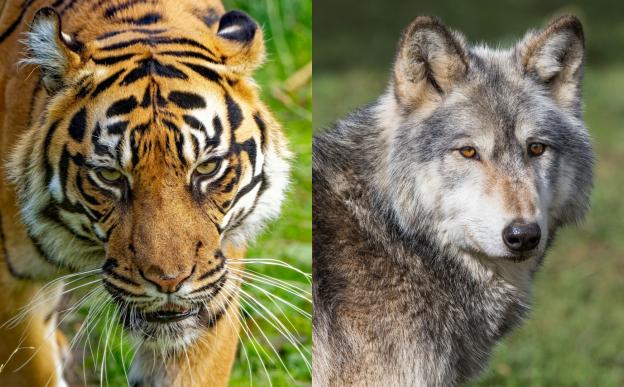
The study, led by Martin Luther University Halle-Wittenberg, Germany, and the Wildlife Institute of India, examined the contrasting worlds of the Indian tiger and the German wolf. These nations represent differing conservation principles, especially regarding lethal measures. India hosts 75 per cent of the global tiger population and deals with dangerous encounters that can lead to human fatalities. Germany, on the other hand, is grappling with the return of the wolf after a two-century absence. This situation threatens livestock but poses almost no direct threat to human life. Despite these differences, both nations face the same fundamental dilemma of how to manage the coexistence of humans and apex predators in crowded, human-dominated landscapes.
Did You Know? One of the most famous cases in India involved a tigress named T1, or Avni, who was accused of killing 13 people. Her pursuit involved thermal drones, paragliders, and elephants, sparking a massive national debate before she was eventually shot in 2018. |
By analysing 44 legislative documents and conducting extensive interviews with 47 experts, including government administrators, scientists, and activists, the researchers of the new study found that the kill-or-no-kill debate is fundamentally shaped by what they term the sociocultural context.
The researchers used the Institutional Analysis and Development (IAD) framework, a tool for understanding how rules, norms, and physical settings shape human behaviour in complex situations, especially in managing shared resources (commons), like forests or water. It allows social scientists to look beyond a predator's biological behaviour and examine the human systems that govern it.
Through this lens, they discovered that India operates on a system of embedded tolerance. Despite tigers' lethal potential, Indian culture, religion, and mythology have historically revered the big cat. This cultural backdrop creates a surprisingly high threshold for lethal intervention. In India, a tiger is typically only declared dangerous to human life, a designation required for lethal control, after it has killed multiple people. Decision-making power is highly centralised, resting with the state's Chief Wildlife Warden, who must balance intense local grief and anger with national conservation laws.
Conversely, the study characterises the situation in Germany as one of conditional tolerance. Having lived without wolves for 200 years, the German public lacks the generational knowledge of how to live alongside them. While urban populations often romanticise the wolf as a symbol of returning wilderness, rural communities view them as a threat to their economic livelihood, specifically sheep farming.
The research highlights that in Germany, the wolf has become a political symbol in a culture war between left-wing environmentalists and right-wing agricultural advocates. Consequently, the decision-making process is gridlocked. Even when a wolf is legally targeted for preying on livestock, the bureaucratic process is so complex, involving layers of EU and state laws, that lawsuits from NGOs often stall implementation. The study notes that German authorities struggle to act even when the law theoretically allows it, paralysed by the fear of political backlash and legal challenges.
This research moves beyond the binary argument of whether lethal control is right or wrong, or the ethics of killing, or the biological effectiveness of removing a predator. It instead employs a heterologous horizontal axis comparison, a method that compares different cases without forcing them to look the same. It acknowledges that while the biological problem (carnivores eating things humans value) is similar, the societal immune response is vastly different. It highlights that coexistence is not a static goal but a dynamic negotiation. In India, coexistence persists despite danger because of cultural resilience. In Germany, coexistence is fragile because it is being built from scratch in a polarised political climate.
The study also found that both India and Germany rely on reactive, rather than proactive, management. In India, authorities often wait for a tragedy to occur before intervening, driven by resource constraints and a reliance on crisis management. In Germany, reliance on high-tech evidence, such as waiting for DNA analysis to confirm which wolf attacked a sheep, creates delays that render management ineffective. By the time the problem animal is identified, it may have moved on, or the window for legal action may have closed. The researchers also noted that their analysis is based on current legislative frameworks, which are in flux, particularly with the recent down-listing of the wolf's protection status in Europe.
As carnivore populations recover globally, a phenomenon known as rewilding, more communities will face these conflicts. The study serves as a wake-up call for policymakers, suggesting that science alone cannot solve these disputes. For conservation to be sustainable, governments must design institutions that respect local cultural values and address political grievances. For India, this means empowering local communities rather than just imposing top-down decisions. For Germany, it means acknowledging that technical solutions, like electric fences or DNA testing, are useless if the public does not trust the people making the decisions. Ultimately, the work suggests that to save the predator, we must first understand the people living next door to it.
This article was written with the help of generative AI and edited by an editor at Research Matters.