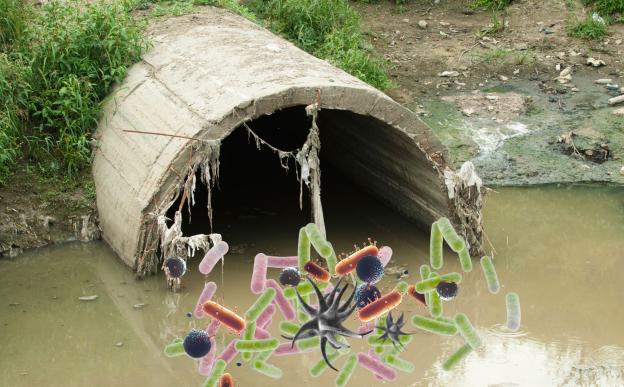
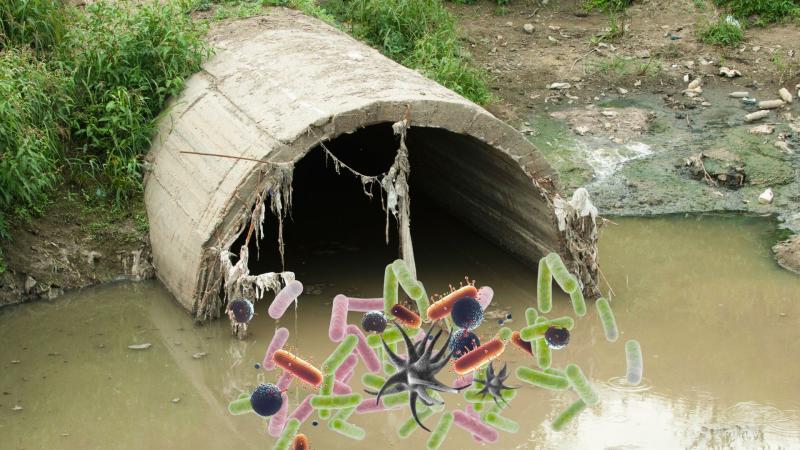
Urban sewage systems across India are acting as vast evolutionary laboratories for antibiotic-resistant bacteria, according to a major new study. Researchers investigating wastewater across six Indian states have discovered that our sewers are teeming with high concentrations of antibiotics and a terrifying array of superbug genes. The study, conducted by BRIC-Translational Health Science and Technology Institute (THSTI), the University of Cambridge, the University of Calcutta, and the National Institute of Pharmaceutical Education and Research (NIPER-Guwahati), reveals a direct genetic link between bacteria found in urban drains and the dangerous pathogens currently causing hard-to-treat infections in hospitals. This study once again highlights the larger role of the environment in the global health crisis of antimicrobial resistance (AMR).
To uncover these findings, an international team of scientists analysed 381 sewage samples collected between June and December 2023 from states including Haryana, West Bengal, and Assam. They employed a multi-pronged approach to map this invisible threat. First, they used a technique called QTRAP mass spectrometry, which can measure the different molecules and their ratios in a compound. The team used it to measure the exact levels of eleven different antibiotics.
Did You Know? In a process called horizontal gene transfer, bacteria can actually pass resistance kits to each other like students sharing notes before a test, even if they aren't the same species |
They found that drugs like Kanamycin and Azithromycin were present in over half of the samples, often at levels high enough to train bacteria to become resistant. Following this, the team used DNA sequencing, specifically 16S rRNA and shotgun metagenomics, where random DNA strands are sequenced. They used these techniques to identify the types of bacteria present and the specific resistance genes they carried. They identified over 170 distinct antibiotic resistance genes, many of which allow bacteria to survive even the most powerful last-resort drugs.
The explosion of AMR microbes in sewage is explained by a phenomenon called horizontal gene transfer. In the crowded, nutrient-rich environment of a sewer, different species of bacteria can physically swap snippets of DNA known as mobile genetic elements. These elements act like instruction manuals for survival, teaching harmless environmental bacteria how to resist antibiotics. When these bacteria eventually make their way back to human populations through contaminated water or soil, they bring these survival manuals with them, turning common infections into life-threatening ones. The researchers even developed a new, low-cost dipstick test, similar to a pregnancy test, that can quickly detect these resistance genes in the field without the need for expensive lab equipment.
This research provides the first large-scale, integrated view of both chemical pollutants (antibiotics) and biological threats (resistant genes) in Indian wastewater. While earlier studies were often small-scale or focused only on one city, this study captures the geographic and temporal diversity of the problem. However, the authors noted that the study spanned only seven months, potentially missing seasonal variations, and focused primarily on urban centres, leaving the situation in rural India largely unknown.
Nevertheless, by monitoring our sewage, scientists can predict which superbugs are likely to cause the next outbreak before they even arrive at hospital doors. It advocates for a One Health approach, recognising that human health is inextricably linked to the health of our environment. Improving wastewater treatment and regulating how we dispose of medicines could be the key to ensuring that antibiotics, one of the greatest inventions of modern medicine, continue to work for generations to come.