The missing mass -- what is causing a geoid low in the Indian Ocean?
The Earth’s interior is still a mystery to us.
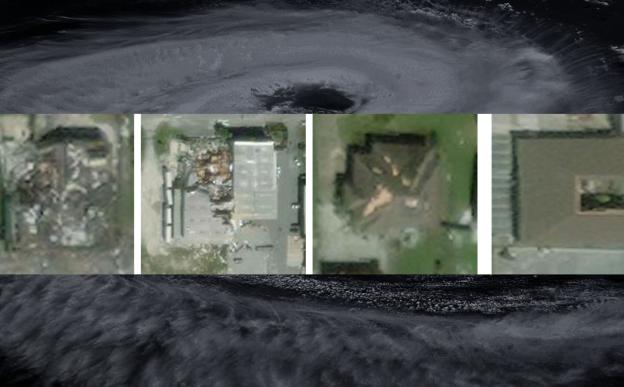
IIT Bombay’s new deep learning framework, named SpADANet, enhances damage classification accuracy using limited labels across multiple hurricanes.
The Earth’s interior is still a mystery to us.
In July this year, the Moderate Resolution Imaging Spectroradiometer on NASA’s Aqua satellite photographed a major chunk of glacial ice shelf (5,800 sq. km) breaking off from one of Antarctica’s floating ice platforms, called Larsen C, shrinking its size by at least 10 percent.
The Indian subcontinent is prone to a large number of natural disasters. The 58% of the landmass is prone to earthquakes and 12 % to floods. 68% of country’s agricultural land is prone to droughts. Apart from these, bad policy making and unplanned development has also contributed to man-made disasters in the country. On the occasion of International Day for Disaster Reduction, learn about the the measures the country has already taken and what more can be done, to reduce the devastation caused by disasters.
Come summer, and we all struggle with availability of fresh and safe water. Have you ever wondered what can be done to conserve enough water when it rains, so that we don’t have to suffer from water scarcity in the summers? India is the largest groundwater user with unchecked groundwater consumption by farmers, industries, urban and rural citizens alike. While the country supports 18% of the world’s population, it has only around 4% of the freshwater resources.
As a part of the Student Conference on Conservation Science held on the 23rd of September in Bangalore, Artecology presented a unique combination of performing arts and science. Titled "How to be a Fig", this movement art presentation was a hit among the attendees that included ecologist, conservationists, artists and dancers. How exactly was the performance? Read on to know.
Approximately 75% of the emerging infectious diseases and 60% of all human diseases are zoonotic in nature, i.e. they are are caused due to the spread of infection between animals and humans. Leptospirosis, a zoonotic disease is a bacterial infection caused by the pathogen spirochetes and reports an estimated 1.03 million cases and 58,900 deaths each year. Leptospira contains 250 antigenically diverse species and due to these distinct variations in the bacteria --called serovars, creating a cross-protective vaccine against the disease is challenging.
Dams and other hydrological barriers are essential for the production of hydroelectricity and to direct water to water-deficient areas. But the presence of these structures are known to interfere with the ecology of the river, affecting the flora and fauna inhabiting it. The western ghats of India are home to many endemic fish species which are affected by these hydrological structures. Recent study from ATREE shows what can be done to ensure that the biodiversity in the Western Ghats is not lost to hydrological structures.
In the present time, with increasing demand for transportation fuels coupled with declining reserves of crude oil, scientific communities are forced to focus on renewable fuels. Although biofuels obtained from energy crops such as food and non-food energy crops act as renewable fuels, various issues such as food versus fuel debate, biodiversity loss and their effect on the land has shifted the idea of energy production towards other alternative biofuel producers like waste materials and microorganisms.
India is one of the 17 megadiverse countries in the world and home to a vast expanse of natural habitats from evergreen forests to grasslands. These natural havens have over the past years faced many threats from humans, but the largest threat that Indian wildlife faces is poaching. How can these vast expanses be constantly monitored in order to protect our unique wildlife? Researchers and forest officials have come up with many ingenious methods using the latest technology to take action against this threat. From realtime videos accessible on smartphones to DNA analysis - read more about how our wildlife is being protected from poachers.
Climate change and anthropogenic pressure are affecting natural environments world over. In this scenario how vulnerable are forests? If we keep growing at the rate we are growing now, what impact will it have on our forests in the years to come? Scientists from Indian Institute of Science and Wildlife Institute of India explore these far reaching questions in an Indian context. Their findings show that many forests are under considerable stress. The researchers say a perception change can help protect our forest.