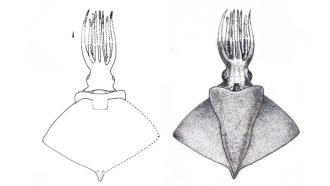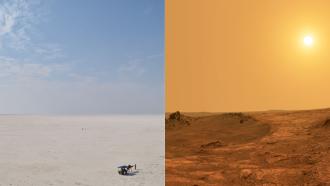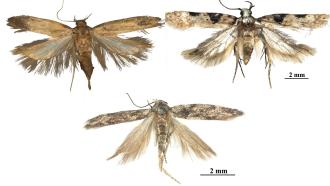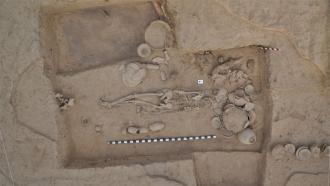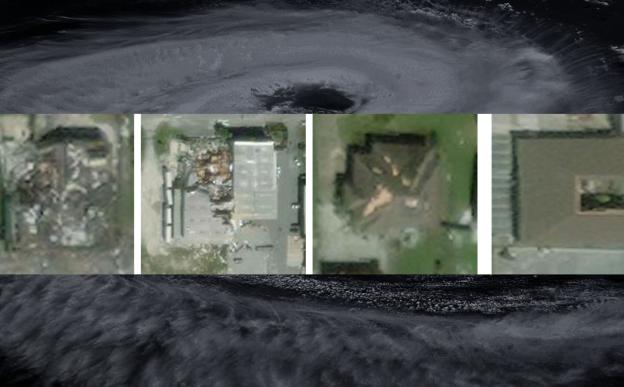
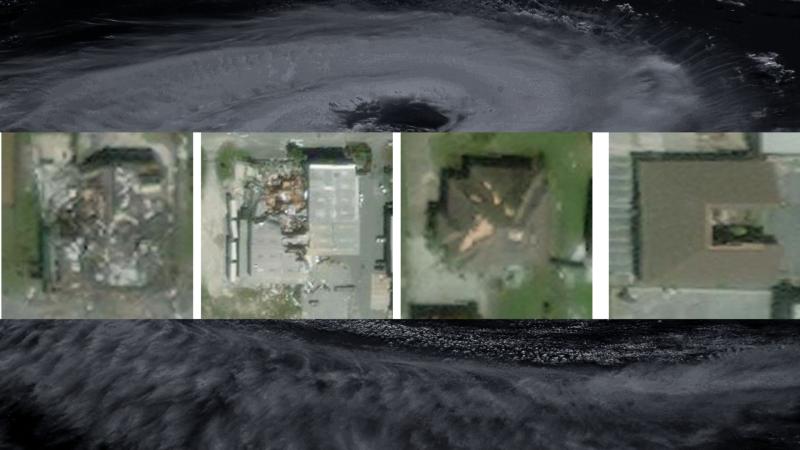
Building damage classes for Hurricane Michael: (from left to right) destroyed, major damage, minor damage, and no damage. (Talreja and Durbha, 2025)
Shakhti, Montha, Senyar, Ditwah… The Indian Ocean gave birth to four powerful cyclonic storms in just the two months of October and November 2025, killing hundreds and devastating coastal communities across India, Sri Lanka, and East Asia. Cyclones and hurricanes are among the most destructive forms of weather events, often leaving entire communities and even cities in ruins within hours. Today, relief teams across the world increasingly rely on aerial images to assess damage to buildings and other infrastructure during such disasters. But a timely response also depends on how well we can interpret the data on these visual datasets.
Captured by drones or satellites, these images are often cluttered and exhibit significant variations in features from region to region. While human assessment takes time, artificial intelligence (AI) models are being employed now to assess damage faster. But every storm looks different. Lighting conditions, landscapes, camera settings, damage patterns, and even building materials vary. For example, an AI model trained to spot collapsed buildings after Cyclone Montha’s impact in Andhra Pradesh may not be able to reliably assess aerial shots from after Cyclone Ditwah’s devastation in Sri Lanka. This problem is known as the domain gap.
Now, researchers from the Indian Institute of Technology Bombay have developed a novel solution to address such domain gaps: a spatially aware domain adaptation network (SpADANet). As the name suggests, the model is ‘spatially aware’, meaning it can recognise damage patterns that are defined by location and context, not just colour or shape. While ‘domain adaptation’ refers to the model’s ability to reuse its prior knowledge and rapidly adjust using limited labelled examples, ‘network’ refers to the model’s architecture, which is an artificial neural network.
Overall, SpADANet refers to an AI model designed to ‘adapt’ across different storms, even with a limited number of labelled samples from ground zero. The findings of the study, published recently in the IEEE Geoscience and Remote Sensing Letters, demonstrate that SpADANet achieves more than 5% improvement in damage classification accuracy compared to existing methods across different hurricanes.
“The existing models consider the problem of domain gap in a statistical sense, but often ignore the spatial context. Spatial context is basically the arrangement and relationship of any spatial object (like buildings) within an image, which is the heart of SpADANet,” explains Pratyush Talreja, a PhD Candidate and Prime Minister's Research Fellow at IIT Bombay and also the first author of the study.
Further, the researchers have even optimised the model to run with limited computing power, and it can be used on tablets and phones as well. This feature makes it a handy tool in the field and addresses a genuine bottleneck in disaster response, particularly for regions with limited resources. While the researchers tested the model on hurricanes in the US, they are confident that the framework can be applied globally for damage assessments with appropriate local imagery. SpADANet can generalise effectively across varied environments, but modest amounts of locally labelled data enhance its adaptation performance and reliability, says Talreja.
“Agencies like NDMA (National Disaster Management Authority in India) face three main constraints: lack of labelled data, limited computing resources, and regional differences (domain gap) in the image characteristics. SpADANet can help overcome these barriers as it learns from fewer labels, adapts to new regions, and can run on modest hardware once trained. With continued collaboration between the researchers and the government agencies, such AI models can soon become part of near-real-time disaster response systems,” highlights Talreja.
SpADANet is developed using ResNet as the background model, which is a type of deep neural network with proven superior image pattern recognition abilities. The study tests the model across Hurricanes Harvey (2017), Matthew (2016) and Michael (2018). Even when only 10% of the new disaster's images had human-verified labels, SpADANet outperformed existing methods, namely DANN, MDD, MCC, and ResNet + CORAL, both in terms of classification accuracy and reliability.
Labelling satellite imagery is slow and expensive, as each image needs a human eye to mark whether a building is destroyed or lightly damaged. Therefore, a reliable assessment using minimal labelled samples is critical for a timely response. The findings, therefore, emphasise the effectiveness of domain-aware learning in real-world disaster response settings. While the results look encouraging, the ways that SpADANet employs to perform domain adaptation are also novel.
“SpADANet first teaches itself by studying unlabeled images from a domain (hurricane study area) by employing a process called self-supervised learning. This helps the model understand general visual patterns, such as how undamaged and damaged buildings or debris appear in aerial photos. By the time it sees labelled data, it already has a strong sense of what to look for in the data,” elaborates Prof. Surya Durbha, who led the study.
After introducing self-supervised learning, the researchers further enhanced the model using a new module called the Bilateral Local Moran’s I (BLMI). Moran’s I is a widely used statistical method to spot groups of similar patterns that appear close together in an image. BLMI builds on this idea to help the model understand how nearby pixels relate to each other. This means the model doesn’t just see what the damage looks like; it also understands where and how it appears in a broader sense. In other words, the model does not judge a patch solely by its colour or shape, but also by how neighbouring patches relate to one another, enabling SpADANet to recognise damage patterns based on location and context.
In essence, SpADANet makes sure each damage category, like 'no damage', 'minor damage', 'major damage', 'destroyed', matches properly across different hurricanes. It learns to recognise that a “destroyed” building in one storm should look like a “destroyed” building in another, even if the lighting, materials or layouts differ. This means a destroyed roof in one hurricane is treated the same way as a destroyed roof in another to avoid mix-ups across geographies. The BLMI module strengthens the model’s ability to read spatial patterns, and the self-supervised learning step helps it adapt to a new hurricane smoothly, even when only a few labelled examples are available.
However, researchers highlight that factors such as the availability of standardised datasets and data-sharing limitations from the agencies may pose a short-term barrier to immediate large-scale implementation. The researchers are aware of these bottlenecks and are working to overcome them. Looking ahead, the team plans to further build on this model. Their next step in this research is integrating multimodal data, such as combining images with LiDAR data. In a warming world, where both frequency and intensity of hurricanes continue to increase, a faster, cheaper damage assessment tool like SpADANet can prove critical for a timely and reliable damage assessment.
Note:
Interestingly, earlier this year, a different team from Japan published an unrelated model with a very similar name (SPADANet) in the International Journal of Disaster Risk Reduction. However, this is distinct from IIT Bombay’s SpADANet, and the researchers confirm that the similarity in name is purely coincidental.
“Our SpADANet is built as a domain-adaptive network that leverages a novel BLMI (Bilateral Local Moran's I) module and class-wise CORAL (CORrelation ALignment) loss function, to enable ‘domain adaptation’. But domain adaptation is neither the aim nor is it mentioned anywhere in the Japan team's work. Their work is related to damage assessment and change detection. We specifically perform self-supervised domain adaptation by taking into account different percentages of samples from the target domain so that we can learn domain-invariant features. This way, our SpADANet is fundamentally different from the SPADANet model from Japan,” explains Talreja.
The Indian model is developed independently for hurricane damage assessment using ResNet as the background, adding spatial awareness and self-supervised learning to achieve domain adaptation.