General

Manipal

The allopathic system of medicine that treats symptoms of diseases using drugs came into existence in the 19th century. Before that, traditional medicines were common in many Asian countries, including India. A common drawback of allopathic medications is their undesired side effects caused by the adverse reactions of specific drug compounds with parts of our body. This has now rekindled interests among scientists in many traditional forms of medicine which are known to have no side effects.

Bengaluru

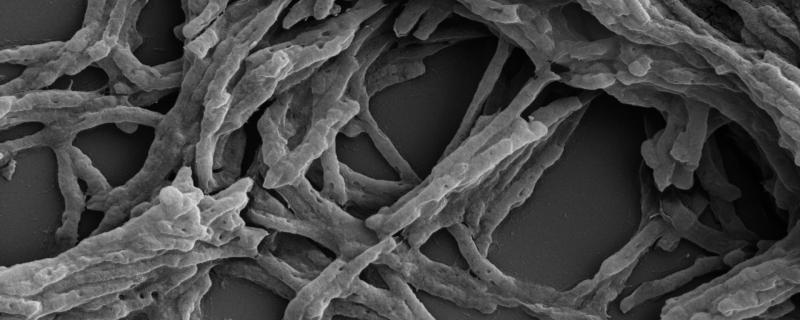
Our genetic material is a big molecule of DNA or deoxyribonucleic acid, whose structure is a double-stranded wound-up helix. It contains specific instructions that run a living cell, and these instructions are written on the strands. When cells divide, the DNA replicates too. In this process, the contents of the strands are read and copied carefully by unwinding the strands. But that's not as simple!

Bengaluru

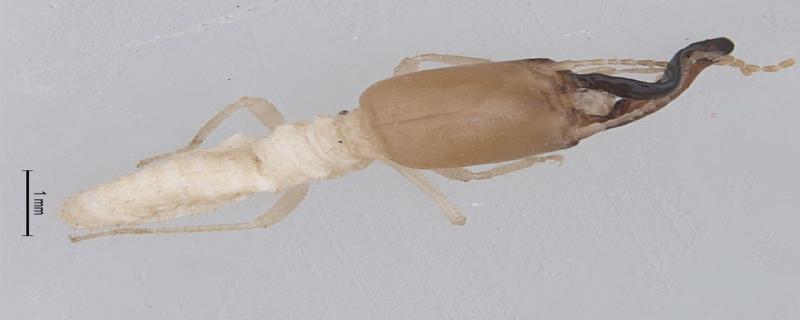
In a recent study, scientists have discovered two new species in the Western Ghats of Kerala, India. To date, this group of termites has been documented only in the Western Ghats of India. The termite species were named after Sri K.A. Dineshan and Sri. Manikandan Nair of the Zoological Survey of India, Kozhikode, who collected the samples from the field and contributed greatly to the entire faunal survey.

Bengaluru

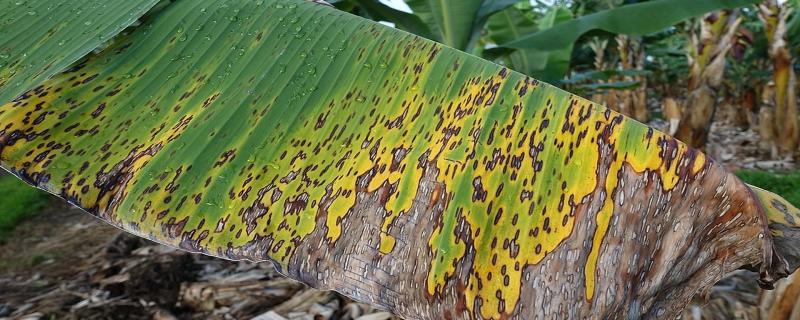
Banana, a nutritionally-rich, delicious fruit, is a widely-cultivated crop across the world and is a staple diet of people living in parts of Africa, Asia and Latin America. Due to pests and diseases, only 13% of the global production is traded, and often, farmers in India experience severe loss due to fusarium wilt or Panama disease. A novel innovation now aims to change the fortunes of banana growers by helping them detect diseases and pests with their smartphone. In a recent study, researchers from the USA, Democratic Republic of Congo, Uganda, Ethiopia and India have developed a banana pest detection app powered by artificial intelligence (AI).

Bengaluru

This study, by researchers from Hungary, India, France and the USA, explored the potential of some new chemical compounds as therapeutic agents against tuberculosis. Such compounds represent new possibilities for further anti-TB drug development.

Bengaluru

A new study by researchers at the WHO attempts to throw some insight into how many boys and girls, between the ages of 11-17 years, are physically active across the globe. The study, published in the journal The Lancet Child and Adolescent Health, analysed data from 1.6 million students in that age group during the years 2001-2016. It found that most adolescent boys and girls—four in five—aren’t as physically active as they ought to be in 2016.

Bengaluru

In a recent study, researchers from Anna University, Chennai, quantified the volume of virtual water trade in India. The study, published in the journal Groundwater for Sustainable Development, focussed on the trade exchange of popular crop and livestock products during the years 2006–2016.

Bengaluru

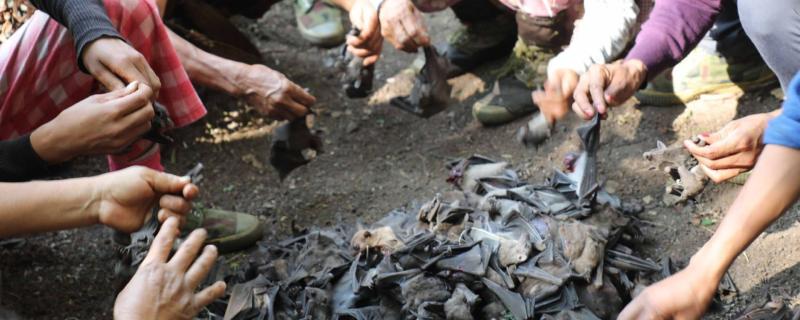
Sometime in the middle of October each year, the Bomrr clan in Nagaland rush to the caves in Mimi village. With a good stock of burning firewood, men and women are ready for the bat harvest festival—an annual ritual where anywhere between 7,000 to 25,000 bats are suffocated or smashed to their deaths. These bats, the clan believes, have medicinal properties and can cure diseases like diarrhoea and body ache, and increase vigour. Now, a new study has shown that these bats, rather than being a cure to diseases, carry deadly filoviruses that could infect humans.

Bengaluru

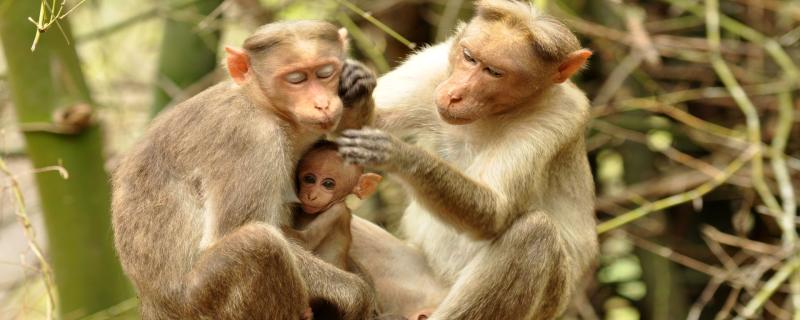
Humans have evolved a complex system of communication expressed through language and primates are perhaps not far behind. Basic signals like facial expressions, gestures and vocalisations, used to share information, are used by humans and other primates. In a new study, researchers from the National Institute of Advanced Studies, Bengaluru, have investigated and compared gestural communication in wild bonnet macaques (Macaca radiata), to those in other apes. 

Bengaluru

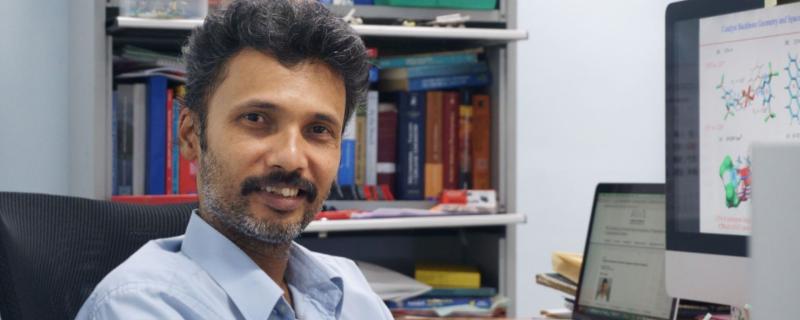
Prof R B Sunoj of the Department of Chemistry of the Indian Institute of Technology Bombay has received the 2019 Shanti Swarup Bhatnagar Prize by Council of Scientific and Industrial Research (CSIR). The prize recognizes his outstanding contributions for providing molecular level insights on organic reaction mechanisms.

Search Research Matters