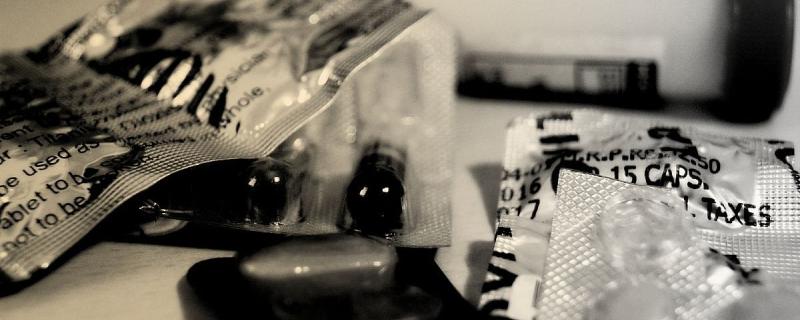
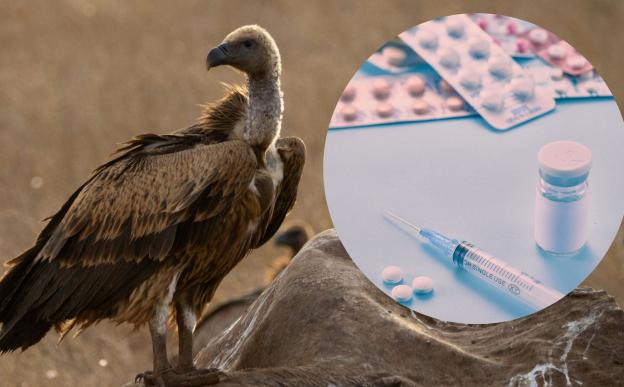
Despite successful bans on the veterinary drug diclofenac in Nepal and parts of India, a decade-long undercover investigation reveals that toxic alternatives like flunixin and nimesulide are rapidly replacing it, posing a renewed existential threat to the region’s critically endangered vulture populations.

Science

Scientists from the Council for Scientific and Industrial Research (CSIR) - Indian Institute of Integrative Medicine, Jammu and the Academy of Scientific and Innovative Research, New Delhi have now synthesized hybrid protein sequences with antimicrobial properties, by using a mixture of natural and synthetic analogues of amino acids – the building blocks of proteins.
Bathinda

The whole world is struggling with the problem of antibiotic resistance developed by disease causing organisms. The epidemic of Tuberculosis especially plagues countries like India. In their recent research scientists from the Central University, Punjab have identified a new target drug to beat the bacteria’s defense against antibiotics.

Researchers at Punjab University have developed a sensor pattern noise based method to detect forged videos where one video is copied onto a different video.

Bengaluru

[field_op_main_image]

Human Elephant conflict in India is hardly news, but the conflict is also faced by our neighbours in the north, Nepal. Scientists from Arkansas State University explore the degree and the reasons due to which elephants come in close contact with humans.

Scientists from Indian Institute of Technology Madras, Chennai and Indian Institute of Science, Bengaluru have developed a novel complex made of silk fibroin (SF) with embedded silver oxide nanoparticles (Ag2O) for wound healing and anti-bacterial applications.

Mumbai

In an attempt to reduce their carbon footprint, many nations around the world are looking at wind energy. This form of energy is already responsible for 12% of installed power in India. An Indian Institute of Technology Bombay study predicts Indian offshore wind farms will benefit from rise in sea temperatures

Scientists from Indian Institute of Science (IISc.), Bengaluru develop a new technique to trap micro particles using the surface features of glass which could help scientist study collective phenomenon and properties of colloidal particles.

The human brain is an extremely complex network of gazillion of nerve cells. This complexity of the brain serves to its advantage. The human brain can store more information than a supercomputer in the tiny space between our ears. Our brain can perform complicated calculations like image recognition in a split second, which the best available computers still aspire for. On the other hand, we don’t stand a chance against a basic calculator to perform long mathematical calculations.

Scientists from Indian Institute of Science (IISc) have developed a novel device made of a fibre Bragg grating to measure the force exerted with a bite.

Roorkee

[field_op_main_image]

Study from  Indian Institute of Technology and National Institute of Hydrology, Roorkee find the total area and number of glaciers in the Himalayas to decrease. The study shows that the glaciers are sensitive to climate change and the long term decrease in the extent of the glaciers could lead to flash floods and water shortage in the future.

Search Research Matters