
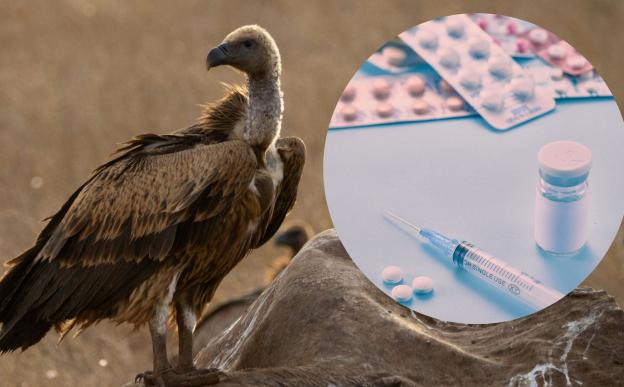
Despite successful bans on the veterinary drug diclofenac in Nepal and parts of India, a decade-long undercover investigation reveals that toxic alternatives like flunixin and nimesulide are rapidly replacing it, posing a renewed existential threat to the region’s critically endangered vulture populations.

Science

In 1959, Luna 1, a Soviet Union mission to the moon, successfully landed on the surface of the moon, kickstarting the space race between America and the Soviet that lasted for decades. Today, many countries are looking beyond our moon, and at moons of other planets like Jupiter and Saturn. Although, twelve astronauts have walked on its surface, manned missions to the moon came to a close in 1972. But the urge to study our closest neighbor never receded.

[field_op_main_image]

India today faces several challenges, an air pollution is one of the important one’s to overcome. Four Indian cities often features on world’s top 10 most polluted cities. And lack of data has prevented us from understanding effects of the pollution and take measures to tackle them. A new study now shows that one’s daily routine can be a good indicator for the level of pollution one might face.  It has already shown us that people travelling in cars and CNG buses face a lot less pollution and could help us find a lot more solutions to our pollution woes. 

Commons is defined as any natural or cultural resources that can be accessed by any member of a society. This includes the air we breathe, oceans and rivers, grazing lands, fish stock, forests and even an office computer. ‘Tragedy of the Commons’, a concept which emerged in 1833 and was later revived in 1968 by Garett Hardin in an article of the same name, explores the struggle for such commons. The tragedy occurs when individuals in a society, guided by their own self-interest, would act against the common good and deplete the common shared resource.

Bengaluru

[field_op_main_image]

Plant based derivatives that cure cancer are a plenty with scientists discover more of them with time. One on the list from a long time is Resveratrol, a compound found in grapes, peanuts and berries. But how does this compound fight with cancerous cells? A new study has now thrown some light on the exact mechanism of how derivatives from resveratrol acts on cancerous cells and kills them, in the process, letting the other healthier cells remain unharmed. This discover, the researchers claim, can help scientists in developing more efficient drugs that can fight cancer, a deadly disease. 

Cancer remains one of the most terrifying disease to face, despite decades of research and billions of dollars spent. They are a group of diseases that begins with abnormal cell growth, which then spreads to other parts of the body, causing huge damage to the tissues and cells. Once a patient has been diagnosed with cancer, doctors can only try and remove the spreading tumors or control their growth. Even if the tumors have been successfully removed, they are likely to return, making a visit to the doctors a regular affair.


[field_op_main_image]

Mosquito borne diseases like malaria and dengue are still rampant and have posed a great challenge to mankind. We have lost several lives in our war against mosquitoes, and scramble new ways to fight them. Now, researchers are working to genetically engineer the genes of mosquitoes using the technique of RNA interference, where an RNA is artificially inserted to disturb the normal functions of mosquito cells, thereby killing them in the process. This process, they claim, is environmentally friendly and most effective compared to existing strategies.

The process of voting is the cornerstone of any democratic process. Be it selecting the leader of a nation or just deciding the laws that govern a nation, a democratic process allows the different participants and stakeholders of the election to have a uniform chance of having their choice win. The process of voting, sometime called the electoral system, can itself be carried out in many ways, sometimes depending on the outcome. A Plurality voting system selects the candidate with the highest number of votes as the winner.

The Smart Cities Mission of the Indian government aims to develop at least 100 cities around the country in to smart cities. Internet of Things and Cyber Physical Systems, the two technologies that will enable the smart city dream, still in nascent stages and require enormous efforts from researchers and engineers to set up the framework for such cities. Scientists are now looking to use crowdsourcing as an effective measure to collect the data and effectively implement certain smart applications.


[field_op_main_image]

Cells are the building blocks of life and have witnessed many exciting phases of evolution. Over this period, since the beginning of life several million years ago, the functionalities of the cell and its organelles have become sophisticated. Cells have also evolved smarter ways to address common challenges and one of them is the acidification of the enzymes found inside cells. While this acidic environment serves many well known functions, a new study shares an interesting hypothesis on the reason behind the acidic pH -- detecting leaks in the cell. Since synthesis of enzymes is an expensive process, the study argues that cells use the acidic medium to detect possible leaks, thus saving energy in the process.

Search Research Matters