Research reveals that graphene-enhanced batteries can slash electric vehicle charging times by up to 27% while cutting battery weight by more than half, potentially solving the biggest hurdles to green transportation.

Science


[field_op_main_image]

Termites are renowned architects whose mounds have inspired many building designs around the world. But did you know how termites build their mud castles? A new study has tried to understand how termites use boluses -- a combination of mud and saliva acting as bricks -- to build their mounds. The study also throws light on the properties of materials the termites prefer to use to build mounds and discusses reasons behind the same. This study, the researchers claim, is a first towards understand the unique procedure followed by nature’s best architects in building some of the finest castles. 


[field_op_main_image]

Space missions come with an unprecedented excitement of open a Pandora’s box of unknown facts, mysteries and phenomenons. It is hardly a surprise that New Horizons, NASA’s mission to explore Pluto and beyond has caused a great excitement in the field of planetary science. Launched in 2006, New Horizons has already provided mankind with the most intimate images of Pluto till date and is now cruising towards the Kuiper Belt beyond our Solar System. Read all that you should know about this space mission, its latest findings and its future stops as it progresses toward new horizons of space in an interview with Prof. Henry Throop.

The Gravity Recovery and Climate Experiment (GRACE), a joint mission of NASA and German Aerospace Center, was launched in 2002 and has been making a detailed map of earth’s gravity field anomalies. By studying these anomalies, one can show how mass is distributed on the planet’s surface. This allows researchers to map the different features on the surface of the planet, natural and man-made ones, in great detail, while also allowing us to monitor the changes in these features.


[field_op_main_image]

Each monsoon brings a fury of rains in different parts of the country killing many people and damaging properties. In spite of having disaster warnings in place, India still battles floods and the rains as many of us watch helplessly. But perhaps no more, thanks to science! Researchers have now developed a new technique to forecast extreme rainfall events by considering regional parameters that affect the quantity of precipitation. This model, which is accurate than existing models used to forecast rains, can be used for any region by including regional parameters like temperature and humidity, say the researchers.

Biofuels are fuels produced through biological processes, like those derived from plant and microbes. Unlike the fossil fuels which are formed by geological processes, over millions of years, Biofuels can be produced from regular plant material, making it an excellent substitute for fossil fuels. Biodiesels have been produced from plant oils and fats, while bioethanol can be produced from sugar and starch, and both these fuels could be safer alternative to burning fossil fuels. The drawback has always been in the cost of production of biofuels.

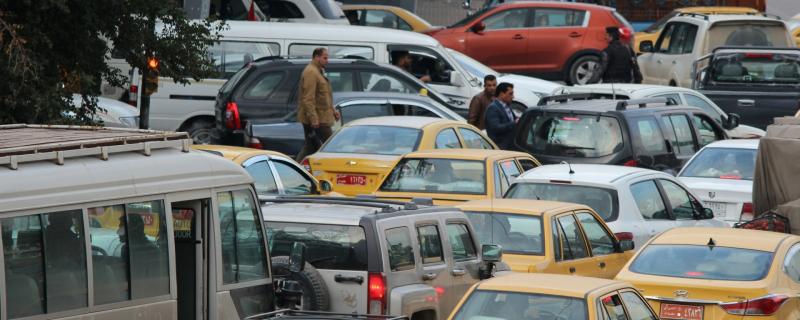
A rising population demands an upgrade to the infrastructure of towns and cities, failing which congestion and traffic jams become unavoidable. The situation is improved with efficient allocation of resources and infrastructure, usually achieved with the help of computer simulations. Through simulations, one can predict the outcome of complex situations which allows us to implement the best solution always. Road transportation depends on efficiently moving of vehicles between intersections.


[field_op_main_image]

Today, India’s space programs command the world’s respect for a multitude of things -- our Mangalyaan mission was the cheapest ever, we recently launched about 108 satellites into space with a single rocket, our Chandrayaan mission is making fantastic discoveries on the Moon, we launched our own space based observatory with Astrosat...the list goes on. But when the country started its space program, it had very humble beginnings that are hard to believe. It required the courage and determination of many intellectuals and Prof. U R Rao is one of those who scripted a new chapter in India’s history of space research. Here is an orbituary piece dedicated to the life of a great visionary that we just lost amongst us. 

Hepatits C, caused by the hepatitis C virus (HCV), is an infectious disease affecting over 140 million people around the world. The virus spreads by blood to blood contact, affecting the liver and causing infections, which if left untreated could lead to cancer. Intravenous drug use and blood donations have been found to be the two main causes for the spread of the virus and can also spread from an infected mother to her children. In India, it is estimated more than 8 million people suffer from HCV.


[field_op_main_image]

The mangrove ecosystem is a fragile ecosystem found in the tropical and subtropical sea shores and houses a variety of plants and animals. Some of these have evolved special adaptation techniques to thrive in the salt-rich low-in-oxygen soil, and have supported human communities around the forests. Today, on the occasion of the ‘International Day for the conservation of the mangrove ecosystem, here is a snapshot of the importance of mangroves and why conserving them is the need of the hour today.

Insects were the pioneers of flight on the planet, having developed wings early in their evolutionary history. Today, though a wide range of insects can claim this distinction, some, like the dragonfly, have exemplified this act. Despite their mastery and long history, knowing how such  insects have achieve complex moves mid-flight, remains a mystery.

Search Research Matters