Despite successful bans on the veterinary drug diclofenac in Nepal and parts of India, a decade-long undercover investigation reveals that toxic alternatives like flunixin and nimesulide are rapidly replacing it, posing a renewed existential threat to the region’s critically endangered vulture populations.

Science


[field_op_main_image]

Have you ever wondered what billions of years of evolution has left us with? Incredible answers to some of the toughest questions, say scientists. In fact, it has given rise to a new field called biomimicry that aims to provide some of the incredible solutions to design problems inspired by nature. Think of the aeroplanes, super fast bullet trains, artificial glues for bones, climate controlled buildings -- all these are a result of us looking close into nature’s way of dealing with problems and drawing an inspiration from them. But there are more such examples that are gamechangers. Read more to know how biomimicry is all set to influence our lives more than ever.

Cyanide is any chemical compound that contains a carbon atom triple bonded to a nitrogen atom, called a cyano group. Some of the cyanide compounds are known to be extremely toxic with the ability to cause death within minutes. In a recent study, scientists from the Indian Institute of Technology, Bombay, North Maharashtra University and SV National Institute of Technology have developed a novel sensor that can detect the tiniest amounts of cyanide.


[field_op_main_image]

Asteroids bring an image of shooting stars streaking across the sky. But did you know, they were the reason behind one of the biggest mass extinction events in the history of life? Often harmless, asteroids have been striking the earth for millions of years and there are still millions out there, wandering in outer space. On the occasion of International Asteroid Day, let us learn about these incredible space rocks and why it is important to track and study them. 


[field_op_main_image]

Foodborne diseases, caused by Salmonella, are responsible for 1 in 10 illnesses globally. Treating Salmonella infections using traditional antibiotics is turning to be a challenge because of the development of drug resistant strains. Now, a new study at IISc has developed nanotechnology based nanocarries using silica that can deliver very small dosage of antibiotics to the affected cells, thus hitting the right target. Using laboratory experiments, the researchers found that these nanocarries performed much better than conventional antibiotics in all stages of the infection. The design of these nanocarries are generic, and can be used for delivering different antibiotics, they claim.


[field_op_main_image]

Malaria, a deadly mosquito borne disease, kills about half a million people around the world, every year. Developing countries face a challenge in accurately diagnosing malaria in early stages due to the need of sophisticated diagnostic devices and skill. A new study at IISc has developed a technique to test for malaria with very small quantities of blood samples using laser light. By holding a single RBC using a pair of 'optical tweezers', this technique can detect malarial parasites in the RBCs even at an early stage, say the researchers. The researchers claim this technique can help save many lives if commercialised on a larger scale. 

Gelatin, commonly used in jellys and ice creams, is a flavorless food additive derived from collagen, a protein, obtained from various animal body parts. Now, scientists at the Centre for Cellular and Molecular Biology, Hyderabad, may have found another novel application of gelatin -- as nanoparticles that could help in drug release. Through a process called protein desolvation, they have generated homogeneous nanoparticles of gelatin whose surface could undergo ‘erosion’ in the body due to other enzymes, thus releasing an entrapped drug or gene in the process.

With the advent of Big Data and Artificial Intelligence, there are numerous technologies built today that help us live ‘smart’ and have revolutionized many fields. Transportation is one such field where numerous solutions are available that make it safe and reliable. But how do these systems collect the data required to turn them smart? Researchers at the Indian Institute of Technology, Bombay, have found an answer in crowdsourcing.


[field_op_main_image]

Securing communication channels has been a long standing challenge for humans ever since early civilisations. Thanks to advances in computation, many so called 'secure' algorithms have been broken and the risk of information being in the wrong hands is at an all time high. A new study by researchers from IISc and NIT-Karnantaka has now developed an improvised version of a cryptographic algorithm based on quantum physics. This algorithm, the researchers claim, works efficiently and faster than their previous versions and allows higher data rate. They also also developing a new breed of communication devices running the improvised algorithms. These devices, the researchers claim, can be integrated into existing infrastructure, making them all the more secure.

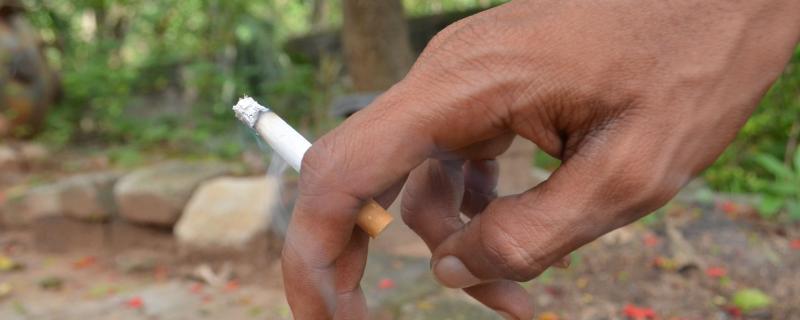
Here is some caution for those struggling to kick the butt and give up smoking. The Global Burden of Disease Study 2015, has found that the number of smokers all over the world has increased in the last decade (2005-2015) as compared to 1990-2005. The Republic of Congo and Azerbaijan topped the list with the most increase for men, and Kuwait and Timor-Leste for women. It also notes that in 2015 alone, 11·5% of global deaths (6·4 million) were attributable to smoking, of which 52·2% were in China, India, USA and Russia.


[field_op_main_image]

Our lifestyles influence our behaviour in a big way -- or so we think. But did you know our activities have a major influence on other creatures living around us? In an interesting study, scientists have uncovered how urbanization has influenced the courtship behaviour among south Indian rock agamas and their escape strategies. The study found that these agamas use change of colour of their body as communication signal during courtship and aggression and human activities and urbanization have a great influence in the everyday lives of these lizards.

Search Research Matters