Research reveals that graphene-enhanced batteries can slash electric vehicle charging times by up to 27% while cutting battery weight by more than half, potentially solving the biggest hurdles to green transportation.

Science

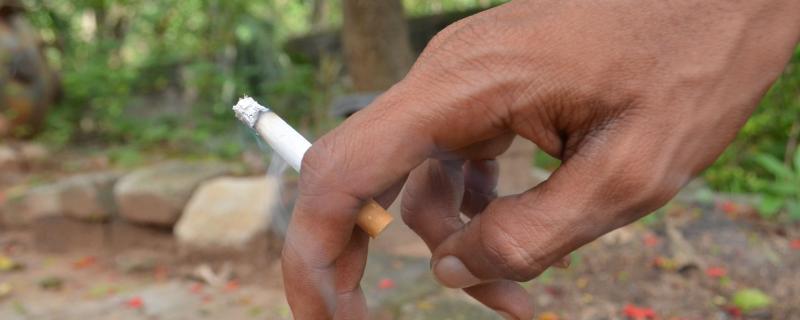
Here is some caution for those struggling to kick the butt and give up smoking. The Global Burden of Disease Study 2015, has found that the number of smokers all over the world has increased in the last decade (2005-2015) as compared to 1990-2005. The Republic of Congo and Azerbaijan topped the list with the most increase for men, and Kuwait and Timor-Leste for women. It also notes that in 2015 alone, 11·5% of global deaths (6·4 million) were attributable to smoking, of which 52·2% were in China, India, USA and Russia.


[field_op_main_image]

Our lifestyles influence our behaviour in a big way -- or so we think. But did you know our activities have a major influence on other creatures living around us? In an interesting study, scientists have uncovered how urbanization has influenced the courtship behaviour among south Indian rock agamas and their escape strategies. The study found that these agamas use change of colour of their body as communication signal during courtship and aggression and human activities and urbanization have a great influence in the everyday lives of these lizards.


[field_op_main_image]

Figs and wasps have a give and take relationship where figs need wasps to pollinate while wasps lay their eggs inside the fig fruits. However, not all fig-wasp relationships are this cordial. There are a set of parasitic wasps that cause more harm to the fig plant than good! A new study has uncovered some of the fascinating abilities of such wasps, especially their ability to sense smell. Ovipositors, specialized organs developed to lay eggs in wasps, have been found to act as a ‘nose’ in sniffing out the best position to lay their eggs, say the researchers. These organs can also detect many chemicals, potentially inspiring new kind of sensors, they claim.


[field_op_main_image]

Yoga is considered to be India’s gift of goodness and health to the world. With millions of people around the world having benefitted by regular practice, yoga indeed has changed several lives for the good. On this International Day of Yoga, here is all you need to know about the history, the scientific basis for Yoga and some of the benefits realised by those who practice Yoga regularly. 


[field_op_main_image]

Technology has provided the best solutions for many of our problems. One such day-to-day problem faced by civic authorities is estimating the number of people in a crowd or a gathering so that they can manage the crowd better without any incidents. A new study by researchers has proposed a novel  crowd counting technique using the concepts of neural networks. This algorithm, the researchers claim, can count crowds that swell in a short period or those that have varying number of people spread out.  


[field_op_main_image]

The problem of waste management is ubiquitous. With growing cities and exploding populations, the amount of waste that today’s cities generate is at unprecedented levels. Since most of urban waste ends up in open landfills, there is a need to relook and contemplate on better, greener ways of handling waste. In a new study, researchers explore alternatives to disposing domestic waste and utilizing their by-products. By doing so, we could also help reduce greenhouse gas emissions and help keep the Earth green, the researchers claim  


[field_op_main_image]

Leopards are one of the majestic cats in the wild who are in the news recently for all the wrong reasons. There are increasing reports of them mauling people, killing livestock and posing a danger in human dominated areas. In many cases, the leopards are unfortunately killed out of panic among people. In an interview with Mr. Nikit Surve, we present the reasons behind the rising human-leopard conflicts and how they must be handled in order for both to coexists peacefully in the same planet we both call home.


[field_op_main_image]

Survival of the fittest has been the norm in nature. Every organism that has to survive, has to find ways to escape from its predators or develop skills to adapt to the adversities of its environment. But, how does the immobile and defenseless pupa of a butterfly survive from being caught by predators? A new study has now explored strategies used by the pupa during its developmental stages to hide from the prying eyes of the predators. It says that based on environmental factors, the pupal colors change, which might help them survive by camouflage. 


[field_op_main_image]

Migration of birds is a fascinating story. Many birds across the world travel to different locations in search of food and a warm place to breed. A new study has now found a dark side of the fascinating tale of migration -- the risk of spread of diseases. The researchers have studied two species of migratory birds and have identified the presence of two strains of parasites in them that could potentially spread the disease to the local bird population, which do not have the required immunity to fight against them. The researchers warn that their finding could put the entire local bird population at the risk of contracting the diseases.


[field_op_main_image]

The theory of evolution has long been an interesting subject for scientists around the world, ever since Darwin’s proposal. Many new findings have shaped our understanding of evolution and some have changed what we knew thus far. Now a new study by scientists on fruitflies might further change how we have understood the importance of ‘trade-offs’ in evolution. The study has discovered that fruitflies develop immunity to a type of bacteria over a few generations without losing any other desirable trait, prompting scientists to believe that they have obtained immunity for free, a concept that was always associated with trade-offs.

Search Research Matters