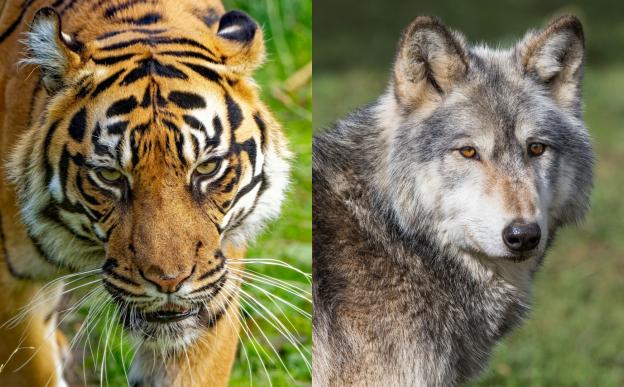
New research reveals that cultural tolerance and political pressure, rather than just biological science, dictate the life or death of tigers in India and wolves in Germany.

Technology

India’s premier institutes like the Indian Institute of Science (IISc) and the Indian Institutes of Technology (IIT) are the most sought after institutes in the country that attract the best of the talent from across the country. But how do these national institutes compare with those in Singapore, a major hub of education in Asia? A new study by researchers from the Vidya Academy of Science and Technology, Thrissur and A.P.J.
Thrips is the common name given to insects belonging to the order Thysanoptera. These tiny insects are seen in aggregates on various plant parts. They have unique asymmetrical mouthparts which they use to feed on plant matter. Most species are herbivorous, but some predatory species have been recorded as well. Out of the 6102 species of thrips described globally 1% act as pollinators, predators and vectors for viruses.

The Indian Institute of Technology’s (IIT) are autonomous public institutions of higher education, offering undergraduate, postgraduate and doctoral courses in engineering and related domains. IIT Kharagpur was the first institute to be set up, followed by in Bombay, Madras, Kanpur and Delhi. Today, there are a total of 23 IIT’s across the country and many of these premier institutions are placed high up in institutional rankings in the country.


[field_op_main_image]

SimYog, a spin-off from the Indian Institute of Science and a private start-up providing electromagnetic diagnostics and services along with developing design and sign-off tools for automotive electronics. Their latest offering is Compliance scope - a virtual 3D laboratory that allows the user to immerse themselves in a virtual world and explore the electrical components and connections and went on to win the coolest demo prize at this edition of IEEE EMC conference

Chlorella pyrenoidosa is a type of freshwater algae found around the world. It has been used in traditional Chinese medicine for a long time, and in recent times, emerged as a leading candidate for the production of biodiesels. Toxic algal blooms, can be seen covering ponds and lakes, and happens due to a rapid growth of algae in the waterbody. Since some of these algae produce toxins harmful to humans and other animals, toxic algal blooms generally lead to a decrease in the amount of fish in the water and amount of life surrounding it.


[field_op_main_image]

The Andaman and Nicobar Islands are a group of islands and a Indian union territory situated 1200 kms from the easternmost boundary of the Indian peninsula. Although some distance from the mainland, scientists have now found evidence for the effects the islands and the surrounding Andaman sea have on the climate on the mainland. Using satellite data and computer simulations, the scientists have established the area as an important contributor to the Indian Monsoon and as one which requires further study. 


[field_op_main_image]

Cloud computing has emerged as the preferred method for processing large amounts of data. It offers the luxury of processing all the data without owning large processors yourself, while the pay-as-you-use model, also allows for economical use of these resources. However, drawbacks such as latency in transferring the data and requirement of bandwidths have given rise to portable cloud computing devices, like Edge and Fog. Now, read about ECHO- a new software platform from IISc that allows you to build and customize applications for Internet of Things and Cyber Physical Systems.   

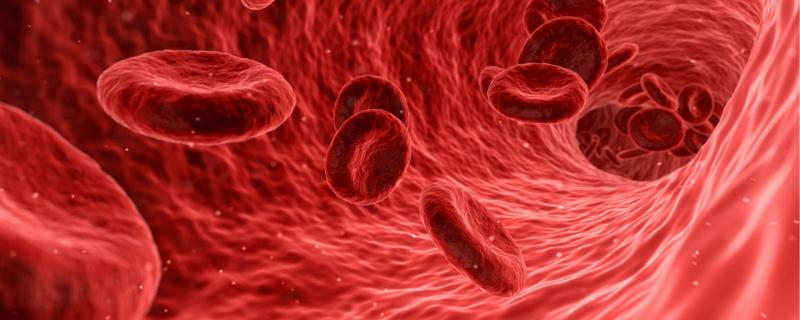
Red blood cells (RBC) are the primary carriers of oxygen in all the vertebrates They pick up oxygen from the lungs, flow through the circulatory system and deliver the oxygen to the different cells and tissues. White blood cells (WBC), on the other hand, are the bodies primary defense system. Produced in the bone marrow, WBC helps the body fight invaders, like virus and bacteria.


[field_op_main_image]

Mosquito borne diseases like malaria and dengue are still rampant and have posed a great challenge to mankind. We have lost several lives in our war against mosquitoes, and scramble new ways to fight them. Now, researchers are working to genetically engineer the genes of mosquitoes using the technique of RNA interference, where an RNA is artificially inserted to disturb the normal functions of mosquito cells, thereby killing them in the process. This process, they claim, is environmentally friendly and most effective compared to existing strategies.

The Smart Cities Mission of the Indian government aims to develop at least 100 cities around the country in to smart cities. Internet of Things and Cyber Physical Systems, the two technologies that will enable the smart city dream, still in nascent stages and require enormous efforts from researchers and engineers to set up the framework for such cities. Scientists are now looking to use crowdsourcing as an effective measure to collect the data and effectively implement certain smart applications.

Search Research Matters