The eyes and the hands work together as a team for most of the daily tasks we perform. When we pick up the morning coffee, or when we drive to work, our brains are constantly commandeering our eye and hand systems to bring about smooth, coordinated movements. We often do not consciously compute the steps required to bring them about. However, when the coordination is disrupted, even the simplest of tasks like picking up a book prove to be extremely challenging. How does the brain achieve efficient eye-hand coordination? A recent study from Prof. Aditya Murthy’s laboratory at the Indian Institute of Science, Bangalore, explores this critical question and suggests a framework to understand the control mechanisms of coordinated eye-hand movements.
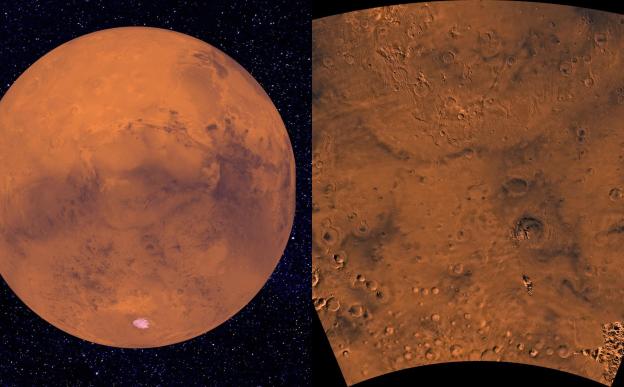
मंगल ग्रह पर स्थित घाटियों के जाल से प्राप्त नए प्रमाण इस बात की पुष्टि करते हैं कि लगभग चार अरब वर्ष पहले नोआकियन काल में उष्ण और आर्द्र जलवायु धीरे-धीरे परिवर्तित होकर लगभग तीन अरब वर्ष पहले हेस्पेरियन काल तक ठंडी और हिममय हो गई थी।