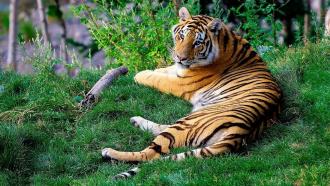
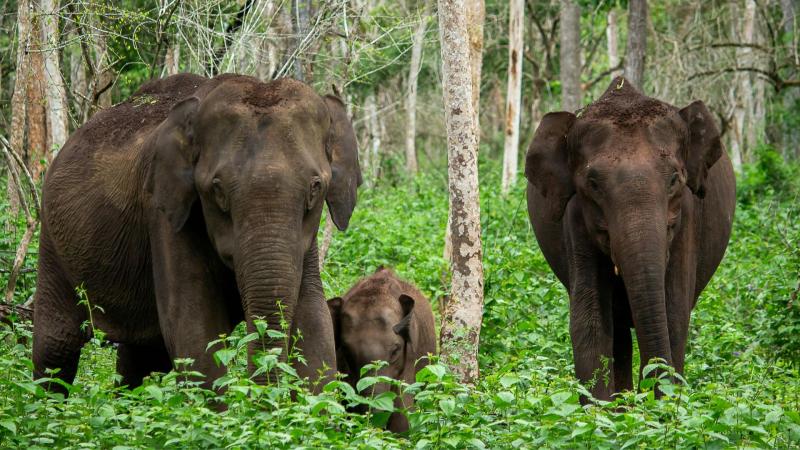
For decades, conservationists and biologists have operated under a specific assumption about the Asian elephant's diet, one of the planet’s most charismatic megaherbivores. The prevailing theory held that browsing, or eating leaves, bark, and stems of woody plants, was nutritionally superior to grazing on grass, particularly for protein intake essential for growth. However, a new study has challenged this notion. Researchers studying wild Asian elephants (Elephas maximus) in the forests of southern India have discovered that a diet heavy in browse is not necessarily healthier than one dominated by grass. This finding could inform how we manage habitats for these endangered giants.
The study, conducted by the National Centre for Biological Sciences, Bengaluru; the University of Turku, Finland; the Sasakawa Global Ocean Institute, Sweden; the Jawaharlal Nehru Centre for Advanced Scientific Research, Bengaluru; and the University of Agricultural Sciences, Bengaluru, focused on the elephants of Nagarahole National Park. Unlike the open savannahs where elephants are often filmed wading through seas of grass, Nagarahole is a dense, dry deciduous forest where grass is relatively scarce. This unique environment provided a natural laboratory to test the browse-versus-grass debate. By analysing what these elephants ate and how much nutrition they absorbed, the team found that high-browsing diets did not result in higher protein levels. In fact, woody plants and non-legumes, which dominate the forest elephant’s menu, offered no significant nutritional advantage over common grasses.
Did You Know? An Asian elephant is a bulk feeder, consuming approximately 140 to 200 kilograms of plant biomass every single day. Because they digest food quickly and inefficiently, they have to eat almost constantly to get enough nutrients. |
The researchers collected 102 fresh dung samples across wet, early dry, and peak dry seasons. Because elephants are inefficient digesters, their waste is a goldmine of information, containing large amounts of undigested plant matter that reflects exactly what they consumed. To determine the ratio of grass to browse in the elephants' diet, the team used stable carbon isotope analysis. This technique relies on the fact that grasses (often C4 plants) and woody trees (C3 plants) photosynthesise differently, leaving distinct carbon-isotope fingerprints in the animal's tissues and waste.
By measuring the ratio of heavy to light carbon isotopes in the dung, the researchers could quantify exactly how much of the elephant's diet came from trees versus grass. They combined this with a chemical analysis of nitrogen content in the faeces. Since nitrogen is a key building block of protein, higher nitrogen levels in the dung generally indicate a higher protein diet. If the old theories were correct, the elephants in Nagarahole, who are forced to browse heavily due to a lack of grass, should have shown signs of a high-protein diet. Instead, the data showed the opposite. The samples with the highest proportion of browse did not have higher nitrogen content. During the wet season, browsing was associated with lower forage quality.
Earlier studies, such as those by renowned ecologist R. Sukumar, analysed carbon isotopes in elephant bone collagen and concluded that browse was the dominant protein source. However, those studies often inferred diet over a lifetime rather than examining the immediate nutritional value of the animals' day-to-day diet. This new study bridges that gap by examining immediate intake and comparing it with a comprehensive database of nutritional values for 141 plant species consumed by Asian elephants. It clarifies that while elephants do eat a lot of browse, it is likely because they have to, not because it is a nutritional superfood.
The researchers explain that the browse category is incredibly heterogeneous. While fresh, tender leaves might be nutritious, a large portion of an elephant's browse diet includes woody stems, twigs, and bark, which are high in fibre and low in protein. Furthermore, the study highlights that nitrogen-fixing legume plants, which are naturally high in protein, are rare in the forests of Nagarahole. Therefore, an elephant filling its stomach with non-legume wood and bark is getting a very different nutritional package than one eating nutrient-rich grasses.
The researchers also propose a mortality filter or elephant trap theory to explain how their dietary choices may be shaping their environment. In forests where grass is scarce, elephants are forced to browse on tree saplings year-round. They prefer fast-growing species, which are generally tastier and have lower wood density. By constantly eating these saplings, elephants may prevent fast-growing trees from reaching maturity, inadvertently shifting the forest composition toward slow-growing, high-wood-density species. These slow-growing trees are better at storing carbon. Therefore, the dietary choices of these megaherbivores could be playing a functional role in how much carbon these forests can sequester, helping to mitigate climate change.
As human-wildlife conflict grows and habitats shrink, understanding the fundamental ecology of these animals is vital. We now know that a healthy elephant population requires a diverse landscape that offers both the bulk of the forest and the nutrition of the grassland, ensuring these magnificent creatures have the energy they need to survive in a changing world.
This article was written with the help of generative AI and edited by an editor at Research Matters.