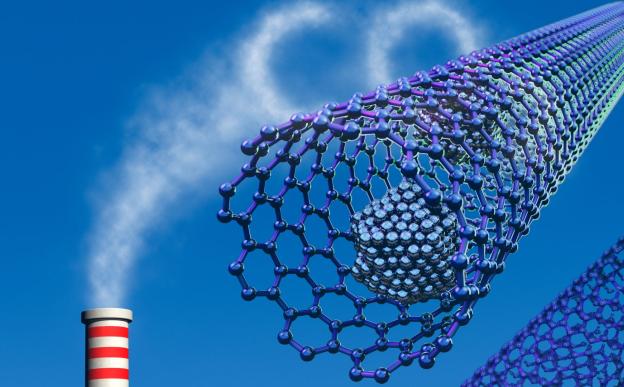
Researchers from BITS-Pilani, Hyderabad, have developed a safer, fluoride-free synthesis method for metal-organic frameworks that significantly boosts their capacity to capture greenhouse gases and store clean fuels at room temperature.

Engineering

Guwahati

New research reveals how specially designed porous walls can significantly reduce the impact of ocean waves on floating structures, paving the way for safer and more resilient offshore engineering.
Mumbai

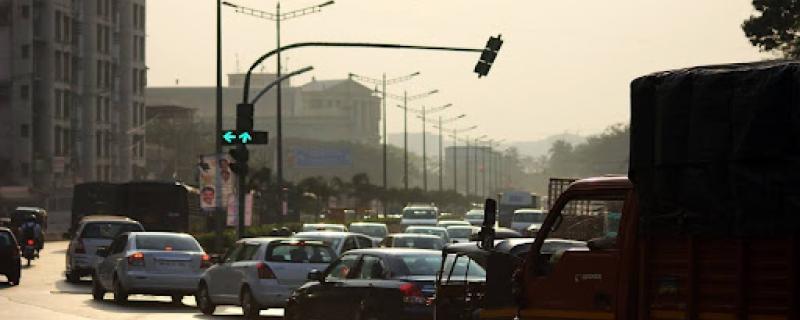
Researchers from IIT Bombay propose a computationally efficient, network theory-based mathematical framework to test decentralised traffic control systems.

Mumbai

A new methodology reveals deep seawater cooling systems can save 79% energy and cut emissions for data centres, with a rapid eight-month payback.

Thiruvananthapuram

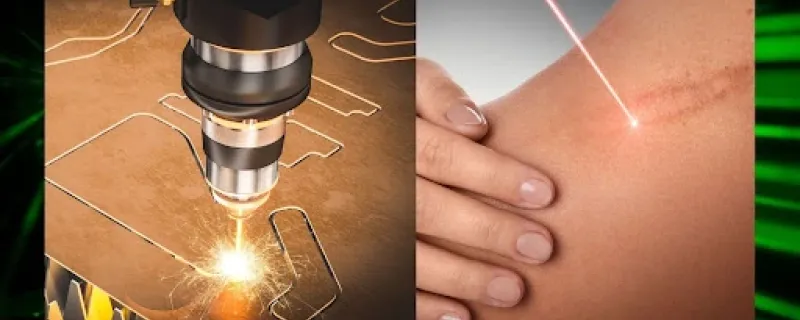
A new way to accurately predict how materials respond to pulsed laser heating, even when the laser's behavior is a bit unpredictable, allowing engineers to  optimise laser parameters for applications, such as cutting, welding, drilling, and surface treatment.

Mumbai

Researchers replicate evolution in the lab using microbes and feeding them with subtly different sugars, and observing how their adaptations diverge

Ahmedabad

New research compares two methods for keeping spacecraft in stable halo orbits near Earth Lagrange Point L1, finding the best approach depends on how much the spacecraft is nudged off course.

Kanpur

Researchers explored the differences between a person solving a logical problem and one facing a moral dilemma by tracking people's eye movements as they tackled these kinds of problems.

Chennai

An AI-powered robotic system, Polybot, has successfully automated the complex process of creating highly conductive and defect-free electronic polymer films, paving the way for faster material discovery and manufacturing.

Kolkata

A unique material, chromium antimonide (CrSb), defies conventional rules by conducting electricity like two different materials in one, dominated by electrons in one direction and holes in another, a phenomenon called DDCP.

Mumbai

Scientists at IIT Bombay (IITB) are applying chemistry to trap summer sun for freezing winters. Read the story to know more.

Search Research Matters