General

Kanpur

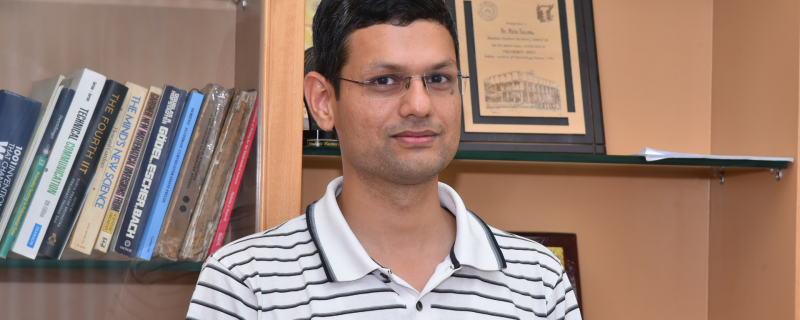
Prof. Nitin Saxena, Professor at the Department of Computer Science and Engineering, Indian Institute of Technology Kanpur, has been awarded the 2018 Shanti Swarup Bhatnagar Prize for his work in Algebraic Complexity Theory. One of the youngest awardees, Prof. Saxena’s research interests include Computational Complexity and Algebraic Geometry.

Amritsar

Researchers from the Guru Nanak Dev University, Amritsar and National Institute of Advanced Industrial Science & Technology, Japan, show that cultivating Ashwagandha organically with vermicompost can enrich the soil and help in the germination and growth of the plant. 

Bengaluru

In a new study, Shreekant Deodhar and Kavita Isvaran from the Indian Institute of Science, Bengaluru, have tried to decode the meaning of the various behavioural signals exhibited by these drop-dead gorgeous male lizards.

Mumbai

Researchers from IIT Bombay develop a mobile application for better positioning using data from neighbouring mobiles.


Kolkata

Researchers from IISER Kolkata and McMaster University, Canada, have studied a model of coexistence among bacteria.

Bengaluru

In a recent announcement, two renowned individuals from the Indian engineering field, Dr Kiran Mazumdar-Shaw and Dr Mylavarapu Ramamoorty, have been chosen as Foreign Members to the National Academy of Engineering (NAE). NAE is a US-based private, independent, and non-profit institution, which is a part of the National Academies of Sciences, Engineering, and Medicine, and provides engineering leadership in service to the nation.

Dhanbad

Researchers from the IIT Dhanbad estimate the generation of different types of plastic wastes by different socio-economic groups in the city of Dhanbad, India.

Mumbai

Researchers from IIT Bombay fabricate highly efficient transistors using graphene nanoribbons.

Kanpur

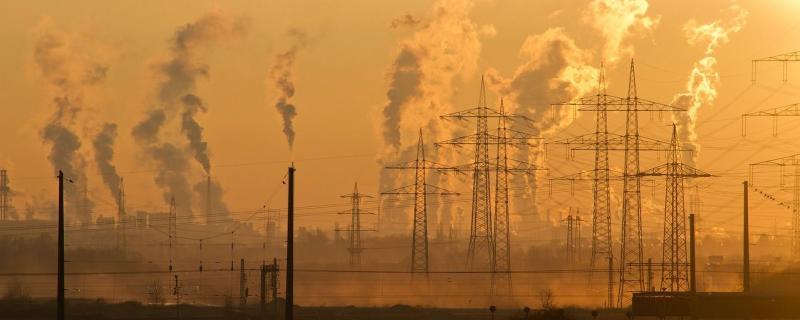
Researchers from IIT Kanpur, Pacific Northwest National Laboratory, USA, University of Hyderabad, and IIT Delhi have tried to understand how aerosols affect the Indian monsoon season.

Have you ever admired red skies or criticised early morning haze? Atmospheric aerosols, tiny solid or liquid particles suspended in air, also called Particulate Matter (PM), are responsible for the myriad hues created by the evening sky. Not just that, aerosols impact the global climate and play a role in ozone depletion. These particles generally range from about a nanometre to ten micrometre in size and are either directly emitted or formed by the conversion of a gas to particles.

Search Research Matters