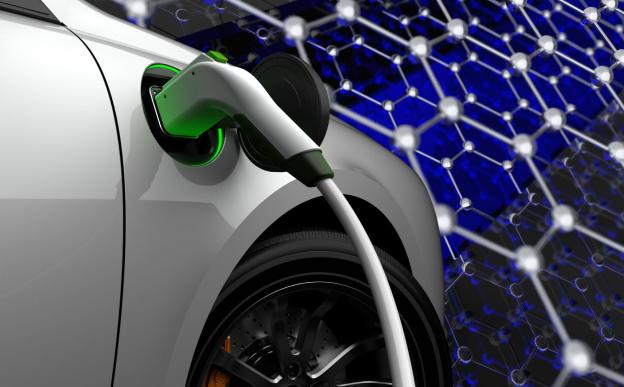
Research reveals that graphene-enhanced batteries can slash electric vehicle charging times by up to 27% while cutting battery weight by more than half, potentially solving the biggest hurdles to green transportation.

General


[field_op_main_image]

How do stars and star clusters influence their neighbourhood? How does the birth of stars affect their neighbours? let us start with the birth of a star. It begins with gasses, mostly hydrogen, accumulating under gravity until it gets hot and dense enough to start nuclear fusion, where the lighter Hydrogen atoms merge to form heavier helium atoms, with an enormous outburst of energy. This energy moves in the form of a shockwave, pushing all the excess gas away from the newborn star. For a million years after its birth, high energy radiation from the star continues to push the surrounding gas away. From here the picture gets a little murky as we hadn’t quite understood what happened around a star or a cluster of stars, after the million year mark. Now a new study by researchers from Raman Research Institute (RRI), the Indian Institute of Science (IISc) and P.N Lebedev Physical Institute, Moscow, Russia could throw more light on this issue. They have successfully developed a model to simulate the interaction of a star cluster with its surroundings. The model was then tested for accuracy by comparing it with observations from Tarantula Nebula, a nearby star cluster, where the observations matched closely to the predictions made by the model. Maybe now we can better understand the processes that guide the formation of stars, nebulae and galaxies!  

[field_op_main_image]

The Internet has revolutionised our way of life, enabling things that were hard to imagine earlier. With the Internet, one can work sitting at home, doctors can treat patients anywhere in the world, and with the advent of smartphones, simple activities like commuting has a whole new meaning. Social media platforms like Facebook, Twitter and YouTube have redefined communication and made reaching out to a large number of people very easy. Any of us can be an ‘influencer’ with the potential to be heard by millions of people.


[field_op_main_image]

If you have read Malcolm Gladwell’s ‘Outliers,' then you might be well acquainted with the ‘10,000-hour rule’, which states that to master a new skill, such as playing the piano or knitting, one needs 10,000 hours of practice to become world-class. This long practice, studies show, facilitates ‘motor learning’ - a set of complex processes that occur in the brain in response to practice or experience of a certain skill, resulting in changes in the central nervous system.


[field_op_main_image]

The 3rd of March every year was declared World Wildlife Day by the United Nations General Assembly to mark the signing of the landmark Convention on International Trade in Endangered Species of Wild Fauna and Flora (CITES) in 1973. Aimed at celebrating and raising awareness of the world’s wild animals and plants, the day is a chance for us to think about the major threats to wildlife including habitat change, over-exploitation and illicit trafficking.


[field_op_main_image]

This year’s National Science Day, celebrated to commemorate the discovery of Dr. C V Raman’s ‘Raman Effect’, is themed around ‘Science and Technology for Specially Abled Persons’. One billion people, or 15% of the world’s population, experience some form of disability today, and the prevalence of disability is highest in developing countries like India. A report by World Bank estimates that about 110-190 million of them experience significant disabilities.  ‘Persons with disabilities’ or PwDs include those who have long-term physical, mental, intellectual or sensory impairments which may hinder their full and effective participation in the society.


[field_op_main_image]

ISRO hit a century of sorts with its launch of 104 satellites in one go. This has been a world record and everyone is proud of ISRO for what it has achieved. Have you wondered what enabled this scientific and technological achievement? Much of the ground work happened at Indian Institute of Science in primarily three scientific and engineering departments - aerospace, materials and electrical communication engineering. Aerospace Engineering helped in building and launching the satellites. Materials Engineering, then Metallurgy helped in arriving at the right composites, alloys and materials for the outer cover for launch vehicles and satellites that helped them to weather extreme conditions. The Electrical Communication Engineering Department helped with the technology to control and communicate with the satellites. It is interesting to note that all three were established during 1940s and before India became independent in 1947. In many ways from the science and technology to building capacity, IISc has been playing a key role. 


[field_op_main_image]

India celebrates National Science Day today in memory of the day when Nobel Laureate Sir C V Raman discovered a fundamental principle of light, which was named the “Raman Effect.” It is the day to celebrate the spirit of science - the same spirit, with which Dr. Raman pursued his research and believed in his words - “the essence of scientific spirit is to look behind and beyond…”


[field_op_main_image]

Scientists have unearthed a natural biochemical entity from our own body, called microRNAs that could soon become a coveted tool in our disease-fighting arsenal. With the dawn of the genomic era, our fight against major diseases is increasingly getting channelized towards acquiring a fresh perspective of disease metabolism and consequently devising newer molecular strategies to combat these diseases. MicroRNAs (or miRNA) are one such new kid on the block, which have completely changed our perspective towards designing disease therapeutics. MicroRNAs are tiny RNA molecules that were once thought to be a waste product of our protein-producing machinery. Made of the same building blocks as our DNA, these pygmy RNA molecules could very well be the answer to curing diseases like cancer, diabetes, viral infections, genetic defects & many other metabolic disorders.


[field_op_main_image]

When the European Space Agency (ESA) released a catalogue containing precise positions and brightnesses of 1142 million stars of the Milky Way on September 14, 2016, it was a treasure trove of information for astronomers. Gaia, a space-based telescope launched on December 19, 2013 by the ESA, is on its mission to study the evolution of our galaxy.  As of today, it is observing approximately one billion celestial bodies including stars, planets, comets, asteroids and quasars in the Milky Way, building the most accurate three-dimensional map of our galaxy we have till now. A billion celestial bodies make just one percent of our galaxy’s population – a scale unimaginable by most of us. Nevertheless,  the tremendous data generated by Gaia will be used for determining the positions and motions of stars (astrometry), measuring the colours of the stars (photometry) and measuring the radial velocity (spectroscopy) and studying the constituents of stars.


[field_op_main_image]

Small Intestinal Bacterial Overgrowth (SIBO) is a condition that affects the small intestine and found in those that suffer from Irritable Bowel Syndrome with diarrhea. Today, absence of an accurate diagnostic method prevents early detection and treatment of this condition. Scientists at the SN Bose National Centre for Basic Sciences and Dr. Sujit Chaudhuri from AMRI Hospital, Kolkata, have now developed an improvised accurate diagnostic method that proposes to measure the amount of hydrogen sulphide gas in a patient’s breath. Due to increased bacterial activity in the small intestine, hydrogen sulphide is produced in larger quantities in patients suffering from SIBO. This research hopes to help in early detection and treatment of SIBO, thus guaranteeing a better quality of life for those with IBS and diarrhea. 

Search Research Matters