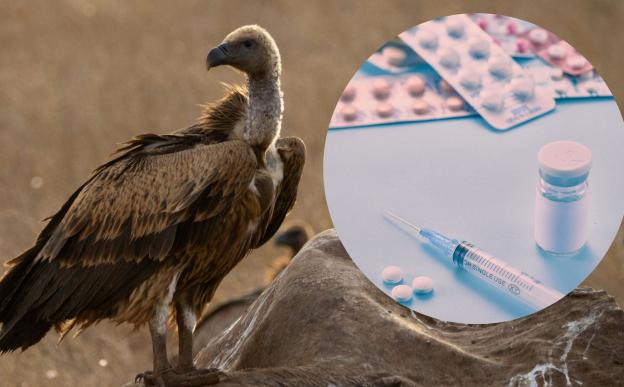
Despite successful bans on the veterinary drug diclofenac in Nepal and parts of India, a decade-long undercover investigation reveals that toxic alternatives like flunixin and nimesulide are rapidly replacing it, posing a renewed existential threat to the region’s critically endangered vulture populations.

General

Chandigarh

Researchers from Panjab University, Chandigarh and Post Graduate Institute of Medical Education and Research (PGIMER), Chandigarh, have discovered a link between selenium and colitis in mice. The findings of this study hint at the possibility of selenium relieving symptoms of ulcerative colitis.
Bengaluru

Researchers from the Natural History Museum, London, have uncovered the evolutionary links between the different species of centipedes dating back to Gondwana. 

Pune

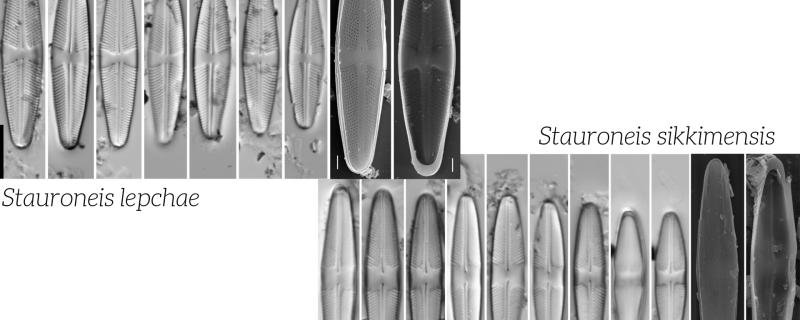
What do you get when a trip to Sikkim does not follow the plan, thanks to hectic schedule and unfavourable weather? It's frustration for many; an "Eureka!" moment for some! A trip, meant to meet up with fellow scientists, ended with the discovery of two new species of diatoms—Stauroneis sikkimensis and Stauroneis lepchae.

Across the ages, humans have tried to explain natural phenomena, like earthquakes, through stories and myths. Indian mythology says that when the elephant that holds the world on his back gets tired, an earthquake occurs; Norse mythology describes an earthquake as Loki, the God of mischief and strife, struggling to escape his prison; and Japaneses mythology talks about the giant catfish Namazu thrashing about beneath the earth, causing earthquakes. So what does science have to say?

Guwahati

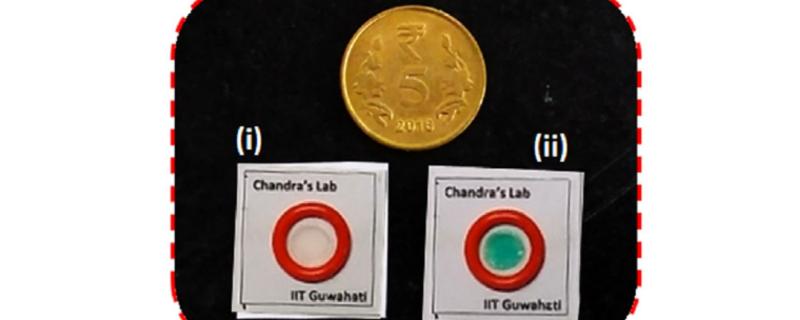
In this digital age, ruled by smartphone apps, how about one to tell you how fresh your milk is? Although there are stringent safety rules concerning the quality of milk, almost 68% of what is available in the country does not conform to them. In a recent study, researchers at the Indian Institute of Technology Guwahati have come up with a paper-based detection system to detect if a sample of milk is pasteurised and fresh. This technique, they say, is cost-effective, rapid, user- and environment-friendly.

Bengaluru

Researchers from the Indian Institute of Science, Bengaluru, have used a non-traditional method to measure extreme rainfall events. This approach is more accurate than what is currently used by meteorologists and researchers.

Bengaluru

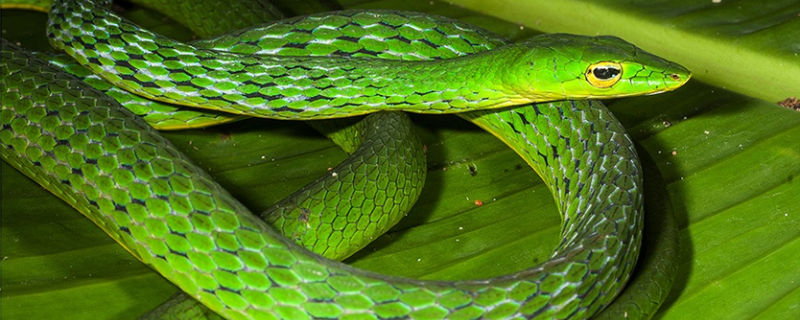
The team of researchers, from the Indian Institute of Science, Bengaluru were attempting to study and classify snakes in the Western Ghats systematically. That's when they came across Proahaetulla antiqua, which is endemic to the southern Western Ghats. What's more interesting is that it is an ancient species, thought to have evolved around 26 million years ago during the mid-Oligocene. 

Bengaluru

Every year, since 2010, the 29th of July is celebrated as the International Tiger Day to raise awareness about tiger conservation. India is home to over half of the world's tigers. New tiger populations are still being discovered, with one as recent as last year, in the Eastern Himalayas at altitudes of 3,630 metres. In 2010, India reportedly had 1,706 tigers, and this number increased to 2,226 in 2014. Isn't a 30% increase in population in just four years remarkable?

Bengaluru

This article is the second part of the series ‘The How and the Why: Interpreting Scientific Studies’, brought to you by Research Matters. The series focuses on the method of scientific studies, including emphasising the importance of meta-analyses, the repercussions of the replication crisis and the inclusion of ethics in experimental biology. We hope this series will better enable our readers to understand and evaluate scientific research they are interested in and those that could impact their lives.

Bengaluru

In a recent study, researchers at the Raman Research Institute, Bengaluru, have used a technique known as spin noise spectroscopy to probe the atomic, magnetic and sub-atomic properties of rubidium vapour. 

Search Research Matters