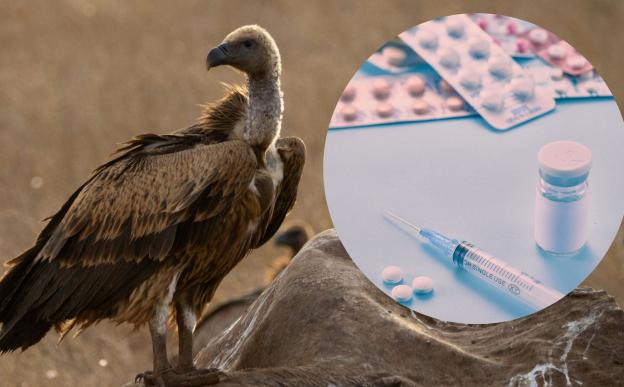
Despite successful bans on the veterinary drug diclofenac in Nepal and parts of India, a decade-long undercover investigation reveals that toxic alternatives like flunixin and nimesulide are rapidly replacing it, posing a renewed existential threat to the region’s critically endangered vulture populations.

Science

Bengaluru

How many times have you fed moneys by the roadside? Are you changing the behaviour of the monkey or is it manipulating your behaviour for food? New  study from Researchers at the Ashoka Trust for Research in Ecology and the Environment along with researchers from the National Institute of Advanced Sciences gives reasons to not feed the monkeys.
Bhubaneswar

Breast cancer is the second leading cause of cancer-related deaths in women across the world. As per an estimate by the World Health Organisation, 570,000 women died from breast cancer in 2015 alone. Although genetic factors and the female sex hormone oestrogen play a role in the occurrence of breast cancer, several other factors like increased iron content in the body might also enhance the risk.

Bengaluru

Scientists from the Indian Institute of Science, Bangalore, study how speech recognition software can be improved by modelling it to be more like the brain, such that it works well even in the presence of background noise. 

Hyderabad

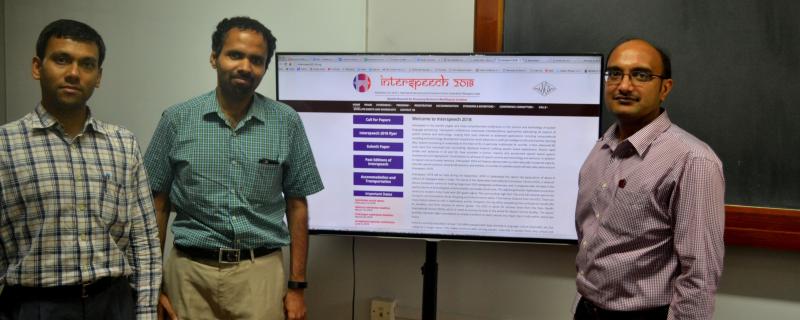
Interspeech--the world’s largest and most comprehensive conference on the science and technology of spoken language processing -- is coming to India for the first time ever. This year will witness the 19th edition of Interspeech, which will be held during September 2-6, 2018 at the Hyderabad International Convention Centre (HICC), Hyderabad, India, with an expected international participation of over 1500 delegates.

Bengaluru

LMC X-4 is a two-star system consisting of a pulsar and a companion star. In a recent study, scientists from the Raman Research Institute, Bangalore, examined characteristics of the X-ray signals emitted from LMC X-4, using signal processing techniques and analysis.

Bengaluru

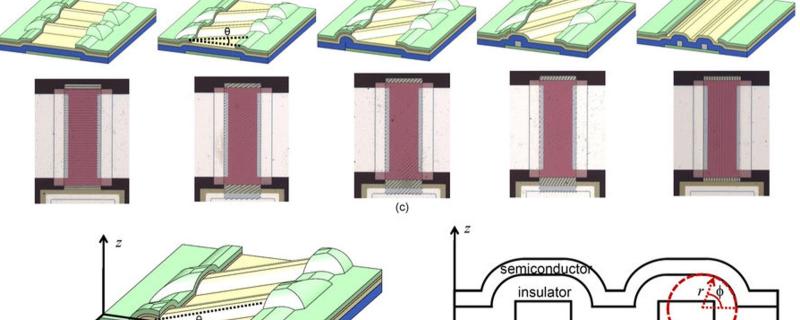
In today’s gadget-filled world of cameras, cell phones, smart watches and other lightweight and wearable devices, thin film transistors are commonplace. They are made by stacking thin layers of semiconductors, insulators and metals. In a study published in Nature’s Scientific Reports, researchers from the Indian Institute of Science, Bengaluru, have explored how creating textures in metal films used in such transistors could help make them easy to control.

Bengaluru

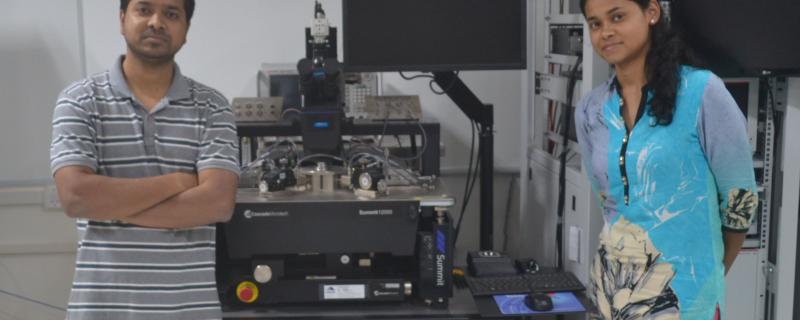
In research to be shared at the prestigious 56th International Reliability Physics Symposium (IRPS), researchers from the Indian Institute of Science Bangalore (IISc)  will present a paper that details a breakthrough in significantly improving the reliability limits of 3D FinFET technology in sub-14nm technology for System-on-Chip integration. The study is the result of work in collaboration with Intel that sought to better understand various aspects of electrostatic discharge (ESD), latch-up and hot carrier reliability of ultra-dense FinFET technologies.

Have you ever stepped outside and looked up at the sky on a clear, summer day and noticed something swimming in your field of vision? Little transparent worms or blobs that seem to disappear whenever you try and get a closer look at them, only to reappear as soon as you shift your glance. These are ‘floaters’, or as the scientific community calls them- ‘muscae volitantes’, which is Latin for ‘hovering flies’.

Bengaluru

Some details of the reproductive journey of a fig wasp, to find a suitable tree and lay eggs while simultaneously pollinate it in the process are known. In a recent study, scientists from the Indian Institute of Science, Bangalore, fill in the gaps in our knowledge about this fascinating journey.

Search Research Matters