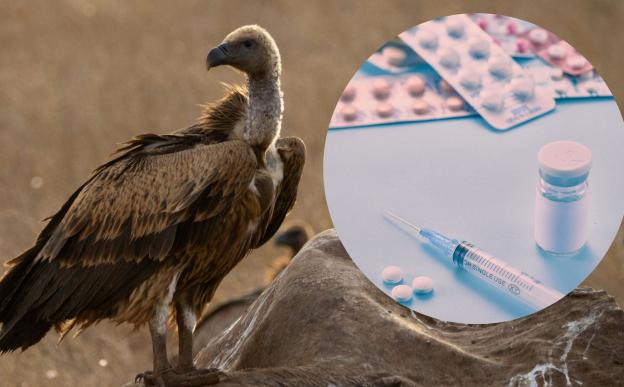
Despite successful bans on the veterinary drug diclofenac in Nepal and parts of India, a decade-long undercover investigation reveals that toxic alternatives like flunixin and nimesulide are rapidly replacing it, posing a renewed existential threat to the region’s critically endangered vulture populations.

Science


[field_op_main_image]

Malaria, the biggest killer of all time, has a long association with humans. As we develop new strategies to combat the fatal disease, the parasite causing the disease gets stronger than ever. In this seemingly never-ending tussle, who ultimately wins the battle? The judgement, it seems, is not an easy one! On World Malaria Day, here is a brief insight into the details of this deadly disease. 

[field_op_main_image]

Most methods that farmers follow today to control pests and save their crop are mostly reactive, which is done ‘after’ the damage has started. In addition, these methods either destroy other crops, or cause harm to animals that feed on them, or pollute the soil or air. Researchers have now found a ‘green’ and ‘clean’ way to detect crop pests before they start the damage. They have built a highly sensitive sensor that detects pheromones or chemicals released by insects for mating, which signal the presence of pests and thus prompt the farmers to take remedial measures.   


[field_op_main_image]

Technology has revolutionized almost every aspect of our lives - from healthcare to doing business. The field of meteorology is not far behind. In a recent study, scientists have leveraged the computing power of a new series of processors from Intel, to improve existing climate models and simulations. The new models, the researchers claim, have better accuracy and increased speeds and also free up meteorologists from the hassles of computer science.


[field_op_main_image]

Today is World Bicycle Day, a day celebrated to commemorate the joy of cycling. In a country like Netherlands, almost every person owns a cycle, and 99.1% are cyclists! But a city like Bengaluru -- almost thrice as big  and with 12 times more population -- loses hands down to Amsterdam, in citizens choosing to cycle. Why is that so? And what can be done to make people here fall in love with their bikes? The Research Matters team caught up with Prof. Ashish Verma, an Associate Professor at the Department of Civil Engineering, at the Indian Institute of Science (IISc), Bengaluru. 


[field_op_main_image]

Forests are home to a wide variety of plants and animals. But what decides the distribution of this rich flora and fauna? How do some species of trees end up in selected pockets of the forest? In a recent study, scientists have examined this connectedness in patchy shola forests of the Western Ghats and have given some insights into what dictates tree distributions in such patchy forests and what connects these patches. This study, the researchers say, provides key details on the micro and macro ecology of the forests.


[field_op_main_image]

What is the price of development? It is a tricky question to answer, especially for a country that is growing at its fastest pace with ambitious goals. But who actually pays this price and how? A recent study has tried to answer this touchy question in the context of small-scale hydropower projects that are increasing their presence in one of the ecologically sensitive area - the Western Ghats and points out how local communities are losing this one-sided game.

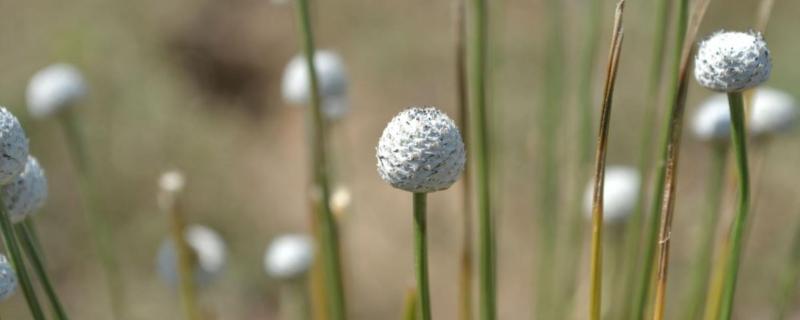
Scientists from the Agharkar Research Institute, Pune, have discovered a new species of plant Eriocaulon parvicephalum in the Western Ghats of Maharashtra. This plant belongs to the family Eriocaulaceae or commonly called pipeworts, due to their long naked stalks with a bulb like bud at the top. Although it looks similar to another species - Eriocaulon palghatense, of the same family, it was identified as a separate species after DNA analysis showed remarkable difference in the genetic make-up.

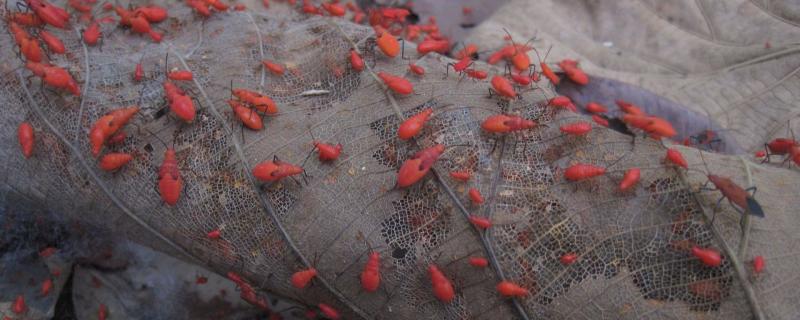
Cotton pests have been the cause of decreasing cotton yields in the country. Despite several attempts to controls these insects, their numbers remain unaffected. Rhynocoris fuscipes is a species of insect belonging to the family Reduviidae, which are known to be the natural predators of many cotton pests. Now, scientists from St. Xavier’s College, University of Florida and US Horticultural Research laboratory have proposed rearing Rhynocoris fuscipes in microenvironmental cages and then using them as predators to control cotton pests.


[field_op_main_image]

Can insects help us decipher how molecules behave? Yes, say scientists from Department of Chemistry of Indian Institute of Technology (IIT) Bombay, IIT Kanpur, IIT Guwahati and Indian Association for the Cultivation of Science, Kolkata. In a recent study, they have described how the concept of ‘swarm intelligence’ can be used to determine the most stable configuration of a molecule and its electronic structure. With this knowledge as base, scientists can design molecules such as drugs, vaccines and polymers with targeted properties.


[field_op_main_image]

When Charles Darwin put forth his theory of natural selection, he argued that all species of life evolved by adapting to their environments to survive. Most of such adaptations are evident in those life forms living in their natural habitat. But what about those that are locked up in laboratories and used as ‘model organisms’ in experiments to understand biological systems? How are their natural habitats and what kind of adaptations have they developed to survive in these habitats? A series of studies by scientists have now thrown some light on these questions in the life of zebrafish, a commonly used fish in laboratories.

Search Research Matters