Researchers have developed a versatile organic crystal that can receive and transmit encrypted data from any angle, paving the way for faster, more secure wireless communication.

General

Bengaluru

LMC X-4 is a two-star system consisting of a pulsar and a companion star. In a recent study, scientists from the Raman Research Institute, Bangalore, examined characteristics of the X-ray signals emitted from LMC X-4, using signal processing techniques and analysis.

Bengaluru

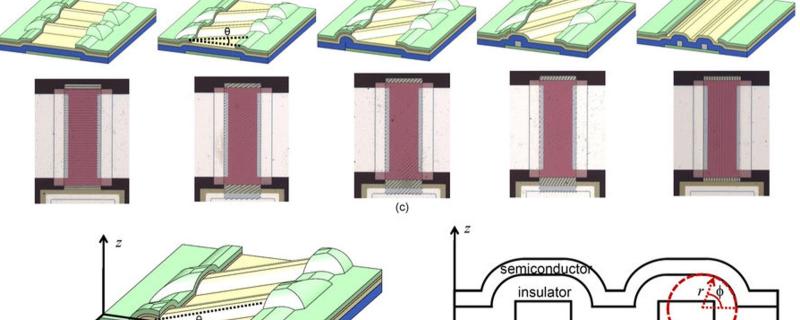
In today’s gadget-filled world of cameras, cell phones, smart watches and other lightweight and wearable devices, thin film transistors are commonplace. They are made by stacking thin layers of semiconductors, insulators and metals. In a study published in Nature’s Scientific Reports, researchers from the Indian Institute of Science, Bengaluru, have explored how creating textures in metal films used in such transistors could help make them easy to control.

Bengaluru

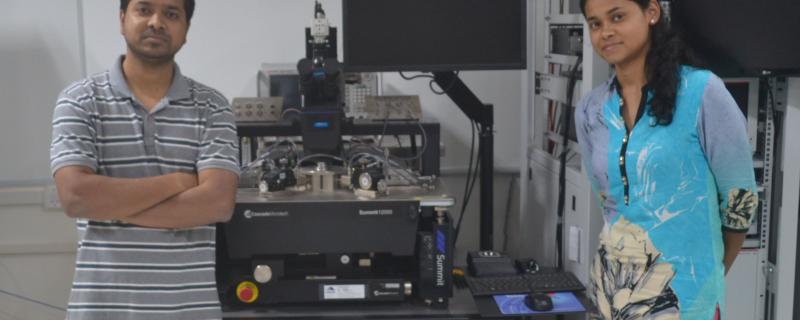
In research to be shared at the prestigious 56th International Reliability Physics Symposium (IRPS), researchers from the Indian Institute of Science Bangalore (IISc)  will present a paper that details a breakthrough in significantly improving the reliability limits of 3D FinFET technology in sub-14nm technology for System-on-Chip integration. The study is the result of work in collaboration with Intel that sought to better understand various aspects of electrostatic discharge (ESD), latch-up and hot carrier reliability of ultra-dense FinFET technologies.

Have you ever stepped outside and looked up at the sky on a clear, summer day and noticed something swimming in your field of vision? Little transparent worms or blobs that seem to disappear whenever you try and get a closer look at them, only to reappear as soon as you shift your glance. These are ‘floaters’, or as the scientific community calls them- ‘muscae volitantes’, which is Latin for ‘hovering flies’.

Bengaluru

Some details of the reproductive journey of a fig wasp, to find a suitable tree and lay eggs while simultaneously pollinate it in the process are known. In a recent study, scientists from the Indian Institute of Science, Bangalore, fill in the gaps in our knowledge about this fascinating journey.

Kharagpur

Scientists from Indian Institute of Technology Kharagpur (IIT Kgp) and GLA University, Mathura have developed a novel, low power humidity sensor using molybdenum disulphide nanoflakes and platinum nanocrystals.

Delhi

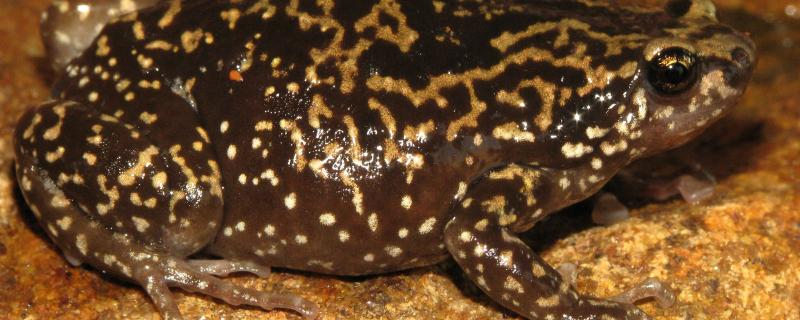
The Western Ghats in India and Sri Lanka are well known biodiversity hotspots, with a rich diversity of amphibian species. Both these regions have high density of amphibian endemism, which means that many of the species of amphibians found here are found nowhere else on Earth. Over 85% of amphibian species found in Sri Lanka are endemic, making this island nation have the highest amphibian endemism in Asia.

Bengaluru

Alzheimer's affects a large section of our aged population. Scientists from the Indian Institute of Science, Bangalore, shed some light on how the disease can be identified in its early stages. 

Bengaluru

A new study conducted by Pallavi Sinha and group from Institute of Medical Sciences, Banaras Hindu University and Boston Medical Centre has concluded that behavioral factors, like alcohol consumption and smoking, and clinical factors, like previous anti tubercular treatment, increases the risk of multi-drug resistant TB (MDR-TB).

Mumbai

For the first time ever, scientists from the Tata Institute of Fundamental Research (TIFR), Mumbai, Indian Institute of Science, Bengaluru, and Indian Institute of Science, Education and Research, Pune uncover the process of transport of fats in the body.

Search Research Matters