Researchers have developed a versatile organic crystal that can receive and transmit encrypted data from any angle, paving the way for faster, more secure wireless communication.

General

Kharagpur

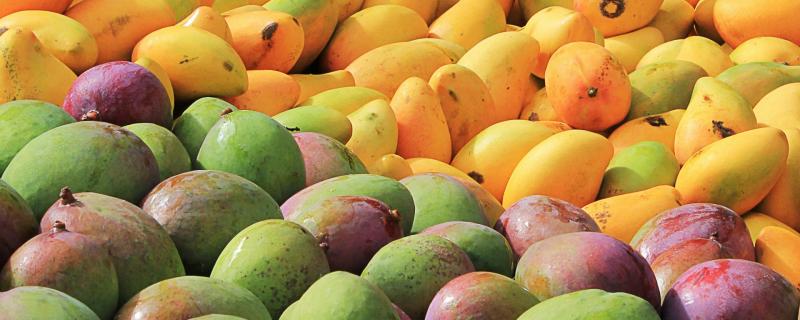
Scientists from the Indian Institute of Technology Kharagpur have developed a model to select the ideal combinations of temperature and pressure conditions to inactivate fruit-degrading enzymes during the processing of mango pulp.

Bengaluru

Around 500 all weather roads, listed in the Pradhan Mantri Gram Sadak Yojana’s (PMGSY) monitoring data as being ‘complete’, and has been paid for, have never been built in reality, finds a new study. This study, by researchers from the Princeton University, New Jersey, USA, and the Paris School of Economics, Paris, France, has suggested that political corruption, and not a lack of resources as thought, is the main reason for the lack of roads connecting remote areas in India.

Bengaluru

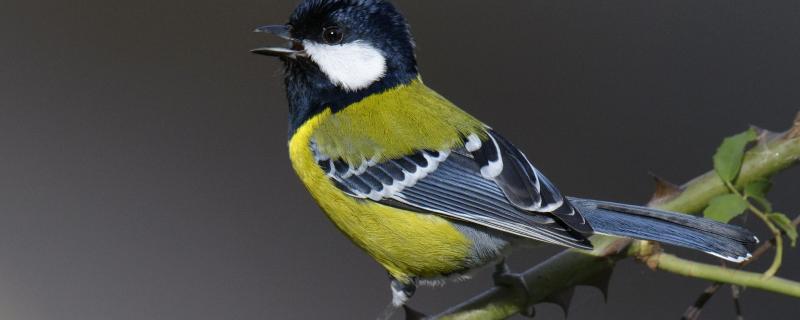
The Himalayas are home  to a host of biodiversity which has yet to be studied in detail. Taking the first steps to better understand a species of song birds scientists from the Indian Institute of Science, Bangalore and Cornell University explore if the sex of Green-backed tits can be identified by looking at the size of the beak and the thickness of the breast stripe.

Bengaluru

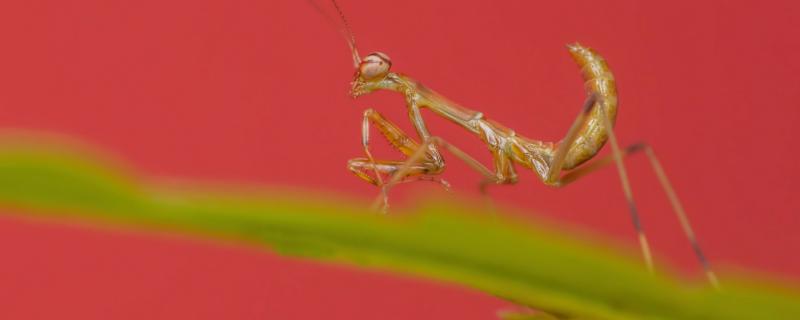
Dr. Vivek Nityananda, a research associate from the Newcastle University presented a lecture titled, “Stereovision and prey detection in the praying mantis”, on the 10th of January 2018 at the Indian Institute of Science. An alumnus of the Center for Ecological Sciences at IISc, Dr. Nityananda was introduced to the audience by his doctoral guide, Prof. Rohini Balakrishnan. The research that he presented to the audience was conducted at the Newcastle University, UK, conducted as a part of research undertaken by Prof.

Bengaluru

The National Institute of Advanced Studies (NIAS), Bengaluru, along with the National Innovation Foundation-India (NIF), Gandhinagar, the Trans Disciplinary University (TDU), Bengaluru, and the Mahatma Gandhi Institute of Rural Energy and Development (MGIRED), Bengaluru, are organizing the first edition of the ‘Annual School for Grassroots Innovations’ -- a programme that brings together scientists, students, innovators and industry representatives to find solutions to local problems and promote sustainable development.

Mumbai

Scientists from Indian Institute of Technology, Bombay, find a way to convert undesirable heat energy from electronic devices to electricity and reconverting this into electricity using the concept of thermoelectric effect - a physical phenomenon where a difference in the temperature between two contacts leads to a difference in the voltage, and hence flow of electricity.

Bengaluru

Prof. Philip S. Low, a Ralph C. Corley Distinguished Professor of Chemistry at Purdue University and the Director of the Purdue University Institute for Drug Discovery, addressed a gathering of students, researchers and Purdue alumni at the Material Research Centre auditorium, Indian Institute of Science, Bangalore on the 8th of January 2018.

Bengaluru

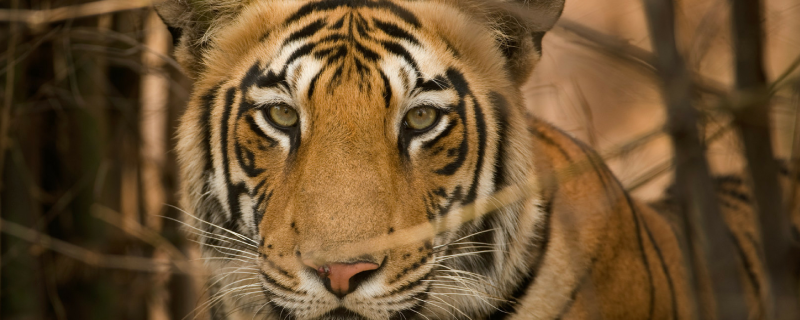
Tigers face threats like degradation on habitats and conflict with humans that has caused their numbers in India to dwindle. When the number of members in a population goes down, the population faces another threat, inbreeding depression. Scientists from the National Center for Biological Sciences, Bangalore, study the genetic makeup of tiger populations to mediate the ill-effects of inbreeding depression.

Bengaluru

Scientists from the Tata Institute of Fundamental Research, Mumbai, Université libre de Bruxelles- Institute of Neuroscience, Belgium, Indian Institute of Science, Education and Research, Pune and Sophia College for Women, Mumbai are now a step closer to understanding how the development of neural and glial cells – the two primary cell types in our brains – is regulated in a developing brain.

Bengaluru

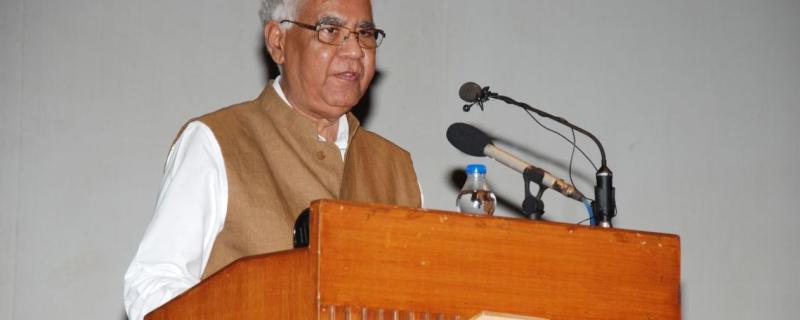
Prof. Baldev Raj was born on 9th April 1947. He completed his Bachelor of Engineering from the Government Engineering College, Raipur under the Pandit Ravishankar Shukla University (currently National Institute of Technology, Raipur). After completing his BE, Prof. Raj moved to Bengaluru to join Indian Institute of Science to complete his PhD and then moved to Chennai to obtain a Doctor of Science degree from Sathyabama Deemed University.

Search Research Matters