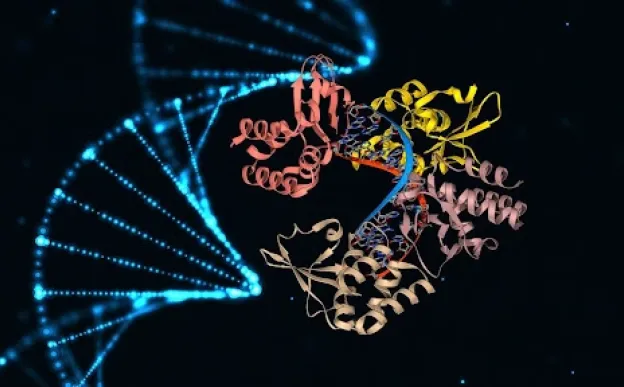

Researchers have identified the specific structural loops in G-quadruplex DNA that allow it to act as a chaperone, preventing protein clumping and ensuring healthy cellular function.

General

New Delhi

It was years ago that India’s first Prime Minister Jawaharlal Nehru had said, “It is science alone that can solve the problems of hunger and poverty, of insanitation and illiteracy, of superstition and deadening custom and tradition, of vast resources running to waste, or a rich country inhabited by starving people... Who indeed could afford to ignore science?” 

Nehru was one of the first people to use the term scientific temper and advocate the promotion of scientific temper:

Frogs have been around since the age of the dinosaurs, having survived four mass extinctions. Due to their remarkable ability to adapt to extreme conditions, they have thrived in almost all landscapes around the world from deserts to tropical rain forests, with some frogs even found in the Arctic circle. However, they are highly sensitive to changes in the environment. The world’s frogs are disappearing fast.

Bengaluru

Scientists from Council of Scientific and Industrial Research – Indian Institute of Toxicology Research (CSIR-IITR) and Amity University, Uttar Pradesh have been studying the harmful effects of Zinc Oxide nanoparticles (ZnO NPs) on living tissue and genes in mice, and their study reveals a potential threat lurking, if increasing use of such nanoparticles is not addressed soon.

Pune

What a year it has been for Indian science! From indigenous transistors to help India's Internet of things to solutions to living in harmony with wild animals we have seen it all. Here we take a look at the highlighs of Indian research in 2017.

Bengaluru

A new research from Indian Institute of Technology Madras, Chennai have developed a cost effective method of measuring the deformations in geotextiles-- a type of fabric generally used in the soil, using a common digital camera.

Bengaluru

2017 had been an eventful year for science all over the world. We have seen tremendous breakthroughs like the detection of gravitational waves, along with many discoveries and inventions that take us a step closer to making out lives better. Here we present snapshots of the remarkable contributions made to science in 2017.

Bengaluru

While the readers picked their choice of stories published on the website for 2017, here are the editors’ pick. Hope you enjoy them!

Whose cup of tea is it – ours or leopards’?

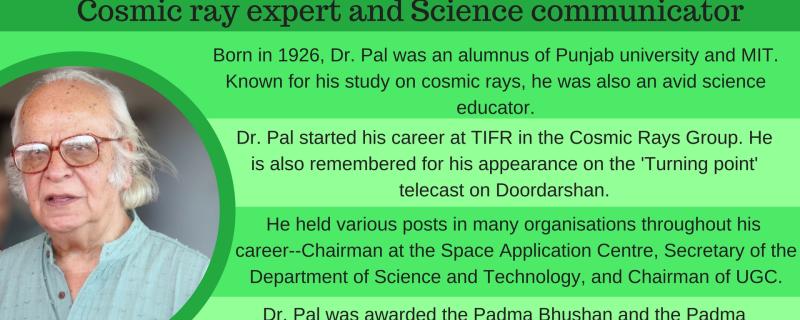
Born on 26th November, 1926, in Jhang, in undivided Punjab, Dr. Yash Pal was an Indian scientist, educator, science communicator and educationist. After completing his M.Sc. degree in Physics from Panjab University, he moved to the Massachusetts Institute of Technology for his PhD. His areas of specialisation included cosmic rays.

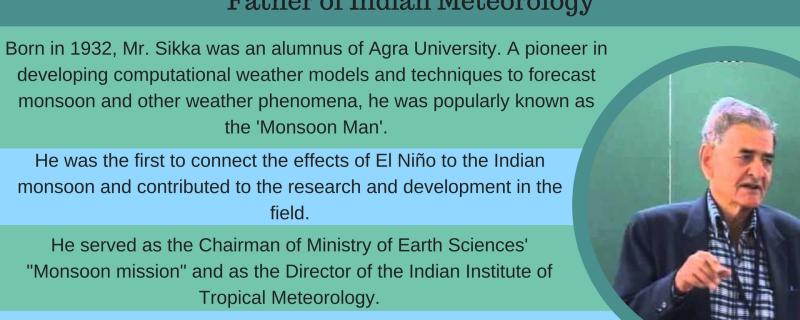
Dev Raj Sikka was born on 1st March 1932, in Jhang Maghiana in the undivided Punjab. After completing his M.Sc in physical chemistry from Agra University with a first rank, Sikka began his career in the Indian Meteorological Department in 1954. He later joined the Institute of Tropical Meteorology (known today as Indian Institute of Tropical Meteorology), becoming its Director in 1986. 

Dr. U R Rao was born on 10th March 1932, at Adamaru in the state of Karnataka. After completing his undergraduate at Anantpur, Rao moved to Banaras HIndu University for his Masters and then to Physical Research Laboratory, Ahmedabad to complete his PhD under  the guidance of Dr. Vikram Sarabhai.

Search Research Matters