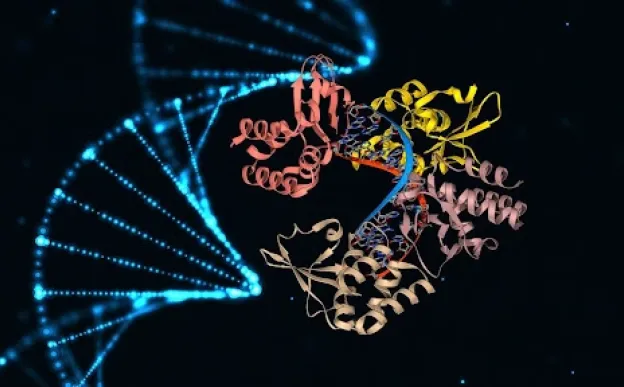
Researchers have identified the specific structural loops in G-quadruplex DNA that allow it to act as a chaperone, preventing protein clumping and ensuring healthy cellular function.

General

C V Vishweshwara or “Vishu” as he was known to all, was born on 6th March 1938, in Karnataka. He finished most of his schooling in Bengaluru and then his graduation in Mysore University. For his PhD, he moved to Columbia University and later to University of Maryland in USA, to work on general relativity. On returning to India, Vishu joined Raman Research Institute in Bengaluru and then later joined the Indian Institute of Astrophysics.     
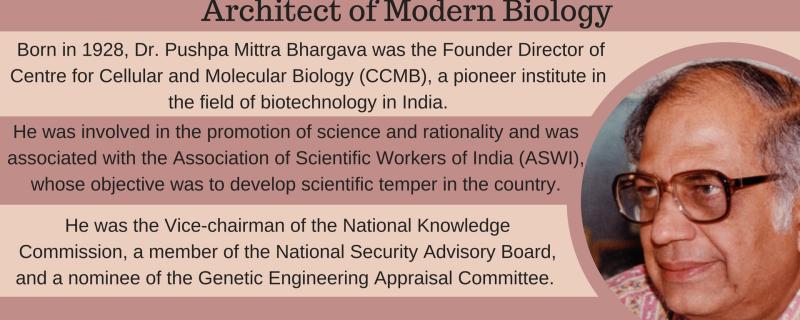
Pushpa Mittra Bhargava was born in Ajaymeru in Rajasthan on 22nd February 1928, to Ram Chandra Bhargava, a medical doctor, and Gayatri Bhargava. He was homeschooled until about the age ten, by his grandfather, after which he was directly admitted to class 9 in Varanasi. Having completing his Master’s in organic chemistry from Queens College, one of the best institutions in Uttar Pradesh back then, Bhargava joined Lucknow University for his Ph.D. By age 21, he was armed with a PhD in synthetic chemistry.  

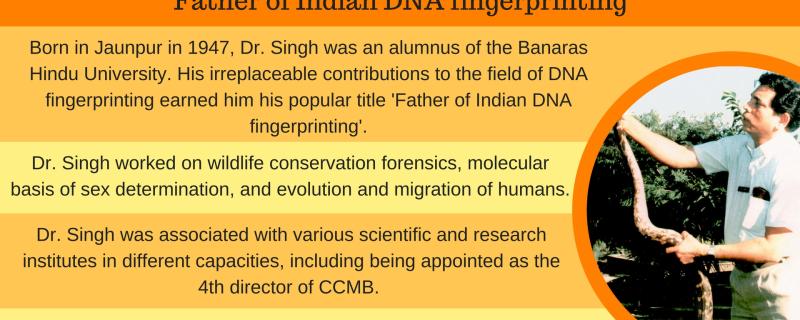
Dr. Lalji Singh was born in the small village of Kalwari in Jaunpur district of Uttar Pradesh on 5th July 1947, to a farmer and head of village, Suryanarayan Singh. With no higher education facilities in his village, Lalji strived for an education early on, travelling to a nearby village to complete his schooling and joining the reputed Banaras Hindu University. After completing his undergraduate and postgraduate degrees from BHU, Lalji was admitted for his PhD in the same university.

Whizzing and whirring past us are these insects that most of us remember as ‘helicopters’ of our childhood. Often subjected to our harsh fascination, these winged beauties were tied a string to their bodies, and flown around. Dragonflies and damselflies, collectively known as Odonates, were once as interesting to us as dragons and damsels of stories. Yet today, we barely have the time to notice these creatures.

A new research from Space Physics Laboratories, Thiruvananthapuram and Indian Institute of Science, Bengaluru has used a ground-based microwave radiometer profiler to evaluate the height of the atmospheric boundary layer, which is the lowest part of the atmosphere and changes based on its interaction with the surface of the Earth.

Bengaluru

Thickness of ice is one of the key indicators of global warming, but it is difficult to take these measurements accurately as direct methods can not be used on a large scale. An international team of scientists make an effort to standardise these measurements and evaluate the various current models.

Scientists from the Council for Scientific and Industrial Research (CSIR) - Indian Institute of Integrative Medicine, Jammu and the Academy of Scientific and Innovative Research, New Delhi have now synthesized hybrid protein sequences with antimicrobial properties, by using a mixture of natural and synthetic analogues of amino acids – the building blocks of proteins.

Bathinda

The whole world is struggling with the problem of antibiotic resistance developed by disease causing organisms. The epidemic of Tuberculosis especially plagues countries like India. In their recent research scientists from the Central University, Punjab have identified a new target drug to beat the bacteria’s defense against antibiotics.

Researchers at Punjab University have developed a sensor pattern noise based method to detect forged videos where one video is copied onto a different video.

Bengaluru

[field_op_main_image]

Human Elephant conflict in India is hardly news, but the conflict is also faced by our neighbours in the north, Nepal. Scientists from Arkansas State University explore the degree and the reasons due to which elephants come in close contact with humans.

Search Research Matters