In a recent study, researchers from IIT Bombay have developed a planning and scheduling framework for water distribution through tankers from water sources to water treatment facilities and consumers while making the cost of delivery affordable.

Professor Khare discusses the vulnerability of research, the charm of number theory, and why mathematics is central to human culture.

In a recent study, researchers from IIT Bombay have developed a planning and scheduling framework for water distribution through tankers from water sources to water treatment facilities and consumers while making the cost of delivery affordable.
Researchers devise a new technique to speed up processing electronic signals at significantly lower costs.
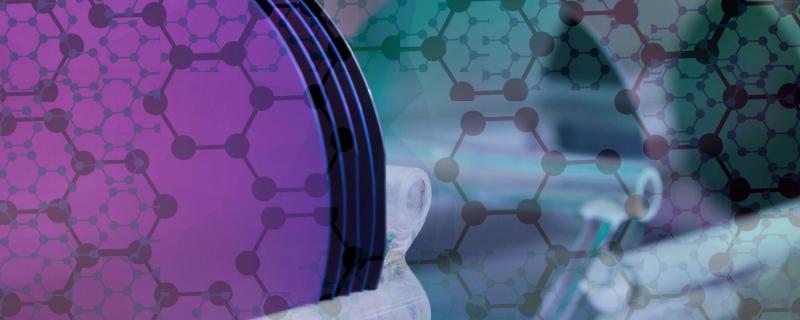
Prof Bhaskaran Muralidharan and Dr Alestin Mawrie of the Indian Institute of Technology Bombay have researched a specific category of two-dimensional nanomaterials, called semi-Dirac materials. Their theoretical studies show that it is possible to engineer semi-Dirac materials to make optical filters and efficient thermoelectric nanodevices.
Researchers develop a powerful stochastic neuron, like those in our brain, using random access memory to aid breakthroughs in artificial intelligence

Researchers from IIT Bombay find how temperature, humidity and properties of different surfaces influence the evaporation rates of respiratory droplets infected with COVID-19.

Photo by Jan Kopřiva on Unsplash
Researchers use ultra-small graphene particles to develop a new soil moisture sensor
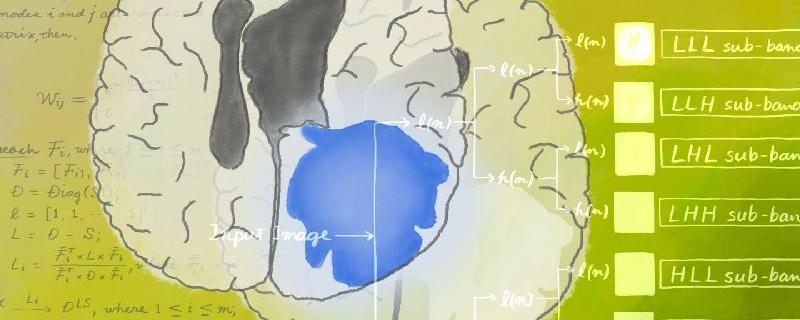
Researchers at the Indian Institute of Technology (IIT) Roorkee, India, and Kyoto University, Japan, have designed a machine-learning algorithm to identify the grade of glioma with high accuracy.
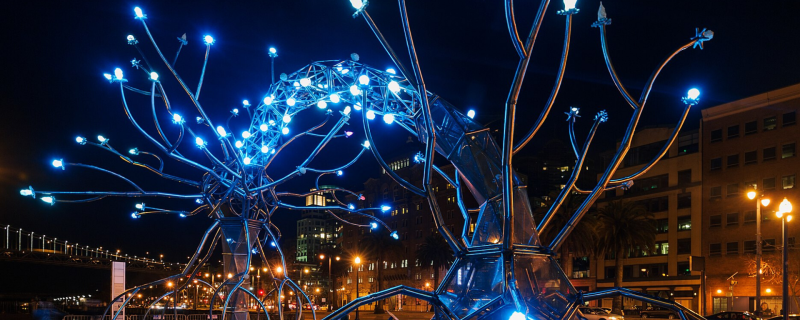
A computer based model of neurons in the urinary bladder

A woman cooking food using improved cookstoves [Image credits: Udaipur Urja Initiatives]
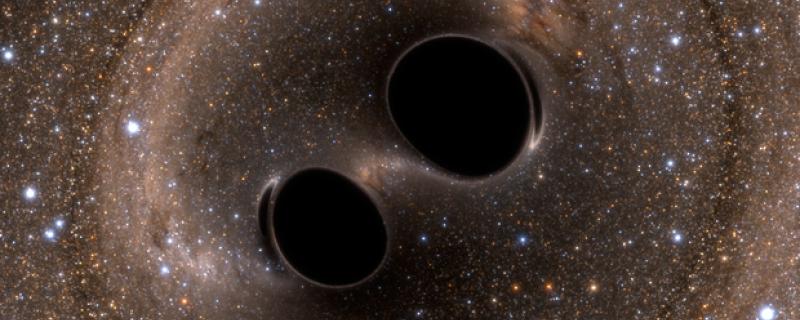
Snapshot of simulation showing two black holes colliding with each other. [Image Credits: Wikimedia Commons]
Astronomers detect gravitational waves from the merging of neutron stars and black holes, but no electromagnetic waves.