News

London, UK

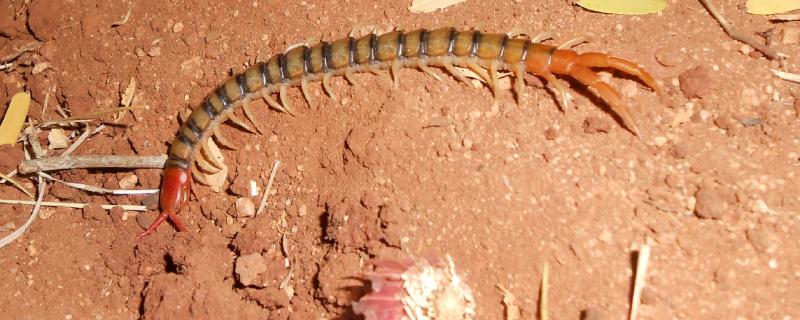
In a new study to be published in the journal ‘Invertebrate Systematics’, researchers Dr. Jahnavi Joshi and Dr. Greg Edgecombe from the Natural History Museum, London, have set out to determine the species boundaries of an old-world tropical centipede from the genus ‘Ethmostigmus’, from Peninsular India.
Kanpur

After graphene, carbon nanocones are now an exciting form of carbon for material scientists. As the name suggests, they are conical structures made up of carbon, where graphene sheets are folded like a party cap with a height and diameter of a few nanometers (1 nanometer = 1/1,000,000,000th of a metre). With unique properties due to their conical shape, they have a wide range of applications, including being used as a tip of the probe of a high precision microscope used to record activity at an atomic level.

Goa, India

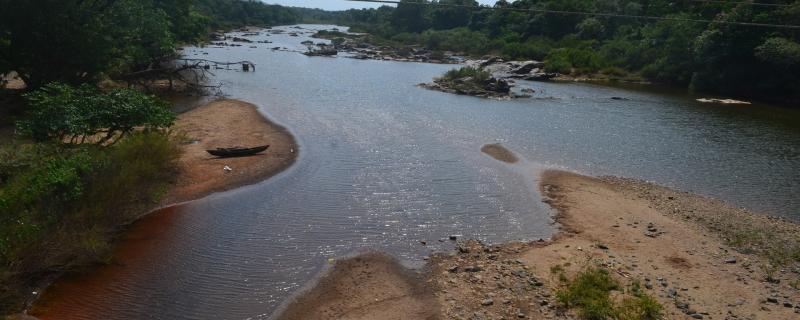
Researchers from National Institute of Oceanography, Goa have studied seasonal distribution of single celled organisms with shells known as forams or foraminifera, in the mudbanks of Allepy, Kerala. The study was conducted to understand the response of forams to physical and chemical changes in the environment associated with the mudbank formation.

Bhopal, India

Scientists from Indian Institute of Soil Science, Bhopal, and Indian Institute of Agricultural Research, New Delhi, both part of the Indian Council of Agricultural Research (ICAR), have been studying the effects of climate factors and use of insecticides on the ability of soil to consume methane.  Their study reveals one of the harmful effects of the insecticide- Chlorpyrifos, and a way to tackle the issue.

Mumbai

A team of researchers from Indian Institute of Technology Bombay, Mumbai, UNESCO-IHE Institute for Water Education, Netherlands, and the Department of Harbour, Coastal and Offshore engineering, Netherlands have come up with a cost effective and efficient method to measure the depth of shallow water. Combining satellite imagery and echo-sounding data, along with a machine learning technique, the team has produced an economical solution to the depth measurement challenge.

Indore

Researchers from Raja Ramanna Centre for Advanced Technology, Indore, Homi Bhabha National Institute, Mumbai, Indian Institute of Technology Delhi, Delhi, and Bhabha Atomic Research Centre Facility, Visakhapatnam are studying speckle variance optical coherence tomography—a new method of microscopy used to study biological materials. Their recent study checked for the possibility of using the method to microscopically monitor wound healing in real time.

Hyderabad

How hard is it shop for a few groceries? The majority of us may find this to be a trivial task. But, close to one billion people all over the world may find this an arduous one. Why? Because, unlike most of us, they live with long-term physical, mental, intellectual or sensory impairments.

Bengaluru

Scientists at the Indian Institute of Science (IISc), Bengaluru have developed a data driven software platform that can efficiently manage Internet of Things (IoT) resources and applications. The software, if commercialized, could be employed for efficient management of smart cities.

Bengaluru

The Quacquarelli Symonds (QS) World University Rankings 2019 were announced on June 6th 2018, which ranked 1000 of the world’s best universities from 85 countries. 24 Indian universities made it into the list, among which Indian Institute of Technology (IIT) Bombay , Mumbai emerged as the leader  ranking 162 in the world, with an overall score of 48.2/ 100.

Delhi

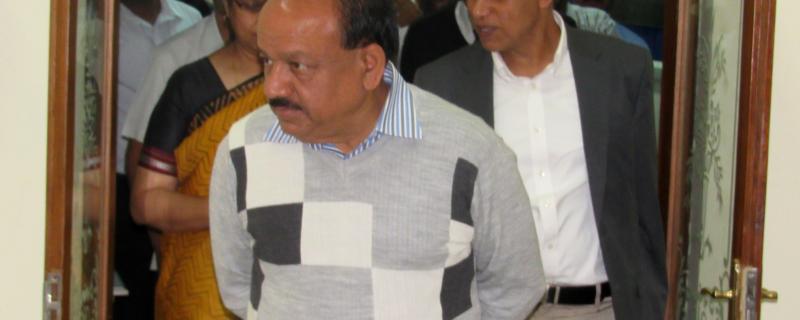
On World Environment Day, June 5th the Hon'ble Minister for Environment, Forests and Climate Change, Science & Technology and Earth Sciences, Dr. Harsh Vardhan, pledged to do away with single-use plastics in his life. He also urged the citizens to take up green initiatives, while avoiding the use of plastics.

Search Research Matters