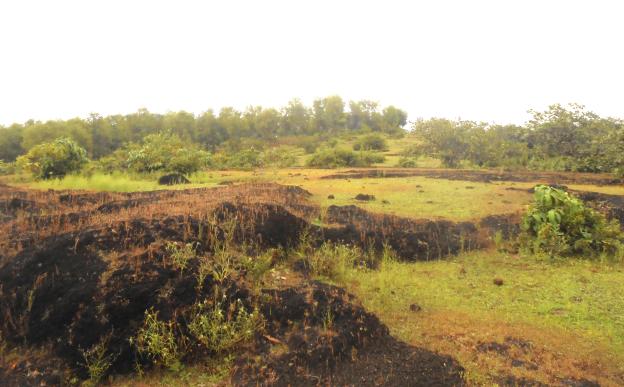
A new open-source satellite tool has revealed the critical ecological and economic importance of India’s Open Natural Ecosystems, challenging the colonial-era classification of these biodiversity hotspots as unproductive wastelands.

Science

Pune

A recent study by researchers at National Centre for Radio Astrophysics (NCRA) in Pune, India, explains the anomaly in the sun's atmospheric temperature. 
Bengaluru

Researchers show that the shape of dried paint or ink deposit is related to the concentration and size of particles in these colloids.

Ever wondered why we use only specific inks for the inkjet printer? Why not any random dye? The wrong ink may result in non-uniform and patchy printing. Printing inks are colloids—tiny solid particles suspended in a liquid. The size and the concentration of the solid particles in ink specified for printers are designed to deposit uniformly on paper.

Hyderabad

Very soon, the shortage of water and population explosion in the world may cost you your plate of biryani, and for many, their livelihood. Researchers from ICAR-Indian Institute of Rice Research, Hyderabad and Telangana State Agricultural University, Hyderabad, have identified essential genes that help in the adaptation of aerobic rice to water-scarce conditions.

Thiruvananthapuram

In a recent study, researchers synthesize a novel trehalose molecule that can form long, helical polymers under high temperatures.

Bengaluru

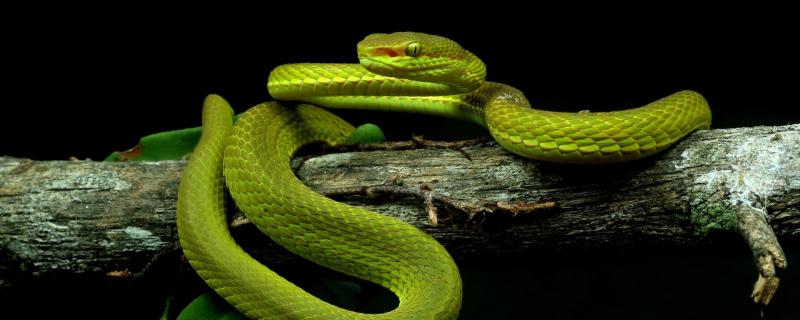
Salazar Slytherin – the parseltongue wizard who talks with snakes in J.K. Rowling’s fantasy Harry Potter is not just a mystical character name of the Potterverse anymore! Now, its found a place in India’s biodiversity as a newly discovered pit viper from Arunachal Pradesh has been named after this character. 

Bengaluru

In a recent study, researchers have found a new mechanism of controlling protein synthesis in the malaria-causing parasite, Plasmodium.

Bengaluru

In nature, colours are everywhere! Insects, birds, and mammals—all of them have vibrant colours and patterns on their bodies, which not only make them look pretty but play a role in behaviour and survival. Some use their kaleidoscopic looks to attract mates and stand out from their background; others prefer a dull look to blend into their surroundings and hide from predators. In some insects, like a few damselflies, males and females are differently coloured. Since the males mostly initiate mating in these insects, this difference in colours helps them to find a mate. A new study has now explored how colours impact the mating behaviour of a species of damselfly, Agriocnemis pygmaea.

Bengaluru

In a recent study, researchers have proved that when we talk to our loved ones, the variations in our speech are independent of language and culture. It also shows that a lack of such variety in our talk can result in problems with social communication. 

Bengaluru

A recent study by a team of researchers gives some insights into diagnosing bladder cancer early enough and preventing misinterpretation.

Mumbai

Researchers from the Indian Institute of Technology Bombay (IIT Bombay) proposes an improved additive manufacturing method to repair damaged industrial components for the sustainable growth of the industry.

Search Research Matters