A team of researchers and others have launched the Open Natural Ecosystem (ONE) Maps explorer, the most complete map of India’s Open Natural Ecosystems. The new digital tool is set to challenge a centuries-old misconception that has long endangered some of the country’s most vital landscapes. By utilising high-resolution satellite imagery to monitor India’s vast Open Natural Ecosystems, the tool provides the first comprehensive counter-argument to the persistent belief that these grassy, rocky, and semi-arid regions are merely unproductive wastelands.
Produced using Google Earth Engine, the explorer offers an eight-year time series of land cover maps spanning 2017 to 2024. These maps provide data at an incredible ten-meter resolution, covering the semi-arid and sub-humid regions of India, though currently excluding the Himalayas and the Northeast. The primary objective of the map is to provide policymakers, researchers, and civil society with the analysis-ready data needed to scrutinise ecological trade-offs. This is particularly crucial in the modern era, where the rush to combat climate change has created a complex Green versus Green conflict, where renewable energy projects like solar farms and large-scale tree-planting initiatives are inadvertently destroying ancient natural habitats.
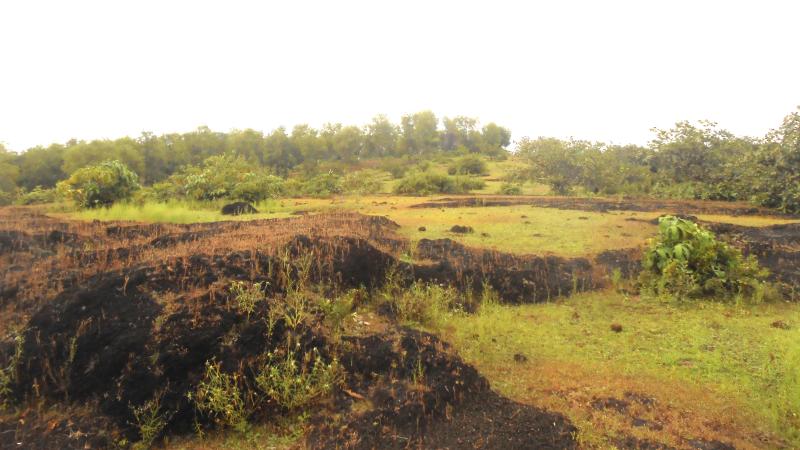
Open Natural Ecosystems, or ONEs, are non-forested, open-canopy landscapes that include savannas, vast grasslands, scrub deserts, rocky outcrops, and ravines. Together, they cover nearly ten per cent of India’s total landmass. However, despite their immense size and ecological significance, approximately seventy per cent of these lands are historically classified as wastelands in public policy documents. This classification is, however, a lingering colonial legacy. The British administration viewed any land that did not produce timber or tax revenue as having no value. This antiquated perspective has left these biomes dangerously vulnerable. Because they are seen as empty space, they are frequently targeted for industrial projects and ill-advised climate mitigation efforts, such as the installation of solar and wind parks or mass afforestation drives on grassy biomes that were never meant to support forest cover.
The ONE Maps Explorer aims to correct this historical error by visualising the immense, often invisible value of these landscapes. The data highlights three critical functions that these ecosystems serve, the first being biodiversity. Far from being barren, ONEs are teeming with life and are home to some of India’s most imperilled wildlife. Iconic species such as the Great Indian Bustard, the lesser florican, the Indian grey wolf, and the blackbuck rely entirely on these open spaces for their survival. Furthermore, these regions host a rich diversity of endemic plants that are found nowhere else on Earth. By providing detailed eleven-class land-cover maps, including six specific ONE classes, the tool allows users to clearly identify these high-priority conservation areas, ensuring that development planners can steer projects away from critical habitats.
Beyond wildlife, these ecosystems are the economic backbone for millions of people. The new data underscores the role of ONEs in supporting livelihoods, particularly for the approximately thirteen million pastoralists who live in India. Communities such as the Maldharis, Dhangars, and Raikas have relied on these commons for centuries to graze their animals and maintain their cultural identity. The livestock economy sustained by these so-called wastelands generates an estimated Rs. 1.31 lakh crore annually. By mapping these grazing lands accurately, the explorer helps protect the economic security of these rural communities against the encroachment of industrial projects that might otherwise fence off their traditional lands.
Perhaps most surprisingly to those unfamiliar with environmental science, these open ecosystems play a massive role in the global climate fight through carbon storage. While forests are famous for storing carbon in their wood and leaves, grasslands and savannas act as significant carbon sinks by storing vast amounts of carbon underground in the soil. This method of storage is often more stable and permanent than the above-ground biomass of forests, which are increasingly susceptible to wildfires in a warming world. The map explorer helps distinguish between areas that need preservation for this purpose and degraded lands that truly require restoration, helping the government avoid unscientific greening projects that can actually damage the water table and local ecology.
The creators of the ONE Maps Explorer are pushing back against a phenomenon known as Biome Awareness Disparity. This describes the tendency of conservation efforts to focus almost exclusively on lush, green forests while non-forest ecosystems vanish in silence. By making this tool open-source, the researchers are democratizing data access. All maps, methods, and source code are publicly available under an MIT License, accessible via a web app on the Google Earth Engine platform, with detailed methodology hosted on GitHub. This transparency encourages engagement from students, citizens, and scientists alike, fostering a better public understanding of the land.
This article was written with the help of generative AI and edited by an editor at Research Matters.