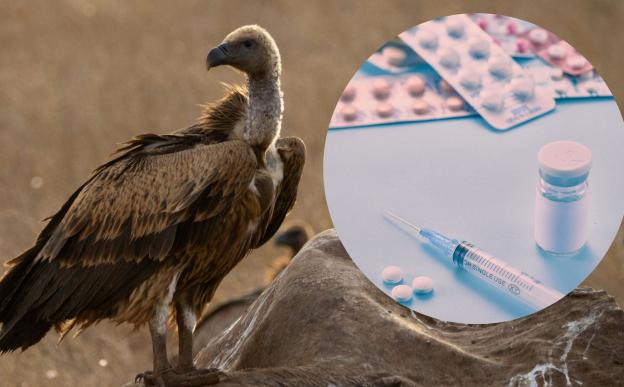
Despite successful bans on the veterinary drug diclofenac in Nepal and parts of India, a decade-long undercover investigation reveals that toxic alternatives like flunixin and nimesulide are rapidly replacing it, posing a renewed existential threat to the region’s critically endangered vulture populations.

Research Matters

Wading through an ‘infodemic’ amidst the pandemic

In February, when the news of the first few confirmed cases of coronavirus in India came to light, we as a nation warmed up to the ‘Wuhan virus’, now at our doorstep. The mainstream media rushed to report on emerging new cases and debated if our infrastructure could handle this epidemic. Social media was abuzz with guidelines and ‘pro-tips’ on what and what not to do, nevermind the accuracy.

Getting more with less: Study proposes the design of an optimum quantum circuit

Nature is an enigma; an ensemble of complex structures and functions come together to form a variety of mesmerising artefacts, including life. Richard Feynman, the well-known American Nobel Laureate and physicist, famously said—"Nature isn't classical, dammit, and if you want to make a simulation of nature, you'd better make it quantum mechanical, and by golly it's a wonderful problem, because it doesn't look so easy".

Mitochondria kill themselves to protect neurons from an early death

Voluntary movements, like lifting your hand to wave, are executed through precise coordination between different brain areas. Sometimes, due to the loss of neurons in the brain, some individuals cannot coordinate such voluntary movements and are said to be suffering from a condition called ataxia. A type of ataxia, known as the spinocerebellar ataxia, involves the loss of neurons from the spinal cord and cerebellum. These brain areas are responsible for controlling movement and balance.

Children of migrant construction workers face a disrupted quality of life

Infants require the highest level of nutrition for healthy growth and development. A four-month-old child, for example, uses 30% of its consumed food for growth. Adequate intake of minerals, like calcium and potassium, are known to be conducive to their wholesome diet. But, data from UNICEF shows that there is a high rate of undernutrition in children around the world.

Mediated by Mold: Bengaluru researchers show how fungi can make rice crops tolerant to salinity

Among all the calamities caused by climate change, an increase in the salinity of the soil is one. It is projected that, by 2050, about half of today’s arable land across the world will be affected by salinity. This increase would also hit India’s rice bowl, the Indo-Gangetic plains, which is projected to lose about 45% of the crop yield. When salinity increases, plants respond by absorbing less water, which affects their growth. How then do we help agriculturally vital crops cope with high salinity?

Fish school by intrinsic randomness reveals a new study by researchers at IISc

Understanding patterns in nature has been of interest to researchers. Some of the popular questions have been around why birds flock together, how groups of bees build their honeycombs out of perfect hexagons, how ants navigate finding the shortest path back to the nest, and the likes. Researchers across the world are trying to decipher and explain how and why such specific patterns emerge.

Study shows an increase in hypertension and obesity among school children

Obesity has become a global concern over the last four decades as the number of obese and overweight individuals has tripled since 1975. In 2016, about one in five children across the world, aged 5-19 years, were overweight or obese and half of them lived in Asia. The obesity epidemic, which was once prevalent in high-income, developed countries, has today soared in low- and middle-income economies, particularly in cities. A similar trend is observed in the case of hypertension—a major risk of obesity. In India, many studies have assessed the prevalence of obesity and hypertension and the correlation between them. However, recent data on this, particularly regarding children and adolescents from urban and rural areas, is scarcely available. Now, a recent study by researchers from India and the UK, published in the journal BMJ Open, provides some insights into the current prevalence rates for obesity and hypertension among adolescents in Northern India.

Search Research Matters