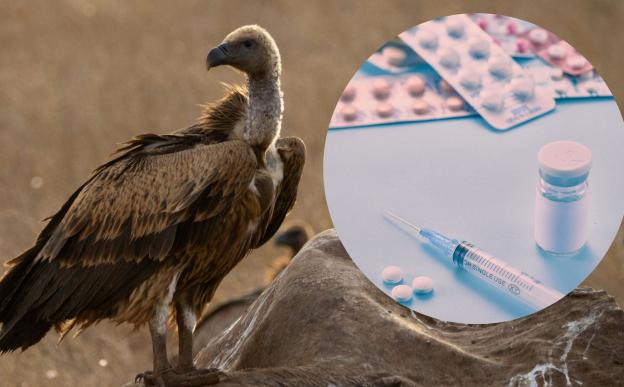
Despite successful bans on the veterinary drug diclofenac in Nepal and parts of India, a decade-long undercover investigation reveals that toxic alternatives like flunixin and nimesulide are rapidly replacing it, posing a renewed existential threat to the region’s critically endangered vulture populations.

Research Matters

Single-scale and multiscale diffusion

Modern science reveals that matter is made of atoms and molecules. Molecules in liquids and gases move randomly; there is an average distance between two nearest molecules. This distance is used to model the properties of the gas. However, there are certain problems, like  turbulence, that cannot be solved using just the distance, which is a single scale. We need to consider all scales from large to small. Such systems are called multiscale systems. 

Importance of Multiscale Description in Science

To understand an extensive, complex physical system, thinkers break it up into smaller components and try to understand the properties of the most minor microscopic components. This method helps us understand many complicated things around us, and has helped us solve a lot of real-world problems. But it does not help us understand certain phenomena, such as turbulence in fluids. A different way of thinking, a method that considers the physical system as a whole is needed in such cases. This method is called the multiscale analysis.

Making sense of sound - Digital Audio Processing Lab at IIT Bombay

Humans communicate a lot non-verbally, thanks to the ability of our brain to understand tone. Would computers be able to do this? Currently capable of understanding plain text, they are struggling to learn the emotions behind the words, conveyed through tone. But these machines are catching up fast. Digital audio processing tools equip computers to understand various information in sound, including emotions.Prof Preeti Rao of the Indian Institute of Technology Bombay is an expert in sound processing—an approach that helps us do various useful things, one of which is removing unwanted sounds (or noise) from an audio clip. With her team at the Digital Audio Processing Lab, Prof Rao attempts to understand the nature of sound, reveal the information it may hold, and use it for, say, identifying tracks, melodies or the raga of a song.

Mini-fuel engines could replace batteries in the future

Scientists around the world have been actively looking for eco-friendly alternatives to conventional chemical-based batteries. In one such effort, researchers at the Indian Institute of Technology Bombay (IIT Bombay) have designed a micro-combustor that is efficient and environment-friendly. The study, funded by the Science and Engineering Board (SERB) and Department of Science and Technology (DST), has been published in various journals including Applied Physics Letters, Energy Conversion and Management, and Applied Energy.

The crown that drove the world into a frenzy: Understanding the infection mechanism of novel coronavirus

 The novel coronavirus — termed SARS-CoV-2 — belongs to a family of viruses that target and infect the upper respiratory tract of mammals. At least six types of coronaviruses are known to infect humans that cause common cold. Scientists have reported the existence of coronaviruses in bats and birds dating back to millions of years ago. They believe that the cross-species transmission is more of a recent event.

Insights from Optics for Better Thermoelectric Devices

New design in thermoelectric devices can increase both output power and efficiency

A significant problem in electronic devices is the generation of heat during their operation. This phenomenon not only leads to the wastage of electric power but can also damage the device. Thermoelectric materials, which convert heat to electricity and vice versa, can be used to turn the generated heat back into electricity, thereby saving power and avoiding overheating of the device.

IISc team building indigenous ventilator prototype for COVID-19 patients

A ventilator can be a life-saver for patients whose lungs are damaged by the COVID-19 infection. But India, like all countries grappling with this pandemic, is likely to face a large shortage of ventilators. Manufacturers are unable to source key components such as sensors and flow controllers from abroad due to the current disruptions in global supply chains.To address this shortage, a team of engineers at the Indian Institute of Science (IISc) is currently building a prototype of an electro-mechanical ventilator from scratch, using only components found or made in India, based on guidelines issued by the UK Medicines and Healthcare Products Regulatory Agency. It is expected to be ready within the next couple of weeks.

Search Research Matters