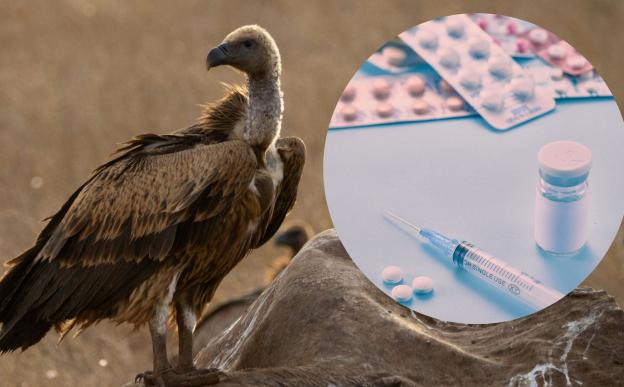
Despite successful bans on the veterinary drug diclofenac in Nepal and parts of India, a decade-long undercover investigation reveals that toxic alternatives like flunixin and nimesulide are rapidly replacing it, posing a renewed existential threat to the region’s critically endangered vulture populations.

Research Matters

Listening to birds amidst the urban hustle-bustle

In a recent study published in the Behavioral Ecology journal, Dr Anand Krishnan from the Indian Institute of Science Education and Research (IISER) Pune, studied birds’ singing activity and changes in the community structure of singing birds, before and after the arrival of migrant birds. The findings serve as a framework for monitoring rapidly-changing urban habitats through vocal birds and their singing behaviour. 

Genetic diversity in India’s lions is dangerously low, and that’s a big problem

A curious question in science is to know how these different types of lions evolved and how different are today’s lions from their ancestors. In a new study, an international team of researchers have tried to answer these questions by analysing the genes of extinct and living lions. The study, published in the Proceedings of the National Academy of Sciences (PNAS), finds that about 500,000 years ago, modern and now-extinct lions shared a common ancestor. Further, about 70,000 years ago, two different lineages of modern lions emerged. The findings also have implications on the conservation of the remaining lion population, which is just 10% of what it was a century ago.

Meet Salazar’s pit viper – a new snake species named after the parseltongue wizard

Salazar Slytherin – the parseltongue wizard who talks with snakes in J.K. Rowling’s fantasy Harry Potter is not just a mystical character name of the Potterverse anymore! Now, its found a place in India’s biodiversity as a newly discovered pit viper from Arunachal Pradesh has been named after this character. 

Poets and Quants

Genius is when someone’s works are so profound that they not only stand the test of time but test the truths of time. It has been 100 years today since Srinivasa Ramanujan was cruelly snatched away at a young age of 32. His works are yet to be fully deciphered.

Patterns of mating interactions in wild zebrafish now unravelled

Animal behaviour studies, which began in the 1970s, had a rocky start as they were viewed as a deviation from biological studies. They try to answer questions relating to why an animal's behaviour differs with different organisms and environmental factors, and the cost-benefits associated with each behaviour. Such studies help to understand not only the biology of the organism but also its ecological role. In one such study, Dr Anuradha Bhat and her group at the Indian Institute of Science Education and Research, Kolkata, have looked at the mating behaviour of zebrafish.


Search Research Matters