An accurate count of Asiatic lions could help design better conservation practices
A new study proposes an improved approach to determine lion densities and identify factors that affect their abundance, but there may be flaws say some.
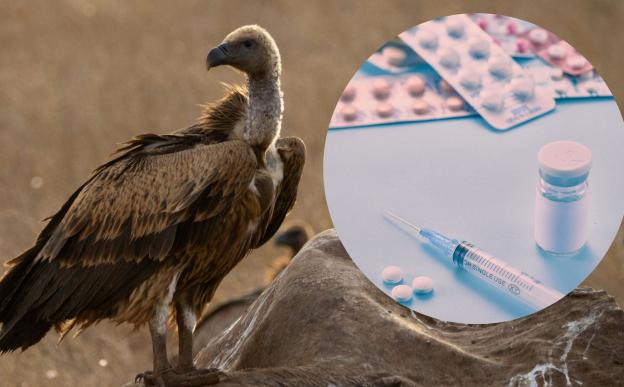
Despite successful bans on the veterinary drug diclofenac in Nepal and parts of India, a decade-long undercover investigation reveals that toxic alternatives like flunixin and nimesulide are rapidly replacing it, posing a renewed existential threat to the region’s critically endangered vulture populations.
A new study proposes an improved approach to determine lion densities and identify factors that affect their abundance, but there may be flaws say some.
Powered by citizen science, the State of India’s Birds report calls for conservation efforts to save India’s aves.
In January 2006, NASA launched the New Horizons space probe to explore the horizons of the Solar System and know what’s beyond all the planets. The space probe sailed about 5.9 billion kilometres for almost a decade, with state-of-the-art instruments on board, before it met Pluto, a now downgraded ‘dwarf planet’. Three and a half years later and still gliding, it encountered ‘2014 MU69’—the farthest object in the Solar System ever to be visited by a spacecraft. Today, this oddly named object has a fancy moniker—Arrokoth—and we now know a whole lot about this distant Kuiper Belt Object than ever before, thanks to three new studies.
According to the National Tiger Estimation survey, the number of tigers has surged to 2967, indicating a doubling of tiger numbers since the first survey conducted in 2006 under a revised monitoring methodology. Although this change may sound exciting to the layperson, some scientists have flagged concerns about accepting these claimed changes in tiger numbers. In a recent study, published in the journal Conservation Science and Practice, researchers from India and Norway refer to important mathematical, statistical and ecological principles and highlight how India’s tiger survey results deviate from these principles.
In the 18th and 19th century, Britain was abuzz with cranking steam engines, rattling power looms, and clattering machines. Amidst this daily ding, the world was witnessing a defining movement in human history—the Industrial Revolution—that soon spread to the rest of Western Europe. Powered by coal, the production of most things transitioned from hand to machine, spurring a rise in population and air pollution. For the next two centuries, London became infamous for its soot and smog, which turned fatal for about 12,000 people. Now, a new study has shown that this mal air has left its trace in the lofty Himalayan glaciers, thousands of kilometres away from Europe.
Researchers find familial dissimilarities in proteins from two species of Mycobacterium.
In a new study, an international team of researchers have found that large dams have heavily fragmented fish population across the world. Published in the Proceedings of the National Academy of Sciences, the study assessed about ten thousand species of fish worldwide affected by around 40,000 existing dams and 3,700 upcoming dams worldwide. The findings reveal that fish habitats are most disconnected in the United States, Europe, South Africa, India, and China. The proposed dams are poised to further worsen fish habitat connectivity in tropical watersheds like the Amazon, Congo, Mekong and Salween.
Researchers show that the shape of dried paint or ink deposit is related to the concentration and size of particles in these colloids.
Ever wondered why we use only specific inks for the inkjet printer? Why not any random dye? The wrong ink may result in non-uniform and patchy printing. Printing inks are colloids—tiny solid particles suspended in a liquid. The size and the concentration of the solid particles in ink specified for printers are designed to deposit uniformly on paper.
Diabetes is a chronic, life-threatening disease affecting over 8.8% of the Indian population. These individuals often need specialised medical care and support to keep the blood glucose levels in check and ward off complications. Hypertension, a condition where the blood pressure is high, is also chronic and is known to affect about one in three adults in India. As both these conditions are chronic and life-threatening, they pose a significant burden on India’s healthcare system. But, what happens when they coexist in an individual?
A recent study, published in the Journal of Human Hypertension, highlights the plight of individuals in India, with both hypertension and diabetes.
Indigenous tribal communities usually reside in harmony with their environment and possess the knowledge, passed down to them by tradition, of the nutrient-rich food available in their surroundings. These traditional foods are rich in proteins and micronutrients. Globally, almost a billion people are dependent on these foods for adequate nutrition. However, despite this treasure of knowledge and proximity to the biodiverse environment, the tribal communities face widespread malnutrition. A diverse diet, consisting of the specific indigenous foods known and accessible to these communities would fulfil the micronutrient need. But because of reasons like easy access to markets, food security programs and other opportunity costs of accessing diverse food sources, tribal communities are transitioning towards monotonous modern diets, which may contribute to hidden hunger in them.
Dr Suparna Ghosh Jerath of the Indian Institute of Public Health-Delhi (IIPH-Delhi) realised the importance of studying and documenting this treasure trove of knowledge of indigenous foods and food habits and exploring the possibility of utilising this knowledge to address malnutrition in the tribal communities.