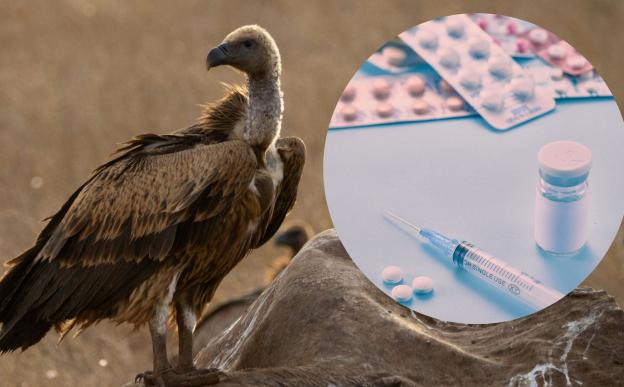
Despite successful bans on the veterinary drug diclofenac in Nepal and parts of India, a decade-long undercover investigation reveals that toxic alternatives like flunixin and nimesulide are rapidly replacing it, posing a renewed existential threat to the region’s critically endangered vulture populations.

Research Matters

Mystery river snail reveals dispersal events into Indian subregion

Mud snails, also known as mystery snails, live in freshwater and belong to a snail family called Viviparidae. They are found throughout the world except in South America and Antarctica. Such globally distributed species incite interesting questions about their dispersal across different continents. In a recent study, researchers in Bengaluru from the Ashoka Trust for Research in Ecology and the Environment (ATREE) and the Indian Institute of Science (IISc), investigated manifestation of these mystery snails in India.

What causes tau to tangle?

In a recent study, researchers at the Indian Institute of Science Education and Research (IISER) Mohali, have studied the mechanism behind the phase separation of the tau protein fragment that forms characteristic aggregates associated with Alzheimer's disease.

Nanocarbon Florets to Treat Industrial Effluents

Nanomaterials are revolutionising the way we do things with applications in medicine, electronics and biocompatible materials, to name a few. Scientists are studying various nanoforms of carbon—nanotubes, nanocones, nanohorns, two-dimensional graphene and even carbon onions! Now, researchers from the Indian Institute of Technology Bombay have added a new form to this list called nano carbon florets. These nano-sized florets, shaped like marigold flowers, have much more than just good looks to flaunt; they can help keep the environment clean by removing harmful heavy metal pollutants from industrial effluents. In a study published in the journal ACS Applied Nano Materials, Prof C Subramaniam and his team from the Department of Chemistry have designed nanocarbon florets that can remove up to 90% of pollutants containing arsenic, chromium, cadmium and mercury.

Anti-androgen drugs to treat prostate cancer may be doing more harm than good, finds study

Prostate cancer occurs when the cells of the prostate gland—a male reproductive organ—start growing abnormally due to the elevated level of androgens. Androgens are hormones required for development and maintenance of the male reproductive system. Androgen Deprivation Therapy (ADT) is the most commonly used treatment against prostate cancer, wherein the androgen production is reduced or the receptors, which are required for androgen to function, are blocked with the help of drugs like enzalutamide and apalutamide.

Machine Learning for faster Drug Discovery

Artificial intelligence (AI) and machine-learning (ML) approaches are the present-day buzzwords finding applications in a host of domains affecting our lives. These approaches use known datasets to train and build models that can predict, or sometimes, make decisions about a task. In one such case, researchers at the Indian Institute of Technology Bombay (IIT Bombay), Mumbai, have in a recent study, developed ML approaches using molecular descriptors for certain types of catalysis that could find use in several therapeutic applications.

Study cautions about the use of designer receptors to control the brain

Chemogenetics is a technique that uses chemicals to understand how neurons are activated. It manipulates genes to place the neurons under the control of special receptors called DREADDS. Short for Designer Receptors Activated by Designer Drugs, these receptors only bind to an inert chemical called Clozapine-N-Oxide (CNO). In a recent study, researchers from the Tata Institute of Fundamental Research (TIFR), Mumbai, and Jawaharlal Nehru Center for Advanced Scientific Research (JNCASR), Bengaluru, point out specific flaws in this technique.

IISc researchers show that Indian monsoon has a 67-year cycle, link it to the global sea surface temperature cycle

Researchers from the Indian Institute of Science, Bangalore; Indian Institute of Tropical Meteorology, Pune; and Florida State University, USA; have mathematically computed a multidecadal variability in the Indian summer monsoon rainfall and the global sea surface temperature. They have established that Indian monsoon rainfall exhibits a 67-year oscillation and is closely linked to the sea surface temperature cycle, which also shows a similar 67-year swing. The study also shows that 80% of all droughts have occurred in the rainfall cycle’s ‘negative phase’, associated with a below-average rainfall; whereas 60% of all floods have occurred in the positive phase, marked with above-average precipitation. Their findings have been published in the Quarterly Journal of the Royal Meteorological Society.

New blood-based test to diagnose TB within an hour

An international study, led by researchers from the USA, which also included researchers from India, have designed a point-of-care testing approach for individuals suffering from TB. The study, published in the journal Science Translational Medicine and supported in part by the Bill and Melinda Gates Foundation, proposes a rapid, cost-effective, and readily accessible triage test kit that can be used at the site of patient care.

Friendly neighbours? Study shows crop yield increases when biodiverse environments surround farms

As winter sets in over Punjab, one can hear the humdrum of hundreds of machines harvesting rice across lakhs of hectares of paddy fields. In Maharashtra, villages in Vidarbha lug their snowy cotton harvest to the market. Years ago, these landscapes were a sprawling array of forests, grasslands, wetlands and multiple crops cultivated on a shifting basis.

Search Research Matters