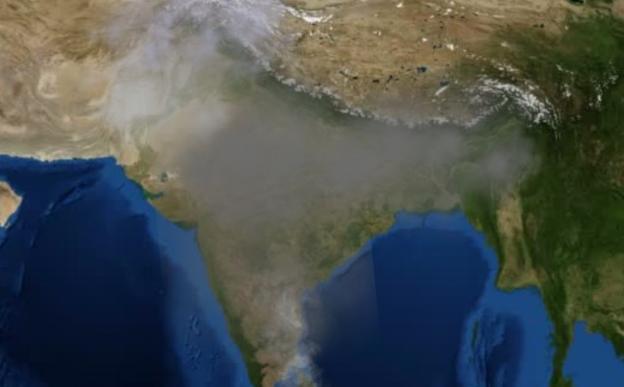

Satellite analysis confirms rising temperatures and wind patterns are driving aerosol spikes across India, with a record high in 2022 following the historic lows of the COVID-19 lockdown.

Deep-dive

Bengaluru

Drought-stricken farmland in Karnataka [Image Credits: Pushkarv / CC BY-SA 3.0)

With climate change occurring at an alarming speed, study finds that temperatures across many parts of the globe, including South Asia, could reach the breaking point by 2050.


Bengaluru

In a new study, researchers devise a unique way to observe the process of devitrification under a microscope, in real-time. 

Mumbai

Researchers from the Indian Institute of Technology Bombay (IIT Bombay), National Centre of Biological Sciences (NCBS) Bengaluru, Anna University, Chennai and ETH, Zurich uncover the molecular events that lead up to the formation of protein clusters commonly seen in Parkinson’s disease.


Bengaluru

In a series of studies, researchers have investigated how the Hemidactylus geckos, or leaf-toed geckos, evolved during the two periods of climate change.

Kolkata

Studies have found that dogs tend to be friendlier in areas with frequent human activity. But what about their interaction with individuals of their kind in these areas? Do humans play a role here? A recent study from the Dog Lab IISER Kolkata has delved into the social interactions of dogs amongst themselves and with humans. 


Mumbai

A team of scientists from IIT Bombay have recently proposed a novel setup to carry out quantum information processing at room temperatures, using a stack of specially designed layered materials. 

Pune

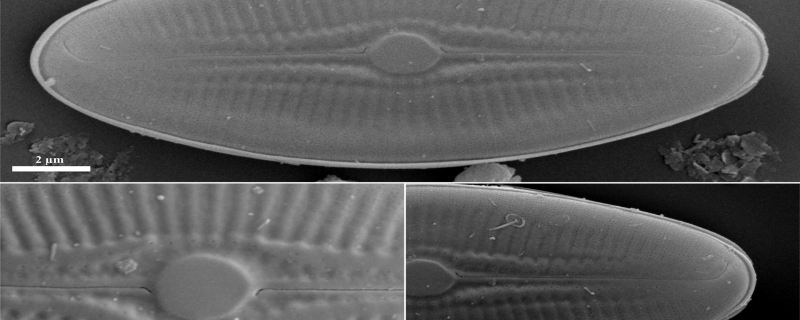
In a recent study, researchers describe this new species of diatoms from the Mawsmai caves in Meghalaya.

Bengaluru

In a recent study, a group of astronomers studied a galaxy not too distant from the Earth, using data from AstroSat, India’s first indigenous satellite dedicated to astronomy.

Bengaluru

Why are apple orchards moving higher up in the Himalayas? This shift is a result of the not-so-cold-anymore winters, says a recent study. 

Bengaluru

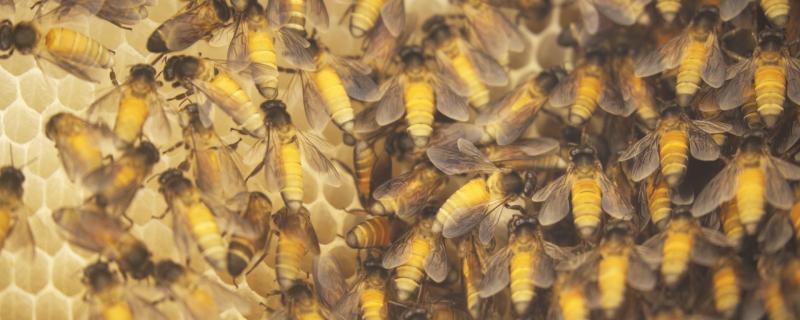
For years, chemicals in pesticides were thought to be the culprits, leading to the mass death of insects. Now, a new study has found that toxic pollutants in the air are equally responsible for this misery. Much like in humans, polluted air is affecting the survival, behaviour, health and genes of pollinating insects, honey bees in this case.


Search Research Matters