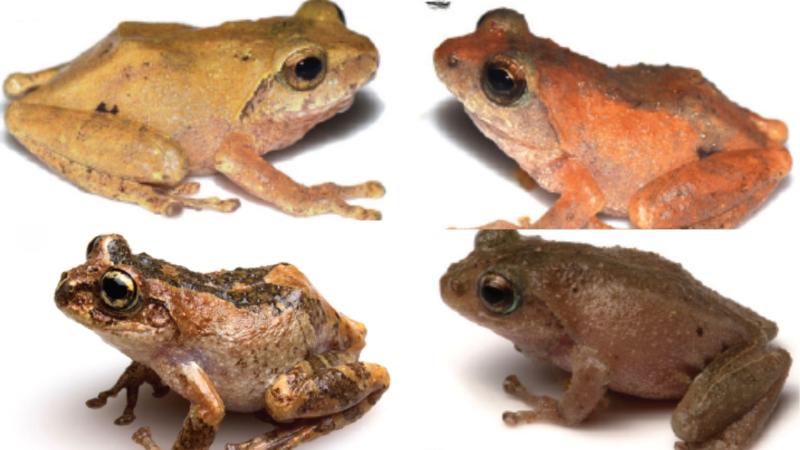
Image: 4 of the new species of bush frogs. Credit: Authors https://doi.org/10.3897/vz.75.e148133
A revision of the tiny, elusive bush frogs of Northeast India has led to the formal description of 13 new species, boosting the region's known amphibian diversity.
Researchers from the Wildlife Institute of India, Dehradun, and the Natural History Museum, London, spent eight years, from 2016 to 2024, conducting extensive fieldwork. Their research spanned across 81 localities in eight Indian states, namely Arunachal Pradesh, Assam, Manipur, Meghalaya, Mizoram, Nagaland, Sikkim and West Bengal, and collected 204 specimens during the time. Their research comprehensively documents the tiny bush frogs to resolve a long-standing mystery surrounding these small amphibians. The frogs, belonging to the genus Raorchestes, are notorious for being amorphologically cryptic, looking almost identical to the naked eye, making them difficult to tell apart using traditional methods.
To overcome this challenge, the research team employed an integrative approach, combining analysis of mitochondrial and nuclear DNA, detailed morphological measurements, and crucially, recordings of the frogs' unique advertisement calls. While the frogs may look alike, the study found that their genetic makeup and their distinctive acoustic repertoire or the sounds they make, were key to differentiating the new species.
The newly described species are small, with adults typically measuring between 13 and 28 millimetres in length, and they occupy similar ecological niches. The bioacoustic evidence proved vital, as the calls could be broadly classified as either pulsatile or non-pulsatile, with smaller-bodied species emitting the highest dominant frequency calls and larger species having the lowest. This comprehensive study has increased the total number of known Raorchestes species in Northeast India to 21.
In addition to the new discoveries, the research resolved the taxonomic identities of several historically known species, and four previously described species from the region were synonymised. The scientists also confirmed that the related genus Philautus does not appear to be present in Northeast India. Many of the new species are point endemics, known only from their specific discovery locations, with seven found within or near protected areas such as the Namdapha Tiger Reserve. The researchers warn that ongoing rapid deforestation and development projects in the region pose a threat to this unique, newly documented diversity, underscoring the importance of protected areas for conservation.
The new species along with the locations where the specimens were found are listed below:
- Raorchestes arunachalensis, Arunachal Pradesh
- Raorchestes barakensis, Assam, Nagaland, Mizoram, Arunachal Pradesh, Manipur
- Raorchestes boulengeri, Meghalaya
- Raorchestes dibangensis, Arunachal Pradesh
- Raorchestes eaglenestensis, Arunachal Pradesh
- Raorchestes khonoma, Nagaland
- Raorchestes lawngtlaiensis, Mizoram
- Raorchestes magnus, Arunachal Pradesh
- Raorchestes mawsynramensis, Meghalaya
- Raorchestes monolithus, Manipur
- Raorchestes narpuhensis, Meghalaya
- Raorchestes nasuta, Arunachal Pradesh
- Raorchestes orientalis, Arunachal Pradesh, Manipur
This article was written with the help of generative AI and edited by an editor at Research Matters.