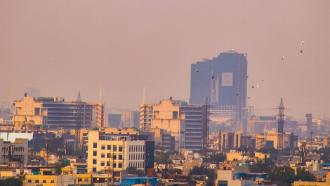
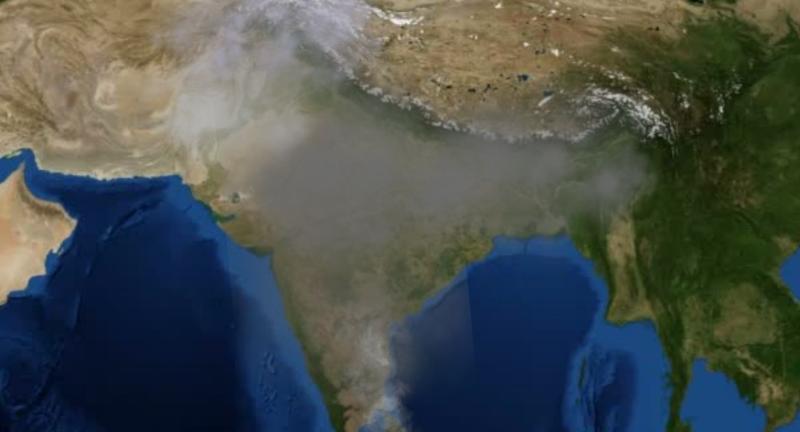
New research has identified a correlation between rising temperatures and the density of atmospheric particles over the Indian peninsula. It found that 2022 marked the highest levels of aerosol pollution in recent years. A team of researchers from the Regional Remote Sensing Center (NRSC, ISRO), Nagpur, and Suresh Gyan Vihar University, Jaipur, used satellites to map the invisible clouds of dust, smoke, and chemicals that hover over the subcontinent.
Their findings show how natural weather patterns and human activity collide to alter the air we breathe. The study highlights that while the COVID-19 lockdown in 2020 provided a temporary reset for the atmosphere, pollution levels have since rebounded aggressively. This increase is primarily driven by heatwaves and wind patterns that transport dust to unexpected places, including the high-altitude cold desert of Ladakh.
Did You Know? Not all pollution acts the same. Absorbing aerosols (like black carbon from fires) warm the Earth by trapping heat, while Non-absorbing aerosols (like sulfates from chemical reactions) can actually cool the Earth by reflecting sunlight back into space. |
The researchers used data from the European Space Agency's Sentinel-5P satellite, which carries the TROPOMI (TROPOspheric Monitoring Instrument). TROPOMI is a complex camera that can capture images of the ground and analyse the chemistry of the air between the satellite and Earth. By processing five years of data from 2019 to 2023 using Google Earth Engine, the team measured the Aerosol Index, which measures how much particulate matter is suspended in the air and, crucially, what kind of matter it is.
Positive values usually indicate absorbing aerosols like dust, smoke, and soot that trap heat, while negative values point to non-absorbing aerosols like sulfates that scatter sunlight. This distinction is vital because these microscopic particles do more than just make the sky look hazy; they play a massive role in climate change by either reflecting solar radiation away from Earth or trapping it like a greenhouse, further warming the planet.
The researchers discovered that temperature is a primary driver of aerosol levels. In the scorching heat of the Thar Desert and the Rann of Kutch, rising temperatures make the air turbulent, lifting massive amounts of fine dust into the atmosphere. This creates a natural hotspot of pollution that isn't caused by cars or factories, but by the landscape itself reacting to the heat. However, the study also revealed that wind is a powerful conveyor belt for these particles. In a surprising discovery, the pristine, high-altitude region of Ladakh was found to have high aerosol loads during the transition from summer to autumn. The study attributes this to strong winds carrying dust up from lower elevations, proving that even remote Himalayan regions are not immune to atmospheric changes.
Conversely, the research highlighted the cleansing power of the Indian Monsoon. As the rains sweep across the country from June to September, they effectively wash the sky, dragging particles down to the ground and resulting in the cleanest air of the year, even in desert regions. However, once the rains stop and winter sets in, a different, more dangerous dynamic emerges in North India. The study points out that despite low temperatures, which usually lower natural dust levels, regions like Punjab, Haryana, and New Delhi see massive spikes in pollution. This is attributed to the boundary layer effect, where cold air traps pollutants close to the ground, combined with human activity. The satellite detected significant levels of non-absorbing aerosols, likely sulfates and smoke from agricultural fires, turning the Indo-Gangetic plains into a winter smog trap.
The study offers a granular, region-specific breakdown of how different landscapes react to weather anomalies. It links the 2022 extreme heatwave to a measurable spike in aerosols, providing evidence that global warming directly worsens air quality. However, the researchers note that the current study focuses heavily on broad meteorological parameters and suggest that further detailed work is needed to understand the impact of other agents. Nevertheless, as India grapples with the dual challenges of industrial growth and climate change, this satellite-backed evidence provides a roadmap for where and when to focus mitigation efforts to protect public health.
This article was written with the help of generative AI and edited by an editor at Research Matters.