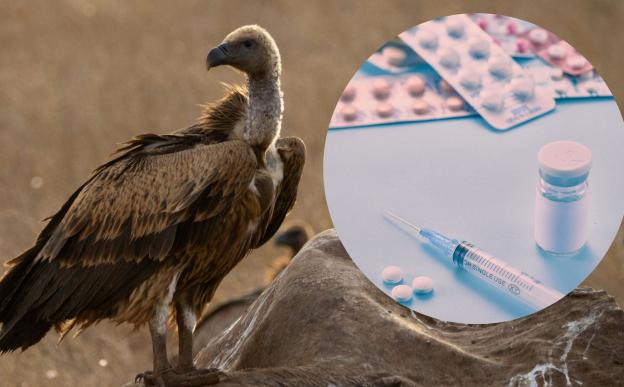
Despite successful bans on the veterinary drug diclofenac in Nepal and parts of India, a decade-long undercover investigation reveals that toxic alternatives like flunixin and nimesulide are rapidly replacing it, posing a renewed existential threat to the region’s critically endangered vulture populations.

Science

Bengaluru

The 28th of February every year is celebrated across the country as ‘National Science Day’ to commemorate the discovery of ‘Raman effect’ by Sir C V Raman. About 90 years ago, Sir Chandrasekhara Venkata Raman, had a ‘eureka moment’ when he discovered how light scattered when it travelled in a transparent medium. After two years, this discovery won India her first Nobel Prize in Physics, for a work that was carried out entirely in India.
Bengaluru

Dr. Attreyee Ghosh is a solid earth geophysicist at the Indian Institute of Science, Bangalore, talks about the advancements made in science in the recent years and how these have helped us in understanding our planet better.

Mumbai

“Honesty is the best policy - when there is money in it”, quipped Mark Twain.

Though the abilities of computers have increased exponentially, recognising sarcastic commentary such as “being awake at 4am with a headache is fun”, still remains a challenge. Unlike humans, who use visual and physical cues like rolling of eyes to detect sarcasm, computers have to rely only on text. For the past decade, linguistic studies have accelerated enhancements in computational irony.

Are you a fan of detective TV shows? If so, you will know of DNA Fingerprinting as a tool to identify a criminal.

Everyone’s DNA, much like a fingerprint, is unique. Repeating sequences of DNA called tandem repeats are present between genes. The number each repeat sequence varies from person to person. We can generate a unique pattern of tandem repeats for every person using specialized laboratory techniques. Identical twins are an exception to this case since they have the same DNA fingerprint.

Bengaluru

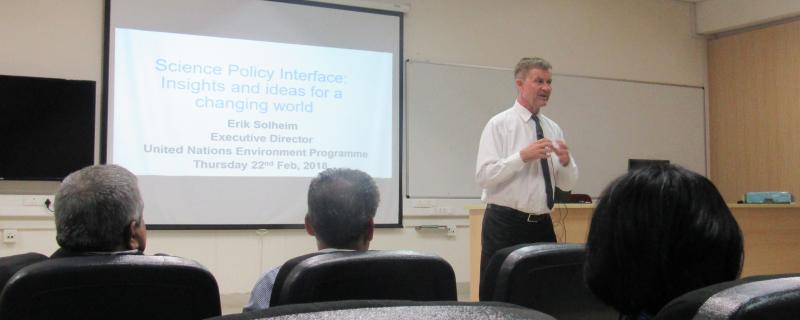
Erik Solenheim, Executive Director of the United Nations Environment Programme visited Center for Ecological Sciences at Indian Institute of Science (IISc), Bengaluru to deliver a talk about the interface of science and policy.

In his talk titled ‘Science Policy Interface: Insights and ideas for a changing world’ Mr. Solenheim spoke about the three main environmental challenges of we face today namely; climate change, pollution and loss of biodiversity.

Bengaluru

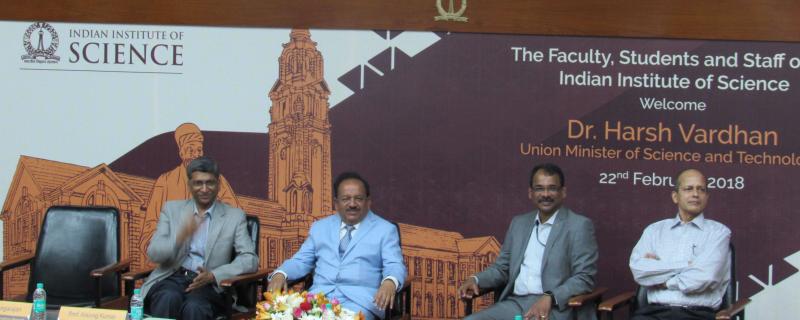
Dr. Harsh Vardhan, Hon’ble Union Minister of Science and Technology, Environment, Forest and Climate Change and Earth Sciences visited Indian Institute of Science (IISc), Bengaluru to inaugurate the supercritical carbon dioxide Brayton cycle test loop facility. He was welcomed by Prof. Anurag Kumar, Director IISc, Prof. G Rangarajan, Divisional Chairman, Interdisciplinary Research, Prof. Pradip Dutta, Chairperson, Interdisciplinary Centre for Energy Research, and V. Rajarajan, Registrar, IISc.

Bengaluru

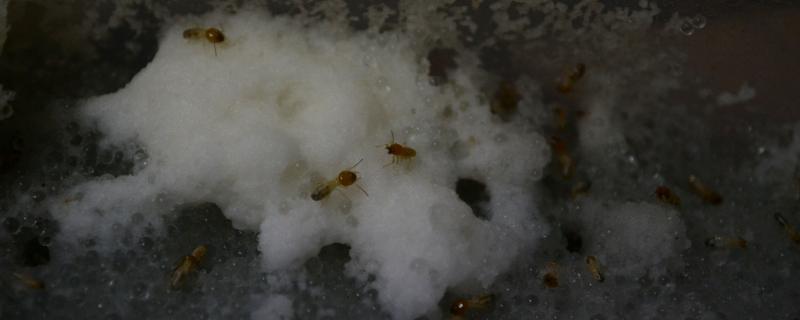
Termites are known to be efficient farmers who farm a kind of fungus in their colonies to digest the wood that they feed. Scientists from the Indian institute of Science, Bangalore and École Nationale Supérieure de Chimie de Montpellier, Montpellier, France, explore whether the termites prefer a certain species of fungus and if they can identify weed fungi and remove them.

Bengaluru

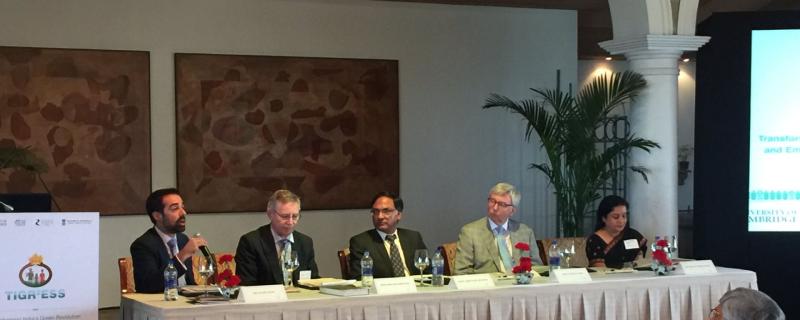
Professor Ashutosh Sharma, Secretary, Department of Science and Technology and Department of Biotechnology, India and Professor Stephen Toope, Vice-Chancellor, University of Cambridge,  along with other researchers from the University of Cambridge and from various Indian research institutions met today in New Delhi to formalise the launch of TIGR2ESS – an acronym for “Transforming India’s Green Revolution by Research and Empowerment for Sustainable food Supplies”.

Gujrat

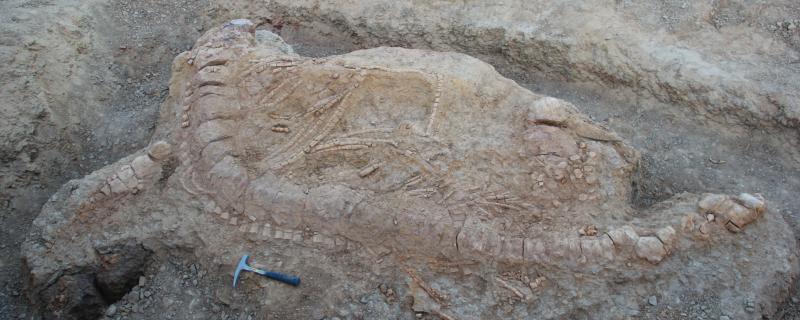
For the first time ever scientists discover the skeleton of the ancient marine reptile, Ichthyosaur, in the Kachchh basin of Gujarat. 

Indore

Researchers from Indian Institute of Technology Indore, Indore have developed shape controlled cobalt ferrite nanoparticles, which can be used to accurately measure the humidity of a region.

Search Research Matters