Researchers have developed a novel all-in-one nanoparticle that could upgrade how we repair serious bone injuries. By combining the bone-strengthening power of strontium with a highly porous silica framework, the team has created a material that can be 3D-printed into custom scaffolds to help the body regrow missing tissue. This new approach addresses three of the biggest hurdles in modern orthopaedics: getting stem cells to turn into bone, ensuring a steady blood supply to the new tissue, and preventing infection at the site.
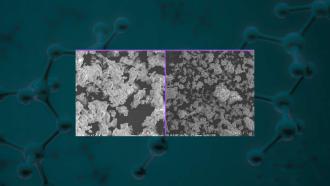
The researchers, based at the BRIC-National Institute of Animal Biotechnology and the BRIC-Regional Centre for Biotechnology, used a chemical technique known as the modified Stöber method to create these particles. At the heart of the discovery are Strontium-doped mesoporous silica nanoparticles, or Sr-MSNs. These particles are incredibly tiny, about a thousand times thinner than a human hair, and are mesoporous, meaning they are filled with millions of microscopic holes. These holes act like a sponge, allowing the particles to hold and slowly release therapeutic ions that tell the body’s cells exactly what to do.
Did You Know? The xanthan gum used to make the 3D-printed bone scaffold is the same ingredient found in your kitchen! It’s used in salad dressings and gluten-free bread to thicken and stabilise them. |
When these nanoparticles were introduced to stem cells taken from goat membranes, the results were remarkable. The strontium ions acted as a chemical switch, activating specific signalling pathways inside the cells that forced them to grow into bone and cartilage. To solve the problem of angiogenesis, the process of building new blood vessels, the team tested the particles on chick embryos. They observed a significant increase in blood vessel density and branching. This is vital because, without a blood supply, newly grown bone would quickly die from a lack of nutrients.
Beyond growth, the nanoparticles also exhibit a built-in defence mechanism. The Sr-MSNs demonstrated a strong ability to kill common superbugs, including E. coli and Staphylococcus aureus. This could be a game-changer for surgery, as bone implants are often prone to biofilm infections that are notoriously difficult to treat with standard antibiotics. To make this technology practical for surgery, the researchers mixed the particles into a bio-ink made of xanthan gum. Using a 3D bioprinter, they created stable, jelly-like structures that could be shaped to fit a specific wound, providing a sturdy home for cells to move into and start the rebuilding process.
While earlier studies have focused on bone growth or infection control separately, this multifunctional platform integrates all three necessary biological functions into a single system. Furthermore, by adding the nanoparticles to xanthan gum, the researchers overcame a major limitation of natural hydrogels, which are usually too weak to support weight-bearing bone. The addition of the silica particles significantly toughened the material, making it suitable for 3D printing without losing its shape.
Despite these promising results, the researchers noted that there are still steps to take before this reaches the clinic. The current study was conducted in a laboratory setting (in vitro) and on chick embryos. The team acknowledges that the next major challenge is in vivo testing, which involves seeing how these scaffolds perform inside a living mammal over a long period. Understanding exactly how the body's immune system reacts to these particles will be crucial for their long-term success.
As our population ages and the number of sports injuries and accidents rises, the demand for better bone grafts is higher than ever. Current treatments often involve taking bone from one part of a patient's body to fix another, which is painful and risky. This 3D-printed nanotechnology offers a future where doctors can simply print a smart replacement part that guides the body to heal itself, reducing recovery times and preventing the need for multiple surgeries.
This article was written with the help of generative AI and edited by an editor at Research Matters.