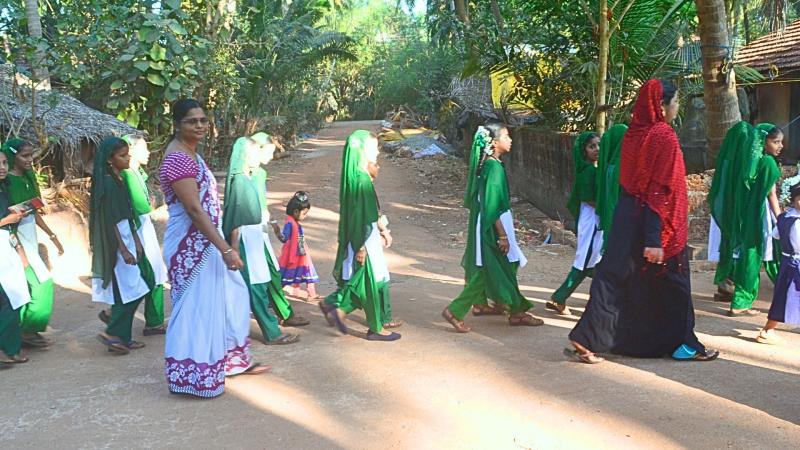
A new, in-depth analysis of India's higher education landscape has identified the barriers to the fulfilment of a child’s fundamental right to education. The new study showed that while students from the poorest economic backgrounds are slowly gaining better access to science, technology, engineering, and mathematics (STEM) courses, deep-seated inequalities based on wealth, gender, and social identity remain significant barriers to equitable access. The research highlights a strong gender and caste bias, with some groups worsening over time, emphasising the need for reform. This is particularly pertinent within the country's rapidly expanding private, unaided institutions, which are often too expensive for deserving students.
Did You Know? The right to education is a fundamental right for all children between the ages of 6 and 14, established by the Right of Children to Free and Compulsory Education (RTE) Act, 2009 |
The study, conducted by researchers at Birla Institute of Technology and Science (BITS) Pilani, Hyderabad, found that the odds of attending or completing a STEM higher education course are still heavily influenced by a student's economic status, their gender, where they live (rural/urban), and their social identity (caste/religion). This is particularly concerning because STEM fields in India are widely considered elite and high-value, offering better job prospects and prestige than other fields. The researchers also observed a positive trend: the odds of STEM attendance for the 'poorest' and 'poorer' economic groups improved between the two survey periods (2014 and 2017-18). However, this progress is overshadowed by persistent gender and location biases.
The team used verified, nationally representative data from the latest two rounds of the National Sample Survey (NSS) education surveys. The NSS, conducted by the Ministry of Statistics and Programme Implementation, collects data through nationwide household surveys on various socio-economic subjects, including education, employment and urban and rural prices. Specifically, the team used data from the 71st round (January-June 2014) and the 75th round (July 2017-June 2018) of the NSS survey that covers millions of households across India. They focused specifically on the higher education age cohort (18-23 years) and measured access in two ways: current attendance in a STEM course and successful completion of a STEM course.
Then, using statistical tools like logistic regression and multinomial logistic regression, they calculated the odds or likelihood of a student attending or completing a STEM course. They based the analysis on various explanatory factors, like being a rural woman or being in the poorest economic quintile, compared to a base group, like an urban male or the wealthiest quintile. The logistic regression model helped determine the factors affecting the odds of attendance and completion overall. For instance, the multinomial logistic regression model helped them compare the relative odds of a student attending a private unaided college versus a government institution. It revealed that the poorest students had the lowest relative odds of attending a private unaided institution.
The explanatory variables they tracked included household monthly consumer expenditure, gender, social group (Scheduled Caste, Tribe, Other Backward Class), and geographical zone. They also created an intersectional variable combining gender and rural/urban location to capture more nuanced disparities.
The analysis of intersectional disparities, where gender and location overlap, showed that gender was a stronger determinant of STEM access than location. Rural males had better odds of attending and completing STEM than both urban and rural women, with rural women having the lowest odds overall. This highlights a persistent, and in some cases, a worsening, gender bias.
The researchers also stress the role of private institutions. Given that a majority of India's colleges are private unaided, the study found a strong need for equitable access to these institutions. The researchers note that students from disadvantaged groups like Scheduled Tribes (STs) were worse off than others in terms of attending private, non-government colleges. The odds of STEM attendance for all disadvantaged groups (SCs, STs, and OBCs) actually decreased between the two NSS rounds, underscoring a worrying trend.
However, the authors acknowledge that since they used large-scale survey data, they could only establish statistical associations or correlations, not direct causal effects. They also note that the survey data lacked crucial information on student ability, motivation, prior academic performance, or parental education, which could have provided a deeper understanding of individual choices and potential biases.
Nevertheless, the work provides a vital, data-driven roadmap for policymakers in India. By empirically identifying the specific groups – rural women and particular social identities – who face the highest barriers, the research emphasises the urgent need for targeted interventions. Ensuring inclusion and equitable access to STEM higher education is indispensable for India's economic advancement and innovation. The authors strongly recommend that the Ministry of Education create an official, designated list of STEM courses and that future national surveys include a separate field for STEM subjects to improve data collection and research.
This article was written with the help of generative AI and edited by an editor at Research Matters.