Researchers from the Indian Institute of Technology Bombay (IIT Bombay) proposes an improved additive manufacturing method to repair damaged industrial components for the sustainable growth of the industry.


Researchers from the Indian Institute of Technology Bombay (IIT Bombay) proposes an improved additive manufacturing method to repair damaged industrial components for the sustainable growth of the industry.

This article is a tribute to Phillip Anderson, who passed away on March 29, 2020. Besides his pioneering works in condensed-matter physics, he also wrote extensively on the theme of reductionism and multiscale physics.

Among all the calamities caused by climate change, an increase in the salinity of the soil is one. It is projected that, by 2050, about half of today’s arable land across the world will be affected by salinity. This increase would also hit India’s rice bowl, the Indo-Gangetic plains, which is projected to lose about 45% of the crop yield. When salinity increases, plants respond by absorbing less water, which affects their growth. How then do we help agriculturally vital crops cope with high salinity?
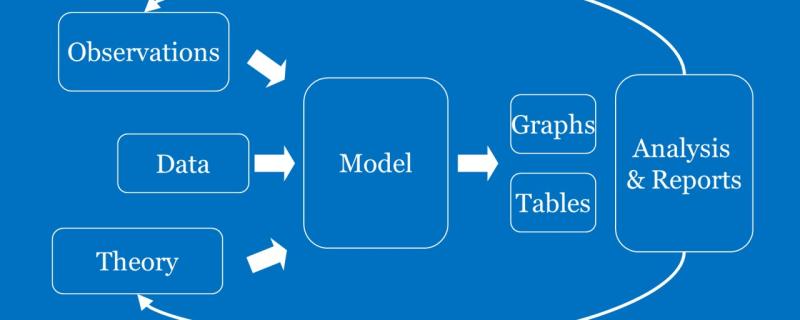
Research Matters is happy to bring you this article as part of the series on Mathematical Modeling and Data Analysis by the Mathematical Modeling team of Indian Scientists' Response to Covid-19 (ISRC). The first part of this series is on Explaining Models of Epidemic Spreading.
Why do we need Mathematical Models for CoVID-19?

To understand an extensive, complex physical system, thinkers break it up into smaller components and try to understand the properties of the most minor microscopic components. This method helps us understand many complicated things around us, and has helped us solve a lot of real-world problems. But it does not help us understand certain phenomena, such as turbulence in fluids. A different way of thinking, a method that considers the physical system as a whole is needed in such cases. This method is called the multiscale analysis.

Humans communicate a lot non-verbally, thanks to the ability of our brain to understand tone. Would computers be able to do this? Currently capable of understanding plain text, they are struggling to learn the emotions behind the words, conveyed through tone. But these machines are catching up fast. Digital audio processing tools equip computers to understand various information in sound, including emotions.Prof Preeti Rao of the Indian Institute of Technology Bombay is an expert in sound processing—an approach that helps us do various useful things, one of which is removing unwanted sounds (or noise) from an audio clip. With her team at the Digital Audio Processing Lab, Prof Rao attempts to understand the nature of sound, reveal the information it may hold, and use it for, say, identifying tracks, melodies or the raga of a song.

Carbaryl is one of the commonly used pesticides for agricultural as well as non-agricultural use. But like any other insecticide, higher concentrations of Carbaryl in the soil can have adverse effects on humans and other organisms. The need to completely remove it from the environment or break it down into less harmful substances is of primary importance. Researchers from the Indian Institute of Technology Bombay (IIT Bombay), and Institute of Genomics and Integrative Biology (CSIR-IGIB), Delhi, have achieved a significant breakthrough in identifying bacteria which can clean up this pesticide from the environment and understanding exactly how the breakdown occurs.
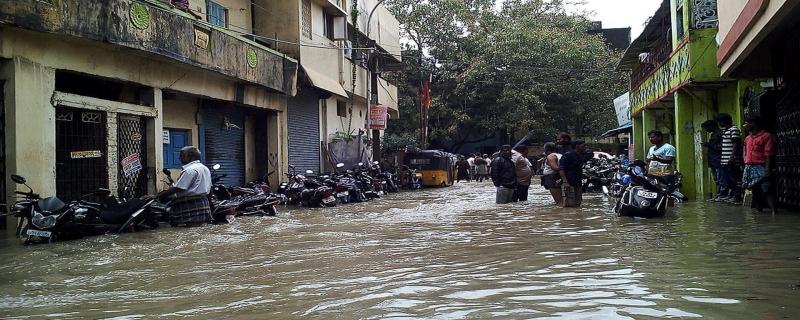
During the fag end of 2015, Chennai experienced severe floods resulting in the death of about 500 people and economic losses of about INR 50,000 crores. The flooding stranded the city and was termed a 'man-made disaster' resulting from irresponsible water management and rapid urbanisation. The northeast monsoon of the year left most parts of South India marooned, exposing how vulnerable our cities are to such catastrophes. That's when the Office of the Principal Scientific Advisor took a major initiative to develop a real-time, integrated, urban flood forecasting system that was non-existent in our country. Soon after, a team of scientists from various institutes across the country, swung into action to develop the first-ever expert system in India to forecast floods. In a recent study, published in the journal Current Science, the researchers shed light on the development of the automated flood forecasting expert system.
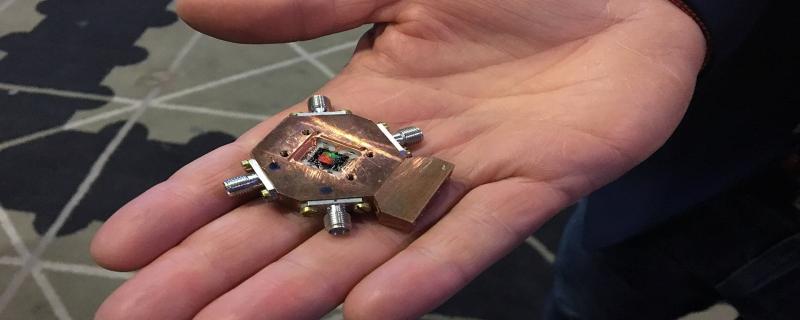
Nature is an enigma; an ensemble of complex structures and functions come together to form a variety of mesmerising artefacts, including life. Richard Feynman, the well-known American Nobel Laureate and physicist, famously said—"Nature isn't classical, dammit, and if you want to make a simulation of nature, you'd better make it quantum mechanical, and by golly it's a wonderful problem, because it doesn't look so easy".
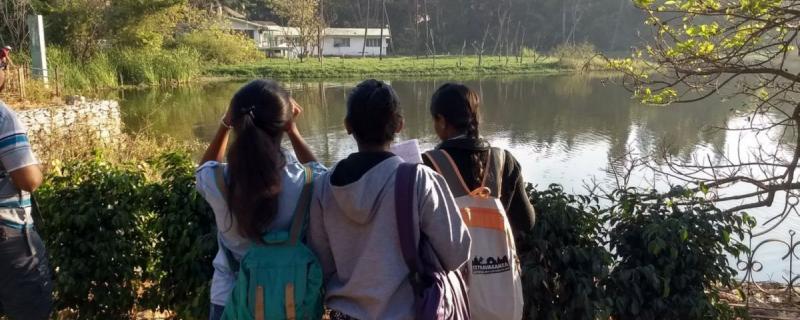
Today is National Science Day—a day to celebrate the spirit of science and scientific temper across the county. It is a day to commemorate Sir C V Raman’s discovery of the Raman effect. This year, the theme of National Science Day is ‘Women in Science’, celebrating the contributions of women scientists to the field of science in India.