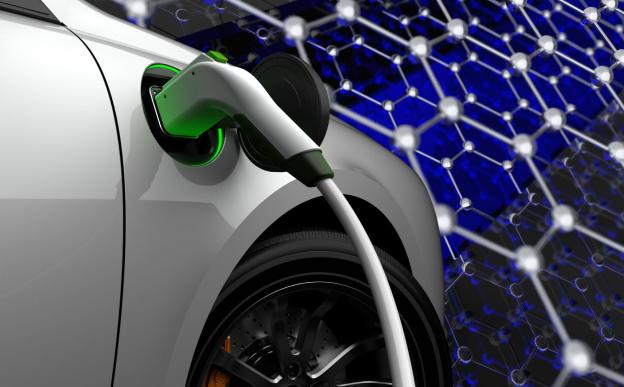
Research reveals that graphene-enhanced batteries can slash electric vehicle charging times by up to 27% while cutting battery weight by more than half, potentially solving the biggest hurdles to green transportation.

General

New Delhi

Dr. Renu Swarup, Senior Advisor and Scientist H at the Department of Biotechnology (DBT), Government of India took over as Secretary, DBT on 10th of April 2018. 
Haryana

In a first comprehensive study, researchers from the Lala Lajpat Rai University of Veterinary Sciences and Animal Sciences and G. B. Pant University of Agriculture and Technology have explored the reasons behind the prevalence of Bluetongue Virus (BTV) in the state of Haryana. BTV is responsible for causing the bluetongue disease—a non-contagious, insect-borne, viral disease caused mainly in sheep and less frequently in cattle, goats, buffalo, deer and antelopes.

Kharagpur

Researchers from National Institute of Technology, Durgapur and Indian Institute of Technology Kharagpur in West Bengal, with support from Department of Biotechnology, Government of India,have shown that the one way to efficiently deal with oil sludge, is to cultivate suitable microbes using nutrients, which then disintegrate the contaminants in the sludge.

Mumbai

Researchers from Indian Institute of Technology Bombay, Mumbai have observed a new phenomenon in a semiconductor quantum dot-- particles of nanometre (a billionth of a meter) size which are also called artificial atoms) made of Cu2ZnSnS4  (CZTS). By shining Ultra Violet (UV) light, on the quantum dots immersed in an electrolyte, they noticed an increase in its capacitance. The effect could be engineered to serve as photocapacitors- capacitors that are charged using light.

Nagpur

Scientist from Visvesvaraya National Institute of Technology, Nagpur, National Institute for Material Sciences, Ibaraki, Japan and Institute for Plasma Research, Gujarat have developed a novel composite material composed of carbon nanotubes decorated with thin films of zinc ferrite (ZnFe2O4) for practical applications like, energy storage.

Bengaluru

Researchers from the Indian Institute of Science, Bangalore use a computational approach to design peptides which are highly effective in killing drug resistant microbes.

Kanpur

Scientist from Indian Institute of Technology Kanpur (IITK) have developed a novel ternary nanocomposite (compound made of three different nano compounds) which can remove methylene blue from a solution when shone with visible or Ultra Violet (UV) light.

Bengaluru

Scientists from the Indian Institute of Sceince, Bangalore show us how the humble grain of rice can be a historian and meterologist!

Delhi

A new study by scientists at Council for Scientific and Industrial Research (CSIR) - Institute of Genomics and Integrative Biology and All India Institute of Medical Sciences in New Delhi have identified the potential role of two genes--ARID1A and KAT2B in the development of obesity.

Kanpur

Scientists from the Indian Institute of Technology, Kanpur, devise a new method to make chemotherapy safer and easier with the help of liposomes.

Search Research Matters